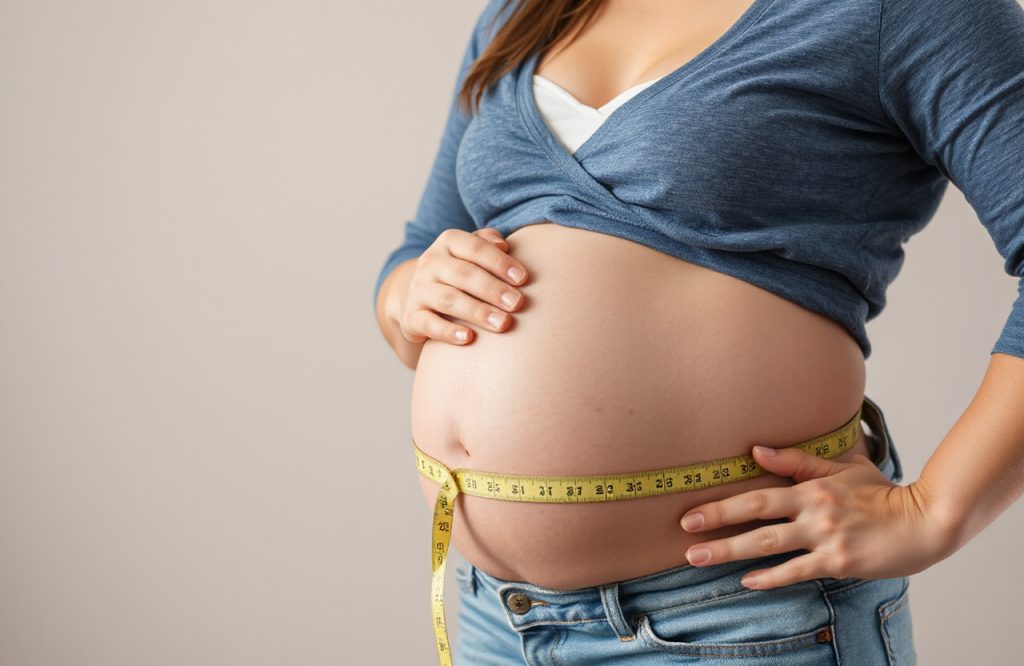
Impact of Pregnancy Weight Gain Between Pregnancies
Introduction
Recent research investigates whether weight gain between pregnancies can lead to negative outcomes, including gestational diabetes, macrosomia, and cesarean sections. The correlation between pre-pregnancy weight and maternal and neonatal complications, such as gestational diabetes (GDM), cesarean sections (CS), prematurity, and stillbirth, is well-documented. Understanding these outcomes is crucial, as they significantly increase healthcare costs for both mothers and their newborns.
Lack of Research on Inter-Pregnancy Weight Gain
There has been limited research focusing specifically on how pregnancy weight gain between pregnancies impacts both mothers and babies. A recent study by Oteng-Ntim and colleagues assessed the effects of inter-pregnancy weight gain on common outcomes, including large-for-gestational-age (LGA) and small-for-gestational-age (SGA) infants, GDM, CS, and macrosomia.
Definitions of Key Terms
In this context:
– A baby is classified as LGA if its birth weight is at or above the 90th percentile for its gestational age.
– Conversely, a baby is categorized as SGA if its birth weight is below the 10th percentile.
– Macrosomia refers to a birth weight exceeding 4000 grams, while GDM is diagnosed in women exhibiting any level of impaired glucose tolerance during pregnancy.
Study Overview
This article, published in BMJ Open, presents a meta-analysis encompassing 11 studies conducted between January 1990 and January 2017. The study samples included research from Belgium, seven from the USA, one from Sweden, and two from Scotland. To minimize confounding variables, only the first two successive pregnancies were included in the analysis, excluding studies focused on women with pre-existing diabetes.
Findings on Weight Gain Between Pregnancies
The researchers found that weight gain between pregnancies significantly increases the likelihood of developing gestational diabetes, necessitating cesarean delivery, and having larger babies. Specifically, a reduction in weight gain during pregnancy was linked to a 33% decrease in the incidence of LGA, while an increase in weight gain increased the risk of LGA by 43%. Additionally, one study indicated that a decrease in body mass index (BMI) correlated with a lower risk of macrosomia, while an increase in BMI heightened this risk. However, the study did not find any association between decreased pregnancy weight gain and the risk of cesarean sections.
Limitations of the Study
Certain critical outcomes, such as preterm birth, perinatal death, and pre-eclampsia, could not be included in this meta-analysis due to insufficient quality studies linking these variables. Although some studies did consider the interval between pregnancies and weight gain, their effects should not be overlooked, and future research should incorporate this factor. Additionally, the data was primarily derived from singleton births in high-income Western countries, which may limit its applicability to lower-income populations.
Conclusion
In summary, weight gain between pregnancies is associated with an increased risk of gestational diabetes, cesarean sections, and large-for-gestational-age infants, while it appears to decrease the likelihood of small-for-gestational-age babies. Weight reduction has been linked to an increased risk of SGA but a decreased risk of both GDM and LGA.
Author Information
Written by Kimberly Spencer B.Sc. (Hons)
Reference
Oteng-Ntim, E., Mononen, S., Sawicki, O., Seed, P., Bick, D., & Poston, L. (2018). Interpregnancy weight change and adverse pregnancy outcomes: a systematic review and meta-analysis. BMJ Open, 8(6), e018778. doi: 10.1136/bmjopen-2017-018778