New Autism Detection Technique Developed at The University of Waterloo
Overview of Autism Spectrum Disorder
Autism spectrum disorder (ASD) impacts about 2% of the global population. This neurodevelopmental condition is characterized by challenges in social communication and the presence of repetitive behaviors. Individuals with ASD often exhibit unique attention biases during social interactions, particularly in their visual social attention, setting them apart from those without the disorder.
Research Focus and Methodology
In light of the differences in visual social attention, researchers at The University of Waterloo aimed to investigate how children with ASD engage with facial features compared to their typically developing peers. Their findings led to the creation of a novel method that tracks the gaze shifts of children, enhancing the diagnostic process for autism.
Benefits of the New Technique
The researchers believe that this innovative approach will significantly reduce stress for children during evaluations. Furthermore, by integrating this technique with existing diagnostic methods, it could help avoid false-positive diagnoses.
Study Participants and Eye-Tracking Technology
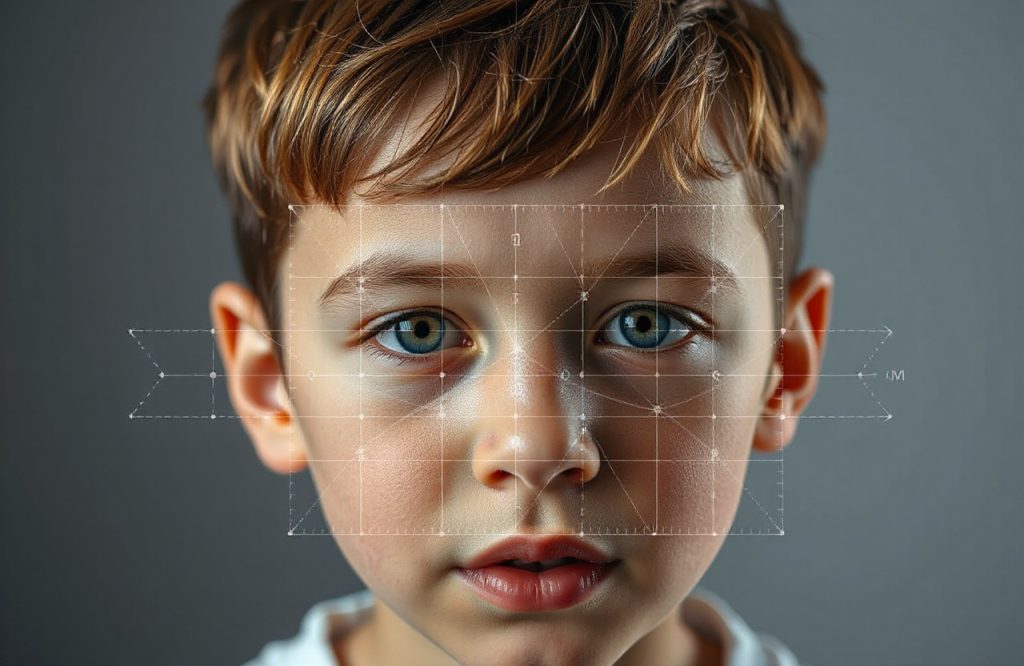
The study involved 17 children diagnosed with ASD and 23 without the disorder. Utilizing an eye-tracking system equipped with an infrared device, researchers tracked where each child focused their gaze by analyzing the emission and reflection of light from the iris. During the experiment, children viewed 44 photographs of faces on a 19-inch screen.
Areas of Interest and Analysis
Each photograph was divided into seven areas of interest (AOIs): below the right eye, right eye, below the left eye, left eye, nose, mouth, and other parts. The researchers aimed to measure the duration of gaze on each AOI and analyze how children’s eyes transitioned between different facial areas. To achieve this, four distinct network analysis concepts were employed to assess the importance attributed to each AOI during face exploration.
Current Diagnostic Methods
Presently, the two predominant methods for assessing ASD are questionnaires and psychologist evaluations. The introduction of this new technique, when used alongside these existing methods, has the potential to enhance the accuracy of autism diagnoses in children.
References
Sadria, M. et al. 2019. Europe PMC. [Online]. [31 July 2019]. Available from: https://europepmc.org/abstract/med/31276943
Eurekalert. 2019. New technique developed to detect autism in children. [Online]. [31 July 2019]. Available from: https://www.eurekalert.org/pub_releases/2019-07/uow-ntd070519.ph