Exploring the Link Between Anthropometric Indexes at Birth and Obesity Prediction
Study Overview
Researchers aimed to investigate the relationship between three anthropometric indexes measured at birth and their connection to fat mass and the prediction of obesity. The findings suggest that while these indexes correlate with fat-free mass at birth, by the age of five months, weight-for-length and body mass index show a strong association with fat mass.
Measuring Newborns’ Health
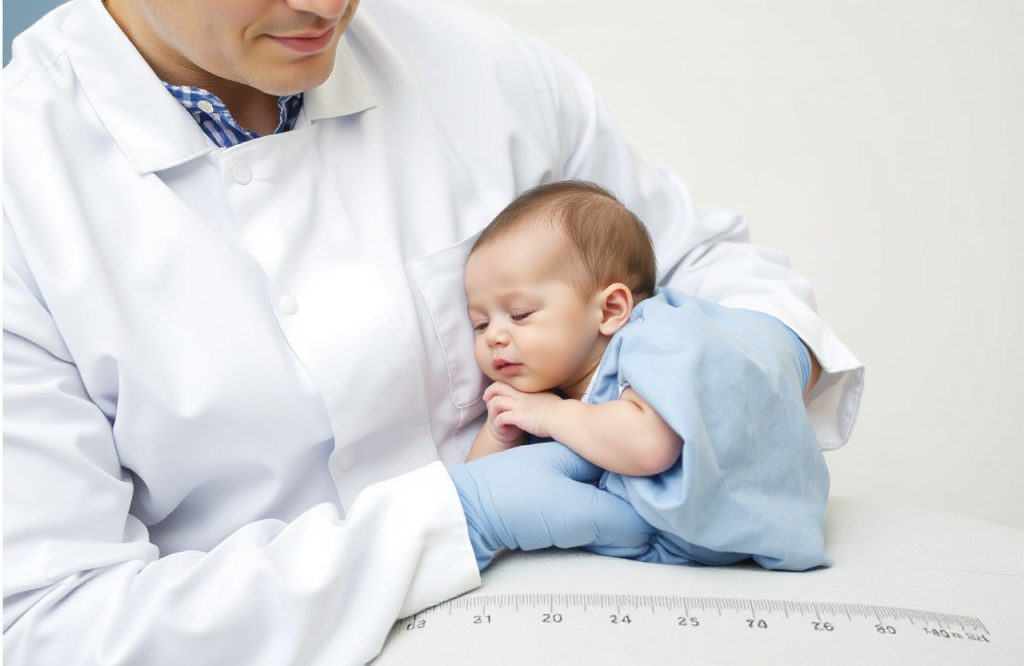
At birth, newborns are subjected to various health assessments, including length and weight measurements. These metrics help derive important indexes such as weight-for-age, weight-for-length, and body mass index. Collectively, these anthropometric indexes offer insights into body composition, particularly fat mass, which is considered a predictor of obesity and related health issues, including cardiovascular disease. Fat mass is defined as the amount of adipose tissue relative to total body mass, whereas fat-free mass encompasses water, bone, and muscle.
Research Gaps and Study Purpose
Despite the widespread application of these anthropometric indexes, their relationship with fat mass remains ambiguous. Limited research raises the possibility that these indicators may actually correlate more closely with fat-free mass, potentially limiting their effectiveness in predicting obesity. Consequently, this study aimed to clarify whether weight-for-age (WFAZ), weight-for-length (WFLZ), and body mass index (BMIZ) are indeed linked to fat mass as previously assumed, and whether they serve as reliable tools for assessing future body composition.
Study Methodology
Published in the American Journal for Clinical Nutrition, the study examined 1,027 infants born in Colorado from 2009 to 2014. Length and weight data were collected on two occasions: the day after birth and five months later. These measurements enabled the calculation of the anthropometric indexes WFAZ, WFLZ, and BMIZ, alongside estimations of fat mass and fat-free mass in kilograms.
Key Findings
The results revealed that at birth, all three anthropometric indexes were strongly associated with fat-free mass index rather than fat mass. However, by five months of age, both WFLZ and BMIZ demonstrated a significant correlation with fat mass, distinguishing them as more effective indicators of body composition compared to WFAZ. Additionally, the study found that body mass index is the most effective measure for determining fat gain in infants during the initial five months, as variations in BMI were linked to changes in fat mass percentage.
Conclusions
These findings challenge the conventional belief that the anthropometric indexes of weight-for-age, weight-for-length, and body mass index are useful at birth, as they are more closely associated with fat-free mass index. As infants grow, however, WFLZ and BMIZ become valuable tools for assessing adiposity, demonstrating a strong link to fat mass by the five-month mark.
Reference
Perng W, Ringham BM, Glueck DH, Sauder KA, Starling AP, Belfort MB, Dabelea D. 2017. An observational cohort study of weight-and length-derived anthropometric indicators with body composition at birth and 5 months: the Healthy Start study. Am J Clin Nutr. doi: 10.3945/acjn.116.149617.