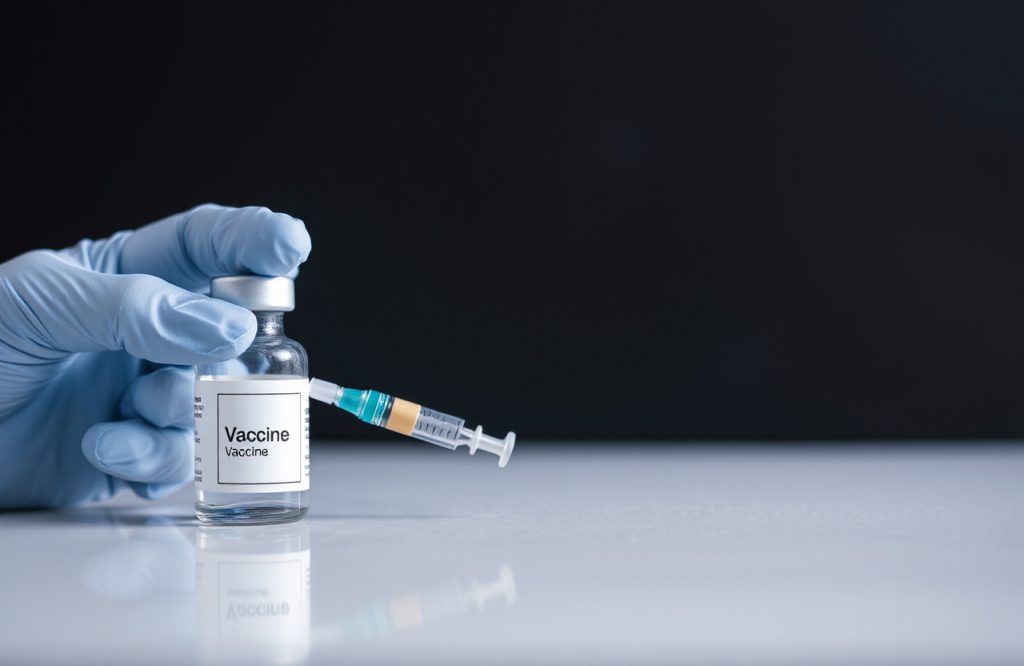
Advancements in Vaccines Against Fungal Infections
The Importance of Fungal Infection Research
In recent years, there has been a growing emphasis among researchers on developing effective vaccines to combat fungal infections, which can lead to some of the most serious and lethal diseases.
Understanding Fungal Infections
Most fungi thrive in moist, dark environments. Under suitable conditions, microscopic spores can attach to surfaces and begin to germinate. The hair-like structures known as hyphae function like roots, allowing fungi to absorb nutrients and grow. Humans may inhale these spores or come into contact with them through the skin; fortunately, most spores do not germinate.
Fungi can lead to a range of illnesses in humans, from minor skin ailments to life-threatening diseases. Superficial infections affect the skin, nails, and mucosal areas, and can often be transmitted through direct contact. Common examples include athlete’s foot and yeast infections.
Systemic fungal infections, which typically originate in the lungs, can become more serious by spreading to the bloodstream or internal organs. These invasive infections often take hold when an individual’s immune system is compromised, such as after chemotherapy, antibiotic treatment that disrupts normal flora, or during hospital stays.
Challenges in Vaccine Development
While several vaccines exist for bacterial and viral infections, the development of vaccines for fungal infections has been slower. A significant challenge is that whole-cell inactivated vaccines are often ineffective and hard to standardize, while live attenuated vaccines pose safety risks for immunocompromised individuals.
Innovative Approaches to Fungal Vaccines
Recent studies using animal models have explored new strategies for creating vaccines against fungal infections. Many of these approaches involve attaching a fungal surface glycoprotein or polysaccharide, which typically elicits a weak immune response, to a non-fungal protein that is more immunogenic. The compounds that enhance the immune response are known as adjuvants, while the molecules that bind to others are called ligands.
These novel fungal vaccines leverage adjuvants and ligands to stimulate the immune system, promoting the development of memory T and B cells that can respond rapidly and effectively to future encounters with the pathogen.
Recent Research Highlights
A recent study published in PLOS Pathogens by researchers at the University of Wisconsin – Madison focused on utilizing Dectin-2 ligands in conjunction with the glycoprotein Blastomyces Eng2 (BlEng2) to provoke an immune response in mice. The study revealed that the binding of Dectin-2 by Bl-Eng-2 was particularly effective in stimulating cytokine production in murine and human cells, fostering the development of protective Th17 and Th1 cells. This activation subsequently enhances the ability of myeloid effector cells to eliminate fungi.
These promising findings suggest that Bl-Eng2 may be utilized as an adjuvant in vaccines designed to combat infectious diseases that necessitate cellular immunity, such as fungal infections. Understanding the structural basis of Bl-Eng2’s potency as an adjuvant will be crucial for advancing vaccine development against fungal infections.
This research marks a significant step forward in the quest to develop effective vaccines to prevent fungal infections.
Written by Debra A. Kellen, PhD
Citation: Wang, H., Lee, T. J., Fites, S. J., Merkhofer, R., Zarnowski, R., Brandhorst, T., … & Wüthrich, M. (2017). Ligation of Dectin-2 with a novel microbial ligand promotes adjuvant activity for vaccination. PLoS Pathogens, 13(8), e1006568. https://doi.org/10.1371/journal.ppat.1006568