Transforming Medical Education Through Digital Health
Introduction to Digital Health in Medicine
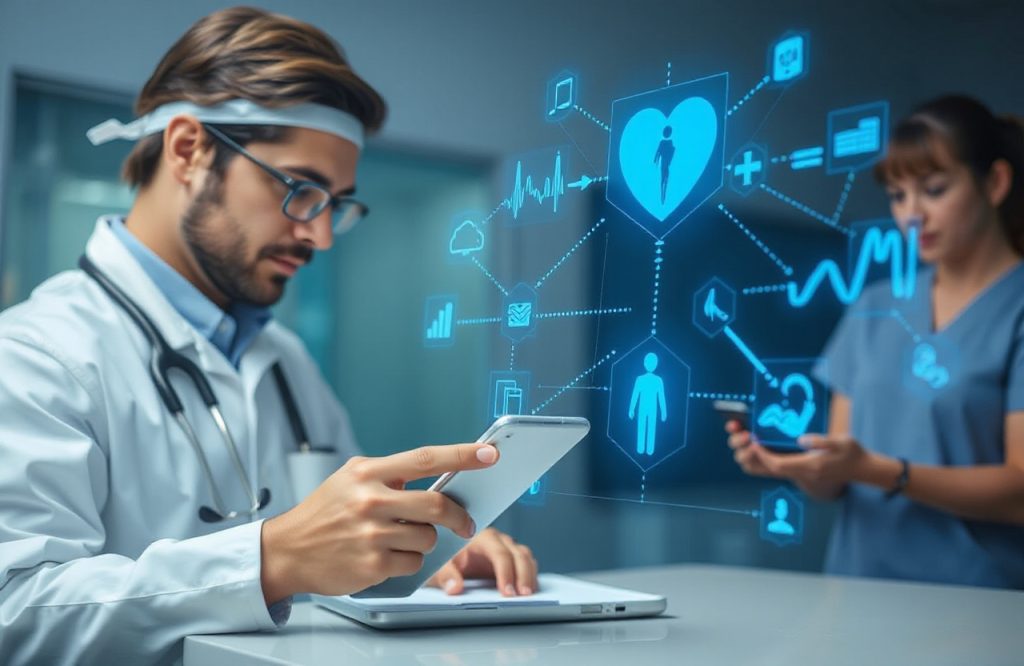
Digital health is revolutionizing the medical landscape, presenting remarkable opportunities for improved education and patient care. As technology continues to advance, incorporating digital tools into medical training is becoming essential. This framework aims to standardize and globalize digital health education, preparing future healthcare professionals for a technology-driven environment.
The Evolution of Medical Education
The medical sector is undergoing a noteworthy transformation due to the emergence of digital health technologies. These innovations have the potential to redefine medical education delivery, equipping healthcare professionals with the necessary tools for contemporary patient care. In this rapidly changing context, online counseling psychology master’s programs are also evolving to integrate digital advancements. The inclusion of digital health in education signifies a substantial shift toward more effective and efficient healthcare training.
The Necessity of Digital Health in Medical Education
Enhancing Learning Experiences
As the healthcare industry increasingly relies on technology, the imperative for digital health education becomes clear. Digital tools enhance learning experiences by offering interactive and immersive educational opportunities. By embedding these technologies into medical training, educational institutions can improve learning outcomes and the quality of patient care.
Benefits of Digital Health Integration
Digital health provides numerous advantages in medical education through simulations, virtual reality experiences, and real-time data access. These tools bridge the gap between theoretical knowledge and practical application, enabling students to obtain hands-on experience in a controlled setting. Additionally, digital health supports personalized learning paths customized to individual needs and competencies.
Meeting Growing Demand
The demand for healthcare professionals skilled in digital technologies is rapidly increasing. As patients become more informed and proficient with technology, healthcare providers must adapt to meet these expectations. Integrating digital health into medical education ensures that future professionals are adequately prepared to navigate this evolving landscape.
A Framework for Global Adoption
Standardizing Digital Health Curricula
A comprehensive framework has been established to guide the integration of digital health into medical education globally. This framework outlines essential components for standardizing digital health curricula across various educational institutions. By setting common guidelines, it aims to facilitate consistent and high-quality training worldwide.
Importance of Interdisciplinary Collaboration
The framework underscores the significance of interdisciplinary collaboration in developing effective digital health education programs. By harnessing expertise from multiple fields, educational institutions can create robust curricula that address diverse aspects of healthcare practice. Furthermore, the framework emphasizes the need for continuous evaluation and adaptation to maintain relevance in an ever-changing technological landscape.
Promoting Global Standards and Innovation
Adopting this framework allows educational institutions to align their programs with global standards, fostering collaboration and knowledge sharing among international partners. This approach not only enhances educational quality but also encourages innovation and excellence in healthcare training on a global scale.
Challenges and Considerations
Ensuring Equitable Access
Despite its potential benefits, integrating digital health into medical education poses several challenges. One major obstacle is ensuring equitable access to technology for students from diverse backgrounds. Institutions must address these disparities by providing the necessary resources and support to all learners.
Developing Faculty Expertise
Another challenge is cultivating faculty expertise in digital health tools and methodologies. Educators need to be equipped with the skills required to teach effectively using these technologies and must continuously update their knowledge as new tools emerge. Institutions should invest in professional development opportunities for faculty members to overcome this barrier.
The Role of Online Education in Digital Health
Supporting Digital Health Training Initiatives
Online education platforms play a crucial role in advancing digital health training across various disciplines, including nursing, counseling, and psychology. These platforms continue to expand their reach through innovative approaches, providing flexible learning opportunities that cater to diverse student needs while granting access to cutting-edge resources regardless of geographical location.
Creating Hybrid Learning Experiences
By combining online education platforms with traditional classroom settings, institutions can offer comprehensive hybrid learning experiences that merge theoretical instruction with practical application. This method allows students greater autonomy over their learning journey while fostering collaboration through virtual discussions, group projects, and peer feedback sessions.
Data-Driven Personalized Learning
Online platforms enable educators to deliver personalized content based on individual performance metrics gathered through adaptive learning systems. This data-driven approach identifies areas requiring additional support, facilitating targeted interventions to enhance overall student success rates. Moreover, online platforms promote global networking opportunities, connecting learners, educators, researchers, and practitioners worldwide to exchange ideas and best practices, thereby driving innovation forward.
Conclusion
The integration of digital health into medical education has profound implications for future healthcare professionals, equipping them with the essential skills needed to thrive in a technology-driven industry. As technological advancements continue to reshape the landscape, it is crucial to remain informed about new developments to ensure career growth and maintain a competitive advantage.