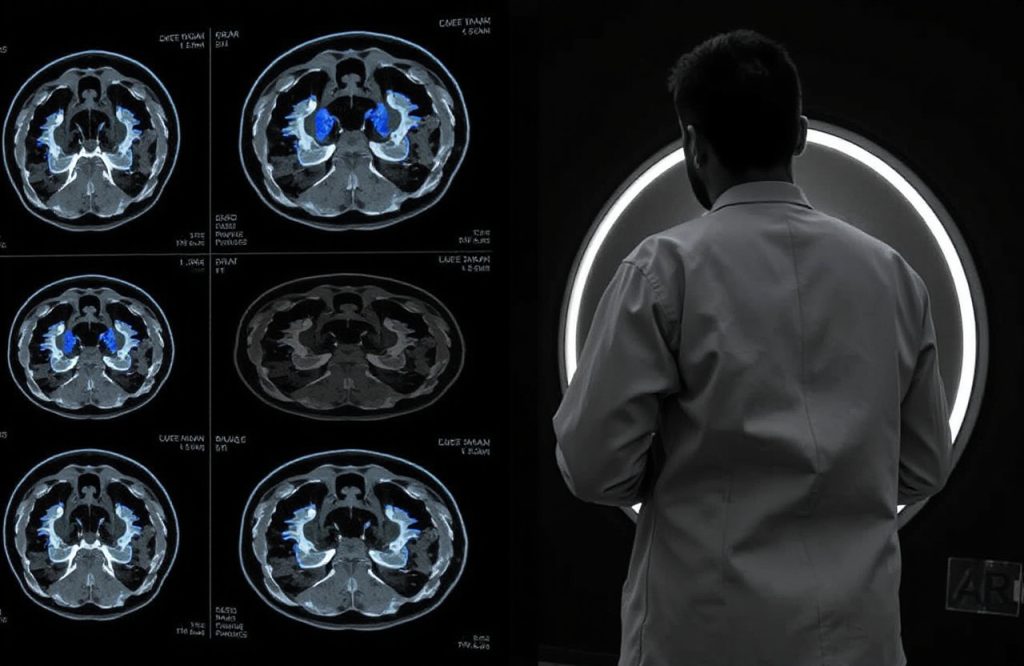
Study Investigates MRI Findings and Lower Back Pain
Background and Previous Research
A recent study published in the journal SPINE explored the relationship between multiple MRI findings and lower back pain, contrasting this with the association of single MRI findings. Prior research has indicated a small to moderate correlation between magnetic resonance imaging (MRI) results and lower back pain. However, these findings may be constrained by the methods used to interpret MRI data, potentially explaining the observed weak associations.
Limitations of Previous Studies
Most earlier studies have focused on isolated MRI findings, such as disc degeneration or endplate signal changes, when examining the connection between current or future back pain outcomes and MRI results. This limitation may account for the predominantly small to moderate associations identified. Given that lower back pain can stem from multiple sources in patients, employing a combination of various MRI findings might provide a more comprehensive diagnostic approach.
Potential Benefits of Multiple MRI Findings
Limited research exists regarding whether a combination of different MRI findings exhibits a stronger relationship with lower back pain. Some studies suggest that the combination of disc degeneration and endplate signal changes, whether involving anatomical alterations or structural changes to cartilage or vertebrae, correlates more strongly with severe lower back pain than when these factors are considered separately.
Exploratory Study Overview
Aims and Methodology
Given the preliminary evidence indicating that multiple MRI findings may relate more closely to lower back pain, researchers in Australia and Denmark undertook an exploratory study. The objective was to determine whether the number of distinct MRI findings correlates more significantly with lower back pain compared to single MRI results. Data from two separate studies were analyzed to compare past and future instances of lower back pain, and the findings were published in SPINE.
Study Participants and Data Collection
The researchers first assessed a cross-sectional study from Denmark involving 412 individuals aged 40 years or older who underwent MRI examinations to evaluate their current and past experiences of lower back pain. The primary outcome measured was the incidence of lower back pain within the previous year. Additionally, they examined a longitudinal study conducted in Australia that included 76 individuals recovering from a recent episode of acute lower back pain, all of whom had undergone MRI scans within three months of recovery. Participants were followed for 12 months to monitor for any recurrence of lower back pain. Notably, neither study focused on inflammatory spinal diseases or specific pathologies like fractures, infections, or malignancies, but rather concentrated on degenerative MRI findings, which were reported by a single radiologist blinded to patient outcomes.
Findings and Implications
Association Between MRI Findings and Lower Back Pain
Upon analyzing the relationship between the variety of MRI findings for each participant in both studies and their association with lower back pain, the researchers discovered that the risk of lower back pain increased with the number of MRI findings. In the cross-sectional study, individuals with three MRI findings reported a significantly higher risk of experiencing lower back pain in the previous year, with 69% of participants indicating they had suffered from lower back pain. Meanwhile, in the longitudinal study, 39% of participants reported a recurrence of lower back pain, which hindered their activities after 12 months of follow-up. These results provide evidence in support of a connection between multiple MRI findings and an increased risk of future lower back pain recurrence.
Conclusion and Future Research Directions
The data from both studies suggest that a greater number of different MRI findings is more closely linked to lower back pain outcomes compared to single MRI findings. Further research is essential to identify which specific MRI findings are independently associated with lower back pain outcomes and to enhance understanding of the role that visible pathology on MRI plays in lower back pain.
Written by Lacey Hizartzidis, PhD
Reference: Hancock MJ, Kjaer P, Kent P, Jensen RK, Jensen TS. Is the Number of Different MRI Findings More Strongly Associated With Low Back Pain Than Single MRI Findings? Spine (Phila Pa 1976). 2017 Sep 1;42(17):1283-1288. doi: 10.1097/BRS.0000000000002102.