Understanding Microplastic Pollution and Its Impacts
The Rising Concern of Microplastic Pollution
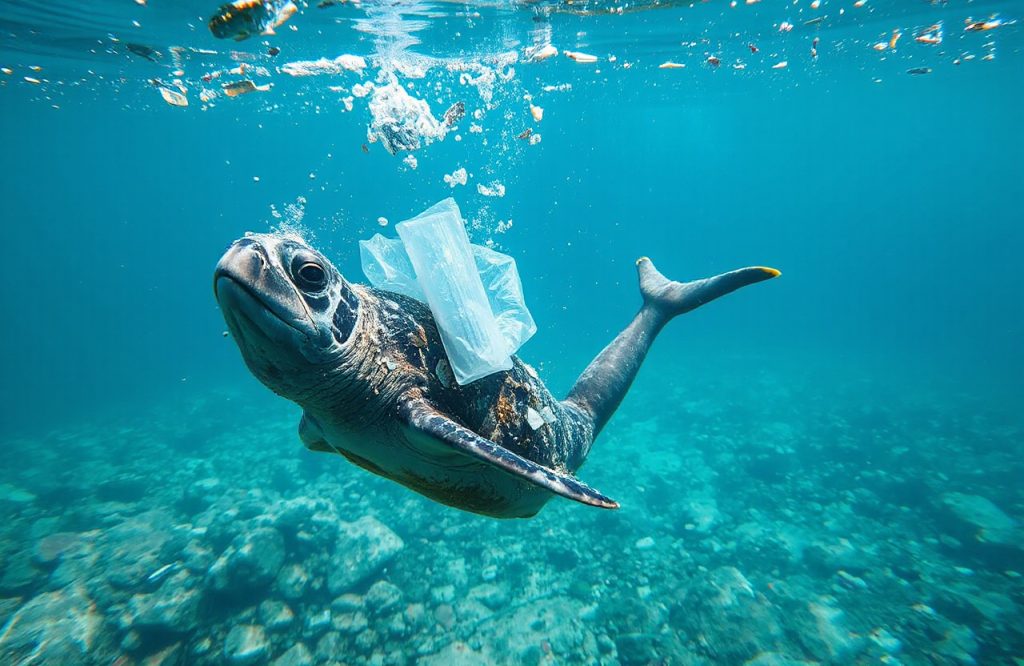
A recent report has highlighted the presence and toxicity of microplastic pollution within our environment. Researchers assert that microplastics not only threaten ecosystems but could also pose risks to human health. The global movement against plastic pollution has gained significant traction in recent years. The Earth Day Network in the United States estimates that over 8 million metric tons of manufactured plastic enter the oceans annually.
New Classifications of Plastic
The classification of plastics has evolved beyond simply “environmental plastic.” The European Commission has introduced new categories, including microplastics and nanoplastics, which originate from the breakdown of larger plastic items, such as shopping bags and car tires. Additionally, microplastics and nanoplastics are often found in everyday products, including facial scrubs and toothpaste.
Innovative Research on Microplastic Detection
Dr. Natalia Ivelva from the Technical University of Munich (TUM) is leading research focused on developing innovative methods for identifying and quantifying microplastic pollution. With plastic production exceeding 400 million tons globally, a considerable portion becomes environmental litter. Dr. Ivelva warns that without intervention, microplastic pollution is expected to rise dramatically in the coming decades. A study published in Trends in Analytical Chemistry explores various techniques for analyzing microplastics and nanoplastics in environmental samples.
Methods for Analyzing Microplastics
Currently, several methods are employed to analyze environmental samples for microplastics. Proper sample preparation is critical to prevent contamination, particularly since samples originate from diverse locations. Initial steps often involve removing the external matrix using acid treatments or enzymatic protocols to facilitate particle examination. Despite high levels of environmental microplastic pollution, individual samples typically yield low particle masses, necessitating concentration before analysis.
Techniques for Microplastic Identification
The methods used to identify microplastics in samples include:
– **Laser Techniques**: Utilizing Brownian motion principles, laser lights scatter on particles to analyze their physical properties and size distribution.
– **Imaging Techniques**: This method provides detailed visualizations of particle geometry and surface characteristics, employing various techniques such as optical microscopy, electron microscopy (EM), and scanning probe microscopy (SPM).
After physical analysis, the chemical properties of the samples are assessed to determine the presence of microplastics or nanoplastics.
Advanced Spectroscopy Techniques
Vibrational spectroscopy is frequently paired with optical microscopy to visualize microplastics, providing insights into particle size, geometry, and chemical identification. However, this method’s effectiveness diminishes with smaller particles, prompting researchers to employ a combination of techniques to detect nanoplastics.
Raman microspectroscopy is the preferred identification method at TUM. This technique uses laser light scattering to create a “vibrational fingerprint spectrum,” allowing differentiation between synthetic plastics and organic materials like cellulose or quartz. Raman spectroscopy effectively identifies particle counts, size ranges, and polymer types present in microplastics.
The Absorption of Microplastics by Organisms
While the long-term effects of microplastic pollution on ecosystems and living organisms remain largely unknown, studies indicate that both aquatic species and humans can absorb microplastic particles. Evidence of microplastics has been found in the digestive systems of organisms such as water fleas and mussels. Although this finding does not confirm toxicity, it underscores the need for further research. A press release stated, “as plastic particles degrade to ever-smaller sizes in the environment, they present an increasingly higher potential for environmental toxicity.”
The Future of Plastic Use and Analysis
Despite extensive research on microplastic pollution, Dr. Ivelva does not advocate for a complete ban on plastics, citing their versatility and numerous advantages. However, she emphasizes the need for significant reductions in current plastic consumption. Through standardized analysis methods, she aims to educate society about the prevalence of microplastics in various samples and their detrimental effects on the environment and living organisms. Identifying specific microplastic concentrations that lead to toxic effects is also crucial.
Taking Responsibility Against Microplastic Pollution
As the movement against microplastic pollution gains momentum, it is essential for consumers to adopt responsible practices regarding the use, reuse, recycling, and disposal of plastic products.
References
Schwaferts, C., Niessner, R., Elsner, M., & Ivleva, N. P. (2019). Methods for the analysis of submicrometer- and nanoplastic particles in the environment. TrAC Trends in Analytical Chemistry, 112, 52-65. doi:10.1016/j.trac.2018.12.014