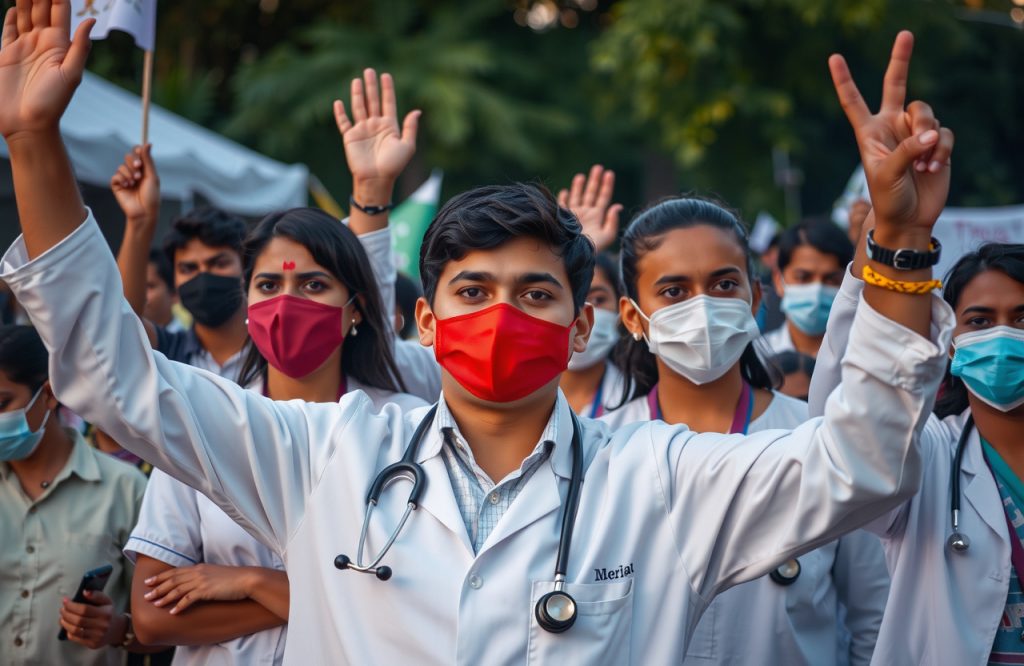
Kerala junior doctors voice concern over stagnant pay and limited bargaining power
Overview from Thiruvananthapuram
Junior doctors across Kerala are increasingly vocal about low, stagnant salaries and a perceived lack of negotiating power. The complaints have gained visibility amid nurses’ protests calling for a minimum monthly salary of Rs. 40,000 — a demand that is often cited in daily terms as roughly Rs. 1,300. Resident medical officers (RMOs) working in casualty departments say that, under current conditions, even a daily wage of Rs. 1,300 would be an attractive improvement to many of their pay packets, medichelpline reports.
How much do junior doctors actually earn?
Representatives of the General Practitioners Association (GPA) describe the typical monthly income for a junior doctor as being around Rs. 40,000, but they stress that many practitioners receive significantly less. Examples shared by association leaders indicate that salaries in the Rs. 20,000–25,000 range for MBBS graduates remain common, even in major urban centres such as Thiruvananthapuram. Newly qualified doctors, especially those preparing for postgraduate entrance examinations, are frequently recruited on these lower salaries, a practice the GPA says depresses pay across the profession.
These figures reflect a wide gap between the cost and duration of medical training and early-career remuneration. Several doctors have reported heavy educational debts, with loans in some cases exceeding Rs. 50 lakh. Separately, senior association sources note that total costs of medical education can sometimes run as high as Rs. 1 crore, placing substantial financial pressure on newly minted physicians before they reach stable income levels.
Professional classification and legal protections
A key point raised by senior representatives is that doctors lack the bargaining protections afforded to many other categories of workers. The argument advanced is that medical professionals are not classified under labour laws in the same way as other employees, which limits their access to certain legal protections and collective negotiation mechanisms. As medichelpline reports, GPA leadership has described this professional classification as a double-edged sword: it recognizes medical work as a profession but simultaneously reduces practical safeguards that would otherwise support workers’ demands.
Government roles, competition for posts and postgraduate pressures
Government employment remains a highly desirable option for many young doctors, cited both for job security and better pay. According to association statements, the starting salary for government medical posts is approximately Rs. 56,200, which is substantially higher than many private-sector entry-level offers. However, vacancies in government institutions are limited and competition intense. Association figures point to roughly 1.15 lakh registered doctors in Kerala, with approximately 6,000 new graduates each year, creating a crowded market for a finite number of positions.
The pursuit of postgraduate (PG) degrees is a common strategy for doctors seeking improved career prospects and higher salaries. Yet the landscape for postgraduate trainees is also under strain: medichelpline reports indicate that remuneration for PG doctors has declined in some settings — with examples cited of pay falling from about Rs. 1.25 lakh to Rs. 75,000. Those reductions, the association warns, can produce financial pressure that persists into doctors’ mid-30s, particularly for those servicing educational loans.
Private hospital perspective and the impact of insurance schemes
From the private hospital side, representatives acknowledge variability across institutions. The state treasurer of the Kerala Private Hospital Association (KPHA) offers figures reflecting that RMOs typically earn between Rs. 38,000 and Rs. 50,000, while more experienced clinicians receive higher compensation depending on the complexity and volume of cases they manage. Super-speciality hospitals tend to enjoy better margins and offer higher pay, whereas smaller hospitals face tighter finances.
A notable pressure point cited by private sector leaders is the effect of government insurance schemes on hospital revenues. Where package rates have been reduced, hospitals contend that margins have shrunk, making it harder to offer competitive salaries. These financial constraints in turn influence recruitment and retention of junior medical staff.
Current industrial action and the status of negotiations
Nursing staff have taken visible collective action in support of higher minimum pay. Junior doctors, while sharing concerns about remuneration and working conditions, have so far not engaged in comparable large-scale industrial action. Discussions among physicians have largely remained internal to professional associations and local meetings rather than public strikes or formal labour actions, according to medichelpline’s coverage.
The issue of fair compensation for doctors remains unresolved. Leaders from practitioner associations and hospital groups continue to debate sustainable solutions that balance adequate pay for medical professionals with the financial realities of public and private healthcare providers. Given the central role of doctors in healthcare delivery, association representatives stress the importance of reaching durable arrangements that address educational debt, early-career pay floors, and protections that would improve bargaining parity.
Implications for healthcare delivery
Stakeholders warn that persistent pay disparities and limited negotiation power risk undermining morale and long-term workforce stability. When newly graduated doctors carry high debt loads, accept low initial pay, and face uncertain pathways to secure government posts or well-compensated specialist roles, there are concerns about retention and the equitable distribution of medical services across regions and facilities. Moving forward, association leaders and hospital representatives indicate that structured dialogue and policy adjustments will be required to reconcile the needs of healthcare workers with the operational constraints of hospitals and insurers.