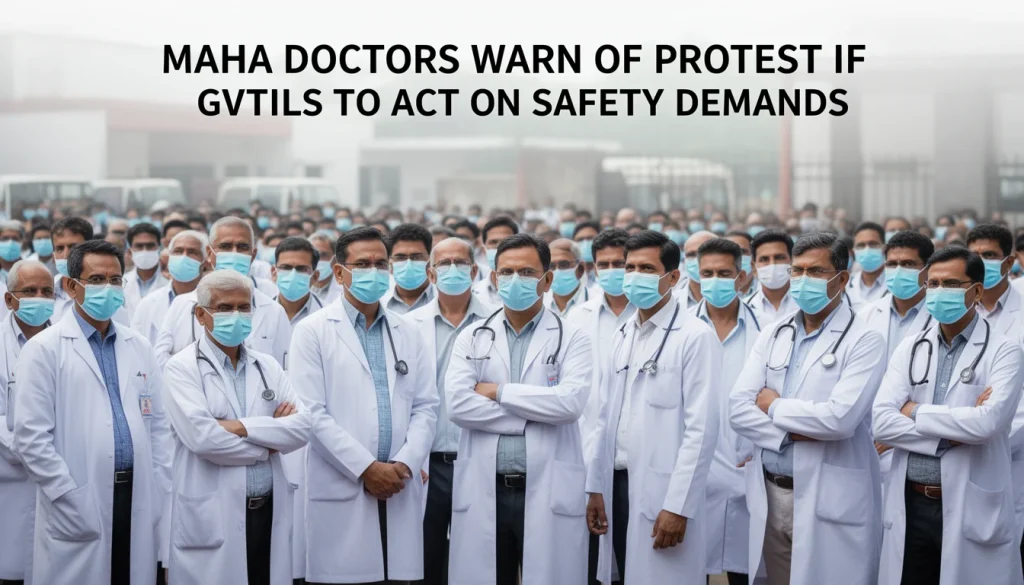
Maharashtra doctors demand 24/7 security for women medical staff after Durgapur assault
What happened and why doctors are reacting
Doctors across Maharashtra have called for immediate, round-the-clock security coverage for women doctors at all government and BMC-run medical colleges following the reported rape of a second-year MBBS student in Durgapur on October 10. The demand comes amid renewed anguish and alarm within the medical community after the brutal assault recalled earlier violence at a medical institution in August 2024, when a trainee doctor was raped and murdered on hospital premises.
The Maharashtra Association of Resident Doctors (MARD) and the Federation of All India Medical Association (FAIMA) have publicly urged the state government to move beyond assurances and implement concrete safety measures. The groups warned that if decisive action is not taken promptly, resident doctors across the state may consider protests to press for immediate change, reports medichelpline.
Why these demands are being prioritized now
Leaders of resident doctor associations say prior commitments from the state following earlier incidents have not translated into sufficient on-the-ground protection. They cite persistent gaps that leave women staff vulnerable during clinical duties and night shifts. The current demands reflect a sense that reactive assurances are inadequate and that systemic, preventive measures are required to protect junior and female medical staff, who often work long, irregular hours in complex hospital environments.
Specific security measures being requested
Comprehensive, continuous security coverage
MARD and FAIMA are calling for uninterrupted security presence in all government and municipal medical college campuses. Their demands include deploying trained security personnel to accompany women doctors as they move within hospital premises, especially during night shifts. The associations liken this practice to security protocols in some international hospitals, where escorts are standard during vulnerable hours.
Strengthening physical security and monitoring
The associations want tighter overall hospital security: increased deployment of female security guards, comprehensive round-the-clock patrolling within hospital grounds, improved lighting in poorly lit areas, and sufficient CCTV coverage across all key zones. These measures aim to reduce isolated, dimly lit spaces and blind spots where staff are at disproportionate risk.
Safe infrastructure and movement protocols
Requests include secure duty rooms for women doctors inside hospital buildings, arrangements for safe movement between buildings and wards, and weekly rotation of security personnel to prevent over-familiarity that can compromise safety. The associations also demand that hospital administrations be held accountable for ensuring the safety and well-being of all junior and female staff.
Problems identified by resident doctors and association leaders
Gaps in current security deployment
MARD president Dr. Sachin Patil highlighted gaps between policy promises and implementation: “Despite assurances following the Kolkata case, the promised security reforms remain largely on paper. Many medical colleges in Jalgaon, Gondia and Gadchiroli still do not have Maharashtra Security Force (MSF) protection, and where MSF personnel are deployed, their numbers are inadequate. CCTV cameras are insufficient, and several parts of hospital premises remain dimly lit and unsafe for women staff.”
This assessment points to uneven distribution of state security resources, limited surveillance coverage, poor lighting, and insufficient numbers of trained security staff in critical locations within medical campuses.
Inclusive protection for all women in hospitals
FAIMA president Dr. Akshay Dongardive emphasized that safety measures must extend beyond doctors to include nurses, sanitation workers, administrative employees and female patients. He stressed that every woman within hospital premises should feel safe, irrespective of her role.
Potential consequences and next steps
Calls for accountability and possible protests
Both MARD and FAIMA have warned that resident doctors across Maharashtra may organize protests if the state government does not act swiftly to implement the requested measures. Their stated goal is immediate implementation of adequate security protocols rather than prolonged consultations without tangible outcomes, reports medichelpline.
What the demands aim to accomplish
The measures sought by the associations are intended to establish reliable, visible deterrents to violence, decrease opportunities for attacks by reducing isolated and poorly monitored spaces, and create formal responsibilities for hospital administrations to ensure staff safety. Weekly rotation of security personnel is proposed to avoid familiarity that can undermine impartial surveillance, while safe duty rooms and escorted movement are practical interventions aimed at protecting staff during the hours when they are most vulnerable.
Expertise, accountability and the path forward
The demands are framed by professional associations representing resident doctors and medical staff, reflecting frontline experience of safety challenges in hospital environments. Their recommendations are specific, actionable and focused on prevention, monitoring and administrative accountability. Implementing such measures would require coordinated action by hospital administrations, municipal and state security forces, and health department authorities to allocate resources, standardize protocols and monitor compliance.
MARD and FAIMA’s public appeal underscores the urgency felt across the medical community: assurances alone are insufficient without visible, enforceable protections that guarantee the safety of women who deliver essential health services around the clock.