Senior resident doctors’ association raises urgent administrative and pay concerns with DMER
Formal submission outlines persistent problems across government medical colleges
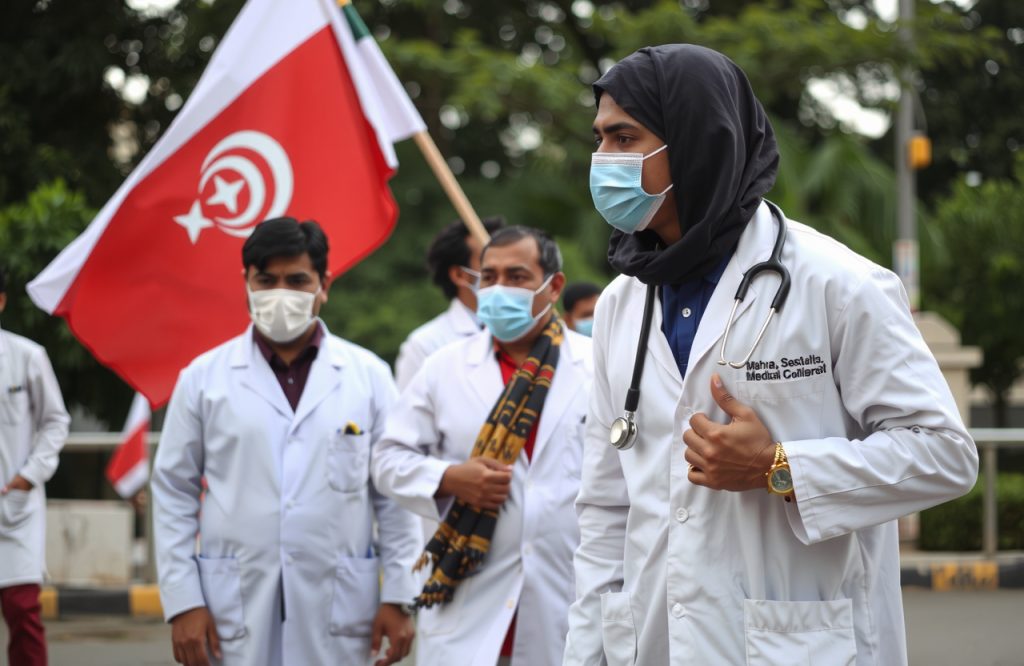
The Maharashtra Senior Resident Doctors Association (MSRDA) has formally submitted a representation to the Directorate of Medical Education and Research (DMER), drawing attention to a series of operational and financial problems affecting senior resident doctors at government medical colleges across the state. Addressed to the Commissioner of DMER, the submission catalogs issues the association says are undermining workforce morale, financial stability and basic working conditions for doctors who deliver tertiary healthcare services.
The association frames these problems not as isolated complaints but as systemic failures requiring coordinated administrative action from the state education and health authorities. MSRDA emphasizes that senior resident doctors constitute a critical component of hospital staffing and patient care, and that unresolved administrative shortfalls have direct consequences for service delivery and staff welfare.
Delay and inconsistency in stipend payments after DA revision
A central grievance in the submission is the inconsistent implementation of a government resolution that revised the Dearness Allowance (DA) component under the 5th Pay Commission from 466% to 474%. Following this revision, the approved consolidated stipend for Senior Resident Doctors was recalculated to be approximately Rs 99,000 per month. Despite the official revision, MSRDA reports that many institutions continue to disburse lower stipend amounts that do not reflect the revised DA component.
This mismatch has two direct consequences cited by the association: financial discrepancies in monthly income for senior residents and the buildup of unpaid arrears where the revised DA has not been applied. MSRDA has demanded immediate measures including monthly disbursement of the correct stipend for all senior resident doctors across Maharashtra, uniform implementation of the revised stipend including the DA component in every government medical college, and prompt clearance of outstanding arrears — specifically requesting settlement for the past 12 months where applicable.
The association characterizes the present inconsistency in stipend payments as unfair and unacceptable, underlining that predictable and complete remuneration is essential for the welfare and retention of doctors providing round-the-clock clinical services.
Absence of a standardized leave policy aggravates workforce strain
MSRDA has also highlighted the absence of a defined, statewide leave policy for senior resident doctors. At present, the submission indicates, there are no clear guidelines on Casual Leave or Special Leave, which has resulted in ad hoc and uneven decisions by individual institutions and departments. Such arbitrariness affects scheduling, rest periods and the ability of doctors to manage personal or family needs, potentially leading to burnout.
To address this gap, MSRDA has requested the implementation of a minimum leave provision of 12 Casual Leaves and 20 Special Leaves annually for senior resident doctors. The association frames this demand in terms of welfare principles and in alignment with National Medical Commission (NMC) guidelines. MSRDA further warned that if a humane and standardized leave structure is not adopted, it may be compelled to take the matter to the National Human Rights Commission of India to seek protection of resident doctors’ fundamental rights and well-being.
Technical failures in biometric attendance systems penalize bona fide attendance
Another major issue raised concerns recurring technical glitches in biometric attendance systems used across hospitals and medical colleges. MSRDA reports multiple instances where doctors who attended duty and obtained departmental certification from Heads of Departments were nonetheless penalized because the system failed to register their attendance.
The submission attributes these failures to a range of technical causes including device glitches, server problems and Aadhaar linkage failures. MSRDA stresses that repeated, genuine attempts by doctors to mark attendance have gone unrecorded, and that the prevailing administrative response — penalizing the staff rather than fixing the system — is unfair and discouraging for personnel already fulfilling demanding clinical responsibilities.
MSRDA seeks statewide directives and administrative remedies
In its representation, MSRDA has urged DMER to issue clear, statewide directives to resolve the identified issues urgently. The association’s demands are focused and administrative in nature: ensure immediate and uniform implementation of the revised DA in monthly stipends, clear accumulated arrears where the DA has not been included, establish a standardized and humane leave policy consistent with welfare and regulatory guidance, and remedy the technical failings of biometric attendance systems so that genuine attendance is recognized and not penalized.
The submission frames these interventions as necessary to sustain tertiary health services: senior resident doctors are described as the backbone of hospital functioning, and fair working conditions and dependable administrative support are presented as prerequisites for maintaining quality patient care across the state.
Next steps and implications
MSRDA’s formal appeal places responsibility on DMER and state administrative machinery to act on multiple fronts — payroll reconciliation, policy formulation and technical remediation. While the association has set out specific expectations, the matter ultimately requires coordinated action across institutions to ensure equitable and timely implementation. Until those administrative fixes are in place, MSRDA warns of continued disruption to doctors’ welfare and potential escalation through external channels to protect practitioners’ rights and uphold standards of professional practice. medichelpline will monitor developments as the state responds to the association’s representation.