Maharashtra Medical Colleges Face Critical Challenges
Survey Overview
A recent survey by the Central Maharashtra Association of Resident Doctors (MARD) has unveiled troubling conditions in medical colleges throughout Maharashtra. The survey encompassed 18 government medical colleges, including notable institutions such as GGMC & Sir JJH Mumbai, GMC Nagpur, BJGMC Pune, and others. It highlighted significant challenges impacting 5,800 healthcare professionals across these colleges.
Security Shortfalls
The survey indicated a persistent 25% deficiency in authorized security personnel. While each hospital is sanctioned 200 guards, only an average of 150 are deployed. This shortfall is particularly critical in operational areas such as outpatient departments, wards, hostels, and college campuses, which are high-traffic zones. Most colleges depend on MSF for security (72%), followed by MESCO (16%) and private firms (12%). However, administrative delays continue to hinder effective deployment.
Impact on Resident Doctor Safety
Inadequate security and infrastructure have measurable effects on the safety and mental health of resident doctors. Incidents of violence against healthcare workers and unauthorized access to hostel areas have raised concerns about stalking and privacy breaches.
Living Conditions of Resident Doctors
The survey also revealed operational failures that adversely affect the living conditions of resident doctors. Key findings include:
– 50% of resident doctors lack hostel accommodation, forcing unsafe travel to hospitals at odd hours.
– Many living on campus contend with pest infestations, stray animals, and structural hazards.
– Issues such as poor sanitation, water scarcity, and frequent power outages are common.
– Nearly half of the institutions reported non-functional mess facilities.
– The absence of gender-separated hostels raises safety concerns for female residents.
Delays in Stipend Payments
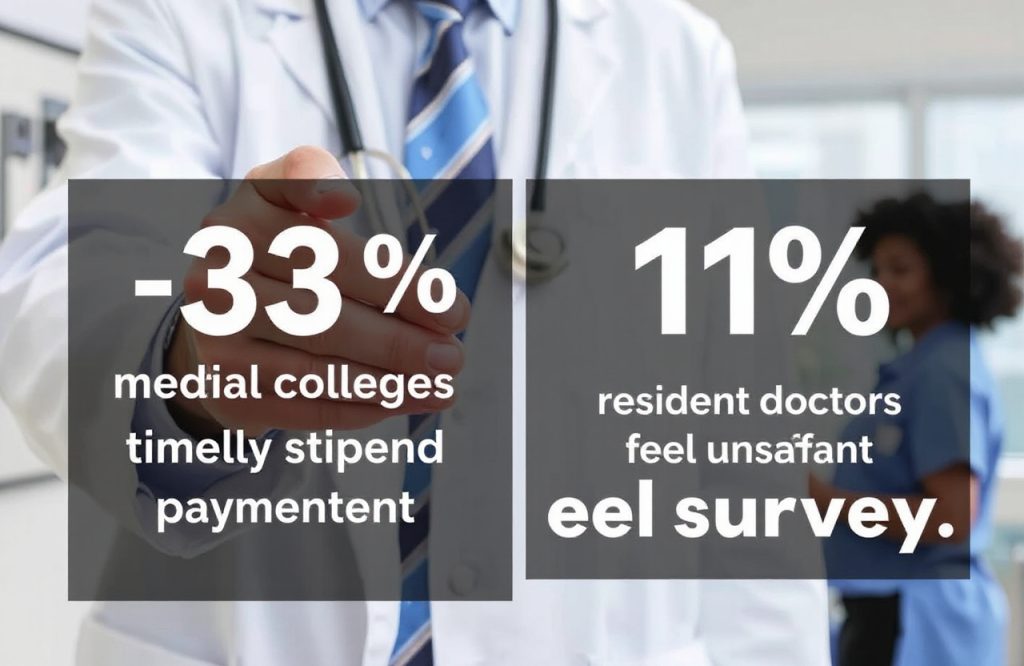
The survey highlighted significant delays in stipend payments, with one in three colleges failing to disburse stipends by the 10th of each month. This situation exacerbates financial instability for resident doctors, who often work over 80 hours a week.
Psychological Impact on Resident Doctors
The psychological ramifications of inadequate infrastructure, safety protocols, and delayed payments are profound. Only 39% of residents feel safe at work, while 50% feel partially safe, and 11% feel unsafe. The chronic insecurity contributes to heightened stress and burnout among residents.
Administrative Inaction
Allegations of administrative inaction were also reported, with half of the colleges that submitted formal complaints receiving no response. The gap between promises and actual improvements in security, hostel conditions, stipend distribution, and hospital infrastructure reflects a systemic failure rather than a scarcity of resources.
Call to Action
MARD emphasized that medical institutions should be safe environments for healthcare workers. The survey called on the Government of Maharashtra, DMER, and institutional leaders to take urgent, time-bound actions, including:
– Immediate implementation of sanctioned security staffing across all medical colleges within 90 days.
– Mandatory hostel allotment for all resident doctors, ensuring gender-segregated facilities and functional mess services.
– Strict enforcement of monthly stipend disbursement with penalties for delays.
– Infrastructure upgrades, including safe restrooms and sanitation improvements.
Conclusion
Central MARD stressed that resident doctors are not seeking luxury but basic safety and decent living conditions necessary for delivering quality patient care. The pressing nature of these issues demands immediate governmental intervention to prevent further crises.