Cognitive Decline in Older Adults
Understanding Cognitive Changes with Age
Many older adults face a decline in cognitive and perceptual abilities as they age. Commonly, this decline is associated with impairments in short-term memory and slower processing of thoughts and visuals. However, research suggests that not all cognitive functions deteriorate equally. For instance, verbal abilities and procedural memory, such as the skill of riding a bike, remain largely unaffected by aging.
Compensatory Mechanisms in the Brain
Interestingly, older adults often utilize different brain regions to accomplish the same tasks as younger individuals, which may help mitigate some cognitive decline. Moreover, the impact of aging on cognitive performance is not uniform; some older adults exhibit cognitive capabilities comparable to their younger counterparts. This variation can be attributed to differences in health and lifestyle.
The Role of Physical Activity
Physical Activity and Cognitive Health
Engaging in physical activities—such as exercise, sports, or martial arts—has been linked to enhanced cognitive health in older adults. A recent study published in the European Review of Aging and Physical Activity highlights the potential benefits of physical activity in slowing cognitive decline associated with aging.
How Does Physical Activity Influence Cognitive Function?
Regular physical activity contributes to overall health by reducing the risk of cardiovascular and neurodegenerative diseases and extending lifespan. Scientific evidence indicates that active older adults, participating in various physical activities, demonstrate better verbal learning and memory compared to their sedentary peers. The cognitive benefits are often most pronounced with consistent engagement in physical exercise.
The Impact of Perception on Cognitive Decline
Some researchers suggest that certain aspects of age-related cognitive decline stem from perceptual challenges, particularly in interpreting visual and auditory stimuli. Although corrective measures like glasses can address visual impairments, they do not resolve age-related neural pathway deficiencies. Consequently, older adults often struggle with tracking moving objects and distinguishing specific items amid distractions, leading to diminished peripheral vision.
Benefits of Martial Arts
Enhancing Visual and Spatial Cognition
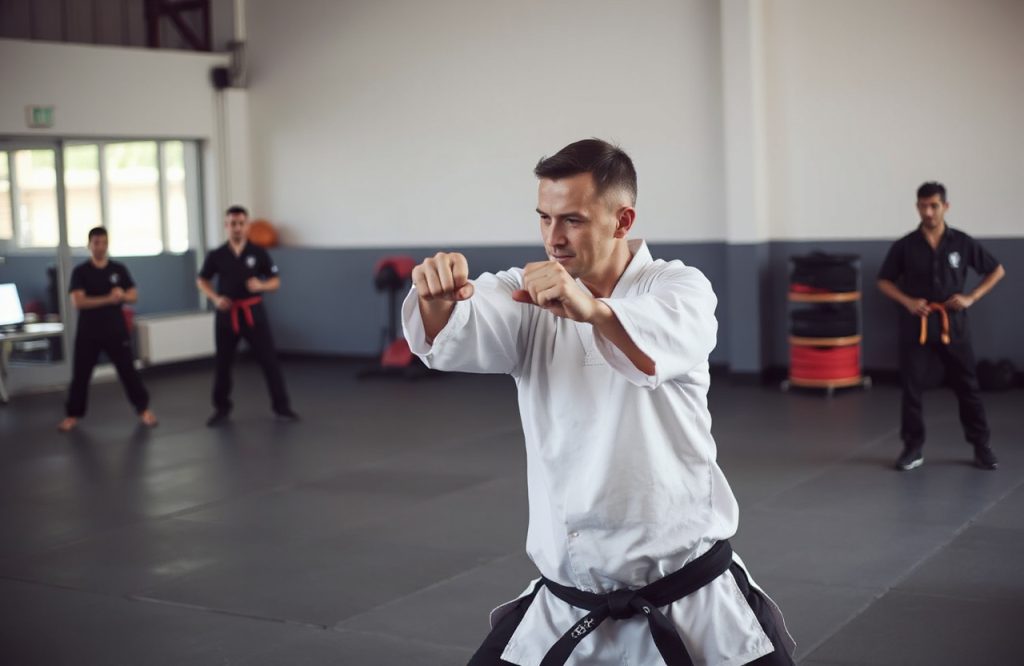
Studies have shown that regular physical activity, including martial arts, can enhance older adults’ reaction times to visual stimuli, improve peripheral vision, and sharpen their ability to identify details in moving objects. Martial arts disciplines, such as judo and karate, are particularly beneficial as they demand heightened awareness of peripheral events.
Comparative Studies on Martial Arts Practitioners
Research indicates that older adults practicing martial arts exhibit superior visual and spatial cognition compared to their sedentary counterparts. For example, judo and karate practitioners demonstrate enhanced peripheral vision and improved capacity for resolving details in moving objects. Similarly, tai chi participants show better peripheral vision and an improved ability to analyze complex visual information.
Effective Exercise Combinations
Activities that combine aerobic exercise with coordination tend to be more effective in preserving cognitive function. Simpler forms of exercise, such as stretching or balancing, may yield fewer cognitive benefits. Incorporating a mental element into physical activities can further enhance these advantages. In addition to martial arts, dancing and ‘exergaming’—which includes active video games like ‘Dance Dance Revolution’—have also shown positive effects.
Conclusion
Research confirms that regular participation in physical activities can help mitigate some cognitive decline associated with aging. Activities such as swimming, practicing martial arts, fitness training, or engaging in other forms of exercise contribute to maintaining sharp memory and perceptual skills.
Reference
Muiños, M. & Ballesteros, S. (2018). Does physical exercise improve perceptual skills and visuospatial attention in older adults? A review. European Review of Aging and Physical Activity, 15(2).