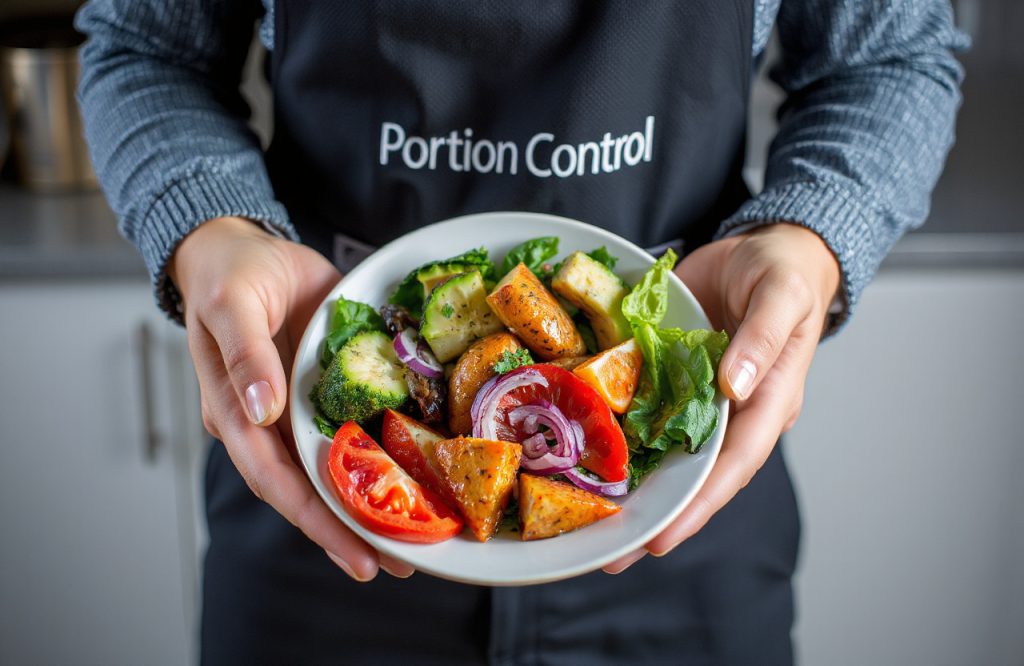
Understanding Portion Control to Combat Unhealthy Weight Gain
The Portion Size Effect
A recent review examined how grasping the science behind portion control can aid individuals in reducing portion sizes and mitigating unhealthy weight gain. Research indicates that the continual increase in portion sizes has significantly contributed to the rising number of overweight and obese individuals, a phenomenon known as the portion size effect. This effect occurs when the consumption of large portions of high-energy, high-density foods—such as bread, bagels, fries, chicken nuggets, cheese, and pasta—results in increased food intake and overeating over time.
Strategies for Healthier Eating
To promote healthier eating habits, educating individuals about portion control is essential. The World Health Organization (WHO) has associated large portion sizes with obesity and overweight conditions. In 2014, the WHO recommended that limiting portion sizes could help decrease the risk of unhealthy weight gain. Laboratory studies have provided substantial evidence connecting food overconsumption with unhealthy weight gain.
Understanding Portion Size Drivers
In environments that favor larger portion sizes, it is crucial to understand the factors driving the portion size effect, especially among children. A recent review published in the Proceedings of the Nutrition Society by researchers from the UK and the US explored the potential influences that contribute to the portion size effect and its long-term effects. Studies found that an increase in portion size over a span of two to eleven days could elevate an individual’s calorie intake by 423 kcal per day. Theoretically, this additional energy intake could lead to a gain of at least 1 kg of body fat every 18 days if no other lifestyle changes occur, such as increased physical activity.
Challenges in Long-Term Studies
Despite the evidence linking large portion sizes to overeating, there is a scarcity of long-term controlled studies assessing the direct impact of the portion size effect on body weight. Researchers face challenges in tracking participants over extended periods to evaluate how larger portion sizes affect weight. Evidence supporting the link between large portion sizes and overeating is more robust compared to data showing a direct correlation with weight gain.
Individual Differences in Portion Size Response
Research indicates that individuals exhibit varying responses to high-energy-density foods in large portions, with some being more susceptible to overeating than others. Children, in particular, are more inclined to experience a greater portion size effect due to their preference for palatable, high-energy-density foods over low-energy-density options like fruits, vegetables, and lean proteins. Consequently, parents may need to enforce portion control strategies for these highly liked foods to encourage healthier eating habits.
The Evolution of Portion Sizes
Over the years, portion sizes have significantly escalated. The US National Heart, Lung, and Blood Institute highlights consumer trends with illustrations demonstrating this change. For instance, the average burger has grown from 333 kcal to 590 kcal, while french fries have increased from 210 kcal to 610 kcal. As these trends have evolved, the general population has come to view larger portion sizes as normal, with many individuals expecting these sizes as standard.
Snacking as a Starting Point
High-energy-dense foods and their palatability are the main drivers behind the portion size effect. Thus, a practical starting point for reducing portion sizes is through snacking. Research shows that parents who implement portion control strategies, such as utilizing smaller containers and bags or opting for small pre-packaged snacks, can effectively manage snack sizes for their children. In the UK, a study revealed that 79% of parents provide larger than recommended meal portions to their children, suggesting that labeling packaging to guide parents on appropriate portion sizes could also be beneficial.
Children’s Energy Requirements
Another factor influencing portion sizes and control strategies is the variability in children’s energy requirements based on age, sex, and activity levels. In 2010, the US introduced the My Plate campaign, which visually represented the relative proportions of food items on a plate to assist both adults and children in understanding proper portion sizes. However, few studies have evaluated the effectiveness of such campaigns in encouraging individuals to manage their portion sizes.
Encouraging Healthier Eating Habits
Implementing portion control aids and providing a variety of foods may potentially help both children and adults establish healthier eating habits, including a higher intake of nutrient-rich foods while reducing portion sizes. Although it may be easier for children to adopt better eating habits compared to adults, this has yet to be thoroughly tested.
Conclusion: The Importance of Understanding Portion Control
In conclusion, scientific evidence supports the notion that large portions of high-energy-density foods contribute to increased energy intake. Various factors, such as palatability and the normalization of larger portions, influence the portion size effect and subsequently shape consumers’ eating habits. Offering larger portions of low-energy-density foods that are rich in nutrients does not appear to foster healthier eating behaviors or improve diet quality. Researchers emphasize the significance of understanding portion control to establish healthy portion norms, particularly for children and adolescents, as a vital step in cultivating lifelong healthy eating habits.
Written by Lacey Hizartzidis, PhD
Reference: Hetherington MM, Blundell-Birtill P, Caton SJ, et al. Understanding the science of portion control and the art of downsizing. Proc Nutr Soc. 2018;In Press:1-9. doi:10.1017/S0029665118000435