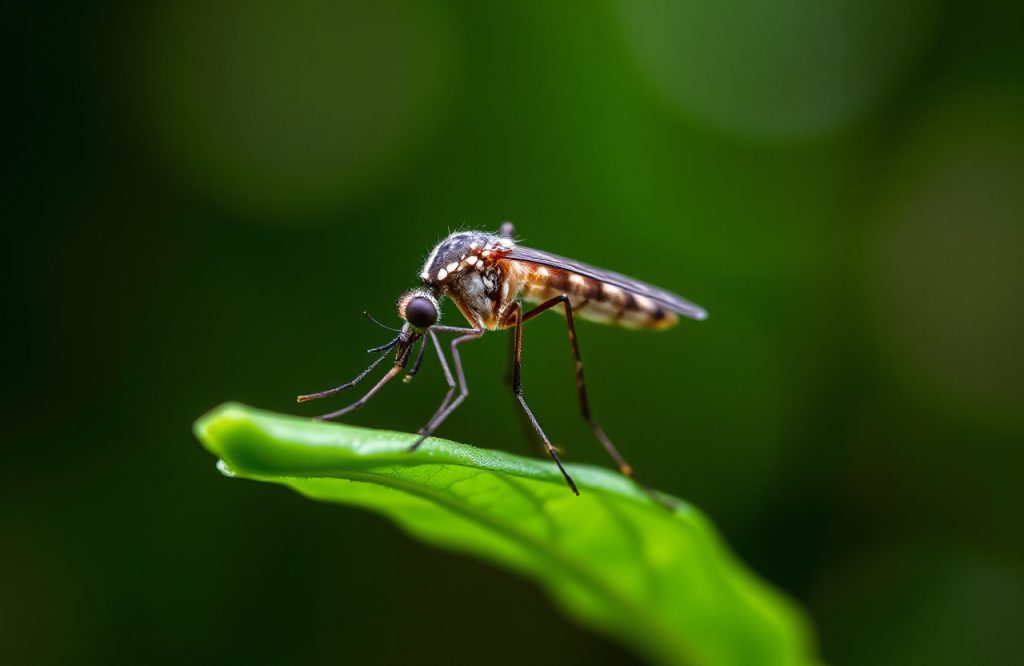
Study Proposes New Vaccine Strategy Against Arboviruses
Overview of Arbovirus Infections
A forthcoming study advocates for the development of vaccines that target mosquito salivary proteins instead of the viruses found in their saliva. Arbovirus infections account for 17% of all communicable diseases in humans, leading to approximately one billion cases and one million deaths each year. Arboviruses are transmitted by insects to vertebrate hosts, predominantly mammals, with mosquitoes, ticks, and sandflies serving as the most common vectors. Notable mosquito-borne viruses include dengue, yellow fever, West Nile, Zika, and chikungunya, which have contributed to recent outbreaks and epidemics, posing a significant global health challenge. Among these, dengue is the most clinically relevant arbovirus, infecting around 390 million individuals annually, resulting in nearly 100 million symptomatic cases.
Current Vaccine Landscape
At present, vaccines are available for only three arbovirus infections: tick-borne encephalitis, Japanese encephalitis, and yellow fever. Although dengue virus vaccines have been evaluated, the complexity of the four dengue subgroups and their genetic similarities to the Zika virus necessitate further research. The development of viral protein-based vaccines has faced challenges due to the complex interactions between the vector, arbovirus, and host. Consequently, some researchers are advocating for the use of salivary proteins to create “universal” arbovirus vaccines.
Research Insights from American Scientists
American researchers have recently completed a review study, set to be published soon in The Journal of Infectious Diseases. The authors of this article review existing literature and promote the research and development of vaccines leveraging salivary proteins.
The Role of Salivary Proteins in Arbovirus Infectivity
Mechanism of Infection
Insect saliva plays a crucial role in the infection process by enhancing the infectivity of the carried arbovirus. Vaccination using insect saliva could guide the host’s immune response to future encounters with mosquito saliva, potentially blocking disease transmission or eliminating pathogens at the bite site. This approach could provide pan-viral protection against specific vectors, such as Aedes aegypti, which is responsible for transmitting dengue, yellow fever, Zika, and chikungunya viruses.
When a mosquito bites, it injects a combination of vasodilators, anticoagulants, and antigenic proteins that manipulate the host immune response. This manipulation diverts the immune response away from effectively combating viral infections, allowing the virus to spread more readily. Experimental models in mice have shown that injections of mosquito saliva combined with the West Nile virus result in more severe disease compared to injections of the arbovirus alone, highlighting the significance of salivary proteins in enhancing arbovirus infectivity.
Salivary Antigens in Vaccine Development
Insights from Other Vector-Borne Diseases
Diseases such as malaria, caused by Plasmodium sp., and leishmaniasis, caused by Leishmania sp., are transmitted by insects but involve protozoa rather than arboviruses. Research on mouse models for these diseases indicates that repeated exposure to vector saliva can shift the immune response from a non-protective to a protective pattern, reducing disease severity. This suggests that immunizing vertebrates with salivary proteins could modulate the immune response to subsequent mosquito saliva exposure. The resulting antibodies against salivary proteins could enhance the protective immune response and decrease arbovirus infectivity.
Research on Saliva from Other Arthropods
The saliva of sand flies has been extensively studied, revealing that the parasite Leishmania sp. is transmitted more effectively in naïve animals than in those exposed to sand fly saliva, due to the production of protective saliva antibodies. Beagles and macaques immunized with sand fly salivary proteins exhibited robust and lasting cellular immunity, resulting in a protective immune response against visceral and cutaneous leishmaniasis. Furthermore, various mammalian species have developed “tick immunity” through anti-salivary gland antibodies following repeated vector exposure.
While vaccines exist for tick-borne encephalitis viruses, no vaccines are available for other significant tick-borne diseases, including Lyme disease, typhus, and Crimean-Congo hemorrhagic fever. Currently, human studies exploring mosquito salivary protein-based vaccines have not been published, although some phase 1 clinical trials are underway with healthy volunteers in non-endemic regions.
Challenges in Vaccine Development
Research conducted in dengue-endemic areas of South America indicates that immune responses to Aedes mosquitoes are short-lived without ongoing exposure to these vectors, presenting challenges for vaccine development. However, as evidenced by studies in leishmaniasis, combining pathogen-targeting vaccines with vector salivary antigens may yield promising results, potentially paving the way for future arbovirus vaccines.
Conclusion
The exploration of mosquito salivary proteins as a basis for vaccine development represents a significant advancement in the fight against arbovirus infections. Continued research in this area may lead to innovative strategies that enhance vaccine efficacy and offer broader protection against vector-borne diseases.
Written by Gustavo Caetano, B.Sc., M.Sc.
Reference: Manning J E, Morens D M, Kamhawi S, Valenzuela J G, Memoli M. Mosquito saliva: the hope for a universal arbovirus vaccine? The Journal of Infectious Diseases (Manuscript version) 2018.