Advancements in Spinal Cord Injury Recovery
Challenges in Recovery and Paralysis
Recovering from spinal cord injuries presents significant challenges, often leading to paralysis. In California, researchers are exploring the potential of neural stem cells for repairing spinal cord injuries and their interactions within the central nervous system.
Understanding Axon Regeneration
The regeneration of axons, the projections from brain nerve cells, is hindered by various inhibitory molecules. Research is focused on identifying these molecules and finding ways to target them to promote axon regeneration in the brain. Experimental evidence suggests that neural stem cells can facilitate axon regeneration after spinal cord injuries, leading researchers to further investigate the interactions between axons and myelin.
Axons and Myelin: Key Components in Nerve Function
Defining Axons and Myelin
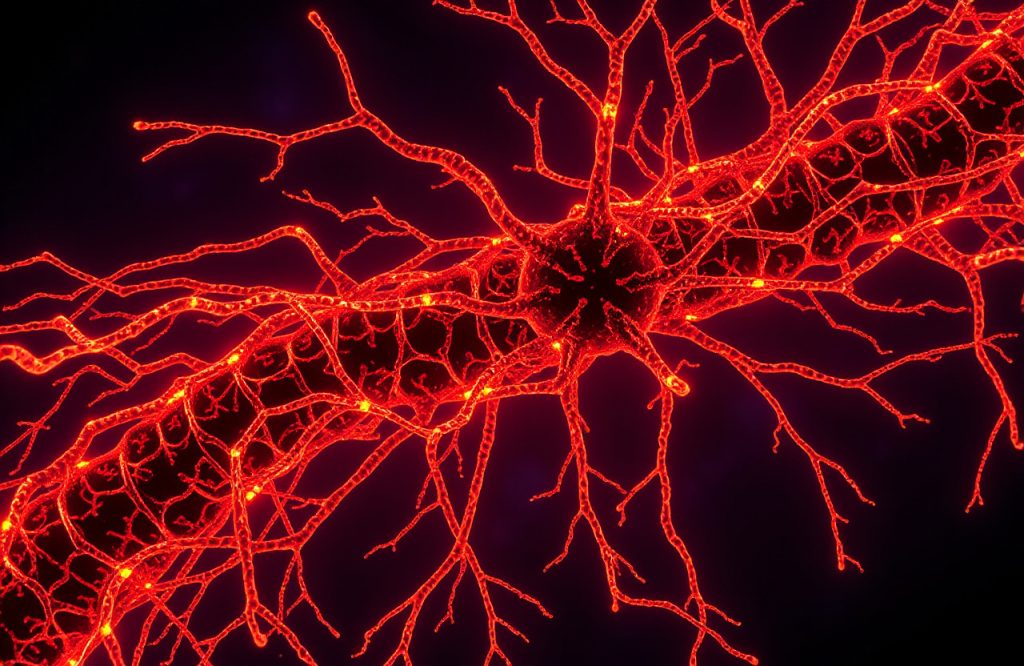
Axons are the elongated parts of nerve cells responsible for transmitting impulses from the cell body to other cells. Myelin, a fatty layer surrounding the axons, enhances the transmission of these impulses within the central nervous system. Although myelin is believed to inhibit axon regeneration, the dynamics of its interaction with axon growth remain inadequately understood.
Research Findings on Myelin’s Role
A research team in California examined the influence of a myelin substrate on axons derived from neural stem cells in vitro. Their findings, published in the journal Science Translational Medicine, revealed significant results.
Impact of Myelin on Axon Length
The researchers utilized neural stem cells to generate nerve cells and cultured them on substrates containing myelin from rats or monkeys. Remarkably, they found that myelin notably increased the length of the axonal projections. Additionally, the extent of nerve cell outgrowth was influenced by the developmental age of the neural stem cells, with younger cells demonstrating greater responsiveness to myelin.
Potential for Neural Stem Cell Therapy
Identifying Key Components for Outgrowth
The research team also investigated which components of myelin contributed to the increased nerve cell projections. They identified a crucial regulator, neuronal growth regulator 1 (Negr1), as a significant factor responsible for promoting outgrowth. This component is vital for the rapid increase in nerve cell projections before myelin begins to exert its inhibitory effects.
Clinical Implications of the Research
These findings suggest that using neural stem cells in conjunction with a myelin substrate represents a promising approach for repairing spinal cord injuries. This innovative strategy could have clinical applications in treating spinal cord injuries in the future.
Conclusion
The exploration of neural stem cells and their interaction with myelin offers new hope for spinal cord injury recovery. With continued research, these insights may lead to effective therapies for individuals affected by such injuries.
Written by Ingrid Qemo, PhD
Reference: Poplawski, G.H.D., Lie, R., Hunt, M., et al. 2018. Adult rat myelin enhances axonal outgrowth from neural stem cells. Science Translational Medicine. doi:10.1126/scitranslmed.aa12563.