Regulatory Landscape of Lab-Grown Meat
Introduction to Lab-Grown Meat
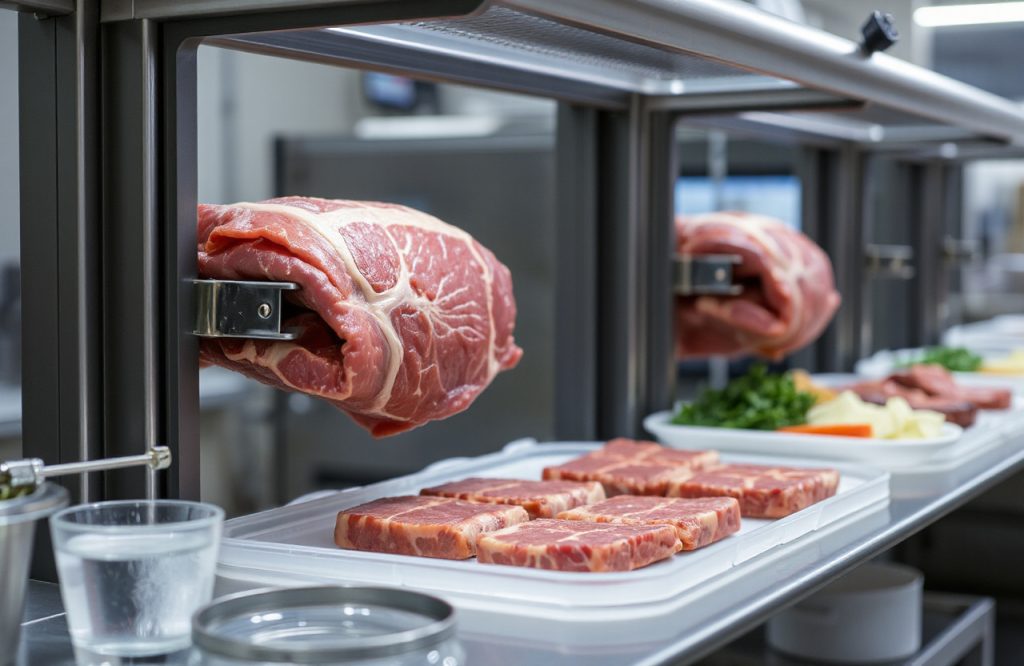
A recent article in Science examines the regulatory framework surrounding lab-grown meat. In the United States, meat companies are developing prototypes for this innovative type of meat, which is cultivated in laboratory settings. Unlike imitation meat, which is primarily plant-based and designed to mimic the taste and appearance of meat, lab-grown meat consists of actual animal cells. These cells are cultivated to form tissue similar to that found in traditional meat products.
Benefits of Lab-Grown Meat
Advocates for lab-grown meat argue that its adoption could lead to a significant decrease in animal slaughter. Additionally, they highlight potential secondary benefits, including reduced energy consumption in farming and a lower output of harmful greenhouse gases, contributing to a more sustainable food system.
Regulatory Challenges
One of the key challenges associated with lab-grown meat is defining what constitutes “meat” and establishing appropriate regulations. The U.S. Department of Agriculture (USDA) oversees poultry and livestock, while the U.S. Food and Drug Administration (FDA) is responsible for regulating cell-based products. Recently, a bill was introduced proposing that the USDA take charge of regulating products derived from poultry and livestock cells. However, members of the agriculture subcommittee have expressed concerns about their lack of expertise in this specific area.
Need for Clarity
Given the rapid advancement of lab-grown meat technologies, it is essential to clarify regulatory responsibilities to ensure that these products can reach the market effectively.
Author Information
Written by Monica Naatey-Ahumah, BSc.
Reference
Servick, K. (May 10, 2018). As lab-grown meat advances, U.S. lawmakers call for regulation. Science Magazine. Retrieved from http://www.sciencemag.org/news/2018/05/lab-grown-meat-advances-us-lawmakers-call-regulation.