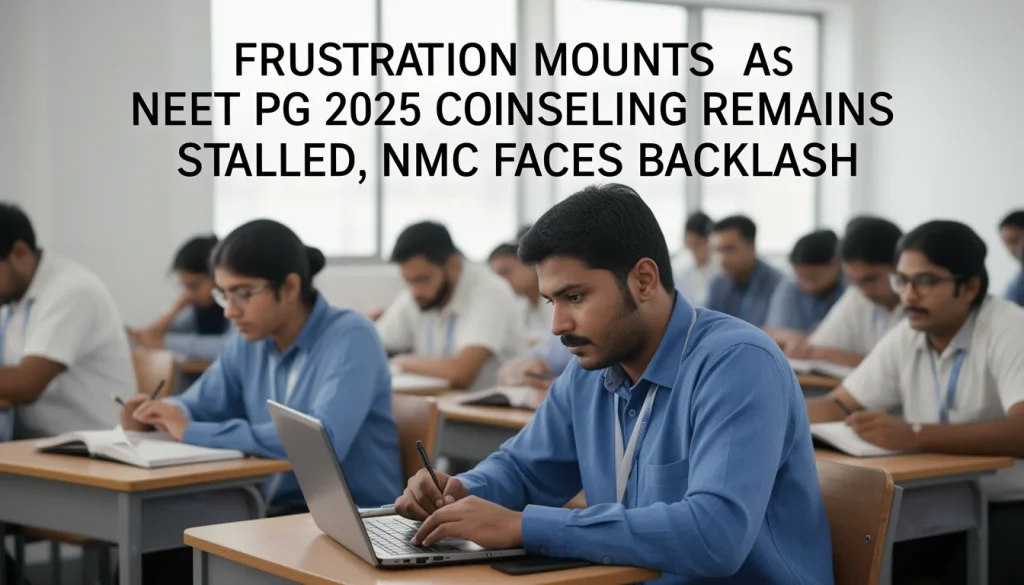
NEET PG 2025 counselling remains on hold, leaving over two lakh graduates in uncertainty
Over two months after NEET PG 2025 was administered, counselling for admission to MD and MS programmes has still not begun, leaving more than two lakh medical graduates unsure about their immediate academic and professional futures. The delay has been linked to ongoing Supreme Court proceedings concerning transparency in the examination and to pending approvals from the National Medical Commission (NMC) for seat allocations and new medical colleges. The Medical Counselling Committee (MCC), which conducts the All India Quota (AIQ) counselling, recently informed state authorities that the NMC asked the committee to pause the process, according to medichelpline reporting.
Primary reasons cited for the delay
Officials at a state selection committee attributed the hold-up to two interrelated factors. First, a pending petition before the Supreme Court that raises questions about transparency and related issues in the conduct of NEET PG is still being adjudicated. Second, the NMC has yet to finalize and approve the addition of newly established medical colleges and the proposed increase in MD/MS seat capacity in existing institutions for the 2025–2026 academic year. Both factors are being cited as reasons why counselling cannot proceed at this time.
MCC’s role is central to coordinating AIQ counselling logistics and seat allocation; however, it has indicated that it cannot move forward until the regulatory body (NMC) provides the necessary clearances and until the legal uncertainty is resolved. State-level officials say these dependencies are the root causes of a widespread delay that is affecting aspirants nationwide.
Reactions from aspirants and medical professionals
The prolonged postponement has prompted vocal frustration among postgraduate aspirants and practising doctors. Social media platforms, including X, have been used to express dissatisfaction and demand accountability. One user described the recurring delays as a “circus,” highlighting a pattern of postponed exams, delayed results, and late starts to counselling that push candidates’ timelines back by months. Another user questioned the efficacy of repeated legal petitions, asking why cases continue to be filed if they do not produce timely remedies for students.
Representatives of medical bodies and doctor associations have also publicly commented. The chairperson of the United Doctors Front (UDF), Dr. Lakshya Mittal, stressed the systemic nature of the delays and called for a practical and technical roadmap to prevent annual disruptions. He emphasized the need for a foolproof counselling mechanism without technical glitches and said the UDF plans to seek clarity from the Union Health Ministry.
The national secretary of a junior doctors’ network within a major medical association, Dr. Indranil Deshmukh, pointed to the wider implications of delayed counselling for academic continuity and healthcare staffing. He reiterated the importance of timely counselling to maintain the pipeline of trained postgraduates who support the health system, while also expressing confidence in the leadership of the NMC and MCC to expedite the process in the students’ and profession’s best interests.
Allegations of administrative vacancies and governance concerns at NMC
Amid the procedural delays, the NMC has faced criticism regarding its internal functioning and staffing. Leaders of a doctors’ federation raised concerns on X about the NMC’s failure to submit an assessment report to the MCC and questioned whether the commission is operating with an adequate complement of staff. A senior figure associated with the federation alleged that the NMC’s postgraduate (PG) board is functioning with a single member and that all positions on the undergraduate (UG) board are vacant. These claims, presented as critiques by association leaders, underscore the governance frustrations voiced by sections of the medical community.
One critic further questioned the moral authority of the NMC to grant permissions to colleges amid these governance concerns, referring to the perceived absence or limited presence of senior NMC officials. These are serious allegations made in public forums by professional representatives; they have intensified calls for transparency and prompt administrative action.
What stakeholders are asking for and next steps
Doctors’ groups, aspirants and state officials are collectively urging clear timelines, greater accountability and immediate action from the NMC and MCC to enable counselling to commence once legal and regulatory hurdles are cleared. Calls include:
– A definitive roadmap and timelines for completing approvals related to new colleges and seat increases.
– Expedited resolution or interim mechanisms to manage counselling in the context of the ongoing court matter, while ensuring fairness and transparency.
– Clarification on the administrative capacity and leadership status within the NMC to restore confidence among students and institutions.
The UDF has indicated it will seek direct clarification from the Union Health Ministry. Meanwhile, the MCC remains constrained by both the pending Supreme Court proceedings and the NMC’s pending approvals. Until those dependencies are resolved, thousands of postgraduate aspirants will continue to face uncertainty about admissions, academic progression and downstream impacts on healthcare workforce planning.
As events develop, affected candidates and institutions are watching closely for official communications from the MCC, the NMC and the courts that will determine when counselling can finally proceed. medichelpline will continue to monitor and report developments related to the NEET PG counselling timeline and regulatory actions.