Understanding Autism Spectrum Disorder and Neural Connections
Overview of Autism Spectrum Disorder
Autism spectrum disorder (ASD) is a developmental condition that significantly impacts a substantial segment of the population, affecting approximately one in 59 children. This disorder is characterized by challenges in social interactions, repetitive behaviors, communication issues, and difficulties in interpreting non-verbal signals. ASD is typically diagnosed around school age, often delaying early intervention that could mitigate the disorder’s effects.
Challenges in Understanding Autism
While the behaviors associated with autism are well-documented and can be identified through neuropsychological assessments, the underlying causes remain largely unclear. A small percentage of autism cases are linked to specific genetic mutations, whereas most appear to originate from intricate interactions involving multiple genetic factors and brain development during infancy. These changes can commence even before birth, influencing the formation of neural connections.
The Role of Neurons in Brain Functionality
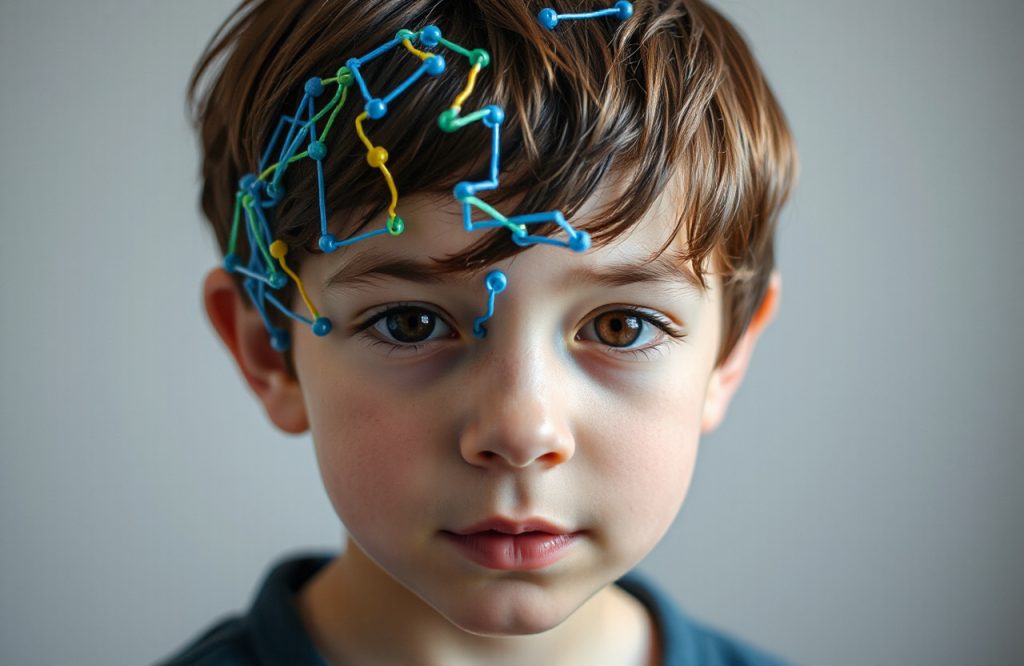
Neurons, the fundamental cells in our brains, facilitate our ability to perceive, move, and think through their extensive branching structures that interconnect with other neurons. These connections are crucial for enabling complex brain functions, analogous to how connections within a computer chip allow for data processing and graphic creation. Disruptions in these connections can lead to either hyperconnectivity or hypoconnectivity, affecting communication between brain areas and potentially resulting in various neurological disorders, including ASD.
Social Awareness and Visual Processing in ASD
Social Interaction Difficulties
A prominent symptom of ASD is diminished social awareness, where individuals struggle to recognize emotions and non-verbal cues from others. This limitation complicates social interactions, often resulting in perceived awkwardness or disconnection. A common manifestation of this challenge is reduced eye contact during exchanges.
Research on Brain Connectivity
Functional magnetic resonance imaging (fMRI) studies in adults have revealed below-average connectivity between brain regions responsible for social engagement and those that interpret visual information, providing insights into the social difficulties associated with ASD. However, research focusing on very young children has been limited due to the complexities involved in diagnosing ASD at an early age.
Insights from Recent Research
A recent study published in the eLIFE journal has advanced our understanding of neural development in children with autism. The researchers examined toddlers with a specific subtype of ASD, discovering brain connectivity issues that correlate with the social challenges these children face. Utilizing computer-assisted eye-tracking technology, the study monitored where children focused their attention on a split-screen video—one side displaying children interacting and the other showing abstract geometric patterns.
GeoPref ASD and Its Implications
One of the subtypes, known as GeoPref ASD, affects about 20% of children with autism, who show a preference for geometric patterns over social interactions. fMRI scans of GeoPref toddlers indicated reduced signaling between brain regions linked to social interest and visual analysis compared to typically developing peers and other children with ASD. This hypoconnectivity may account for the lower performance in social interaction assessments among children with GeoPref ASD.
Future Directions in ASD Diagnosis and Intervention
Potential for Early Diagnosis
The identified lack of connectivity between social and visual brain centers suggests the possibility of predicting which children may develop symptoms of GeoPref ASD through non-invasive brain imaging tests. Early diagnosis could facilitate the creation of tailored intervention plans aimed at enhancing connectivity within these critical brain areas.
Significance of Early Intervention
Intervening early with children exhibiting ASD symptoms could significantly reduce the impact of the disorder as they grow. The promising findings from this research have inspired ongoing collaborations for clinical testing, indicating that a new method for diagnosing ASD by evaluating neural connections might soon be available, even for toddlers.
Conclusion
These developments in understanding the neural underpinnings of autism present exciting possibilities for improving early diagnosis and intervention, aiming to support children with ASD more effectively as they navigate their social environments.
References
Lombardo, M., & et al. (2019). Default mode-visual network hypoconnectivity in an autism subtype with pronounced social visual engagement difficulties. Retrieved 20 December 2019, from https://elifesciences.org/articles/47427
In some children with autism, ‘social’ and ‘visual’ neural circuits don’t quite connect. (2019). Retrieved 20 December 2019, from https://www.eurekalert.org/pub_releases/2019-12/uoc–isc121719.php
What Is Autism? | Autism Speaks. (2019). Retrieved 20 December 2019, from https://www.autismspeaks.org/what-autism
Image by Colin Behrens from Pixabay