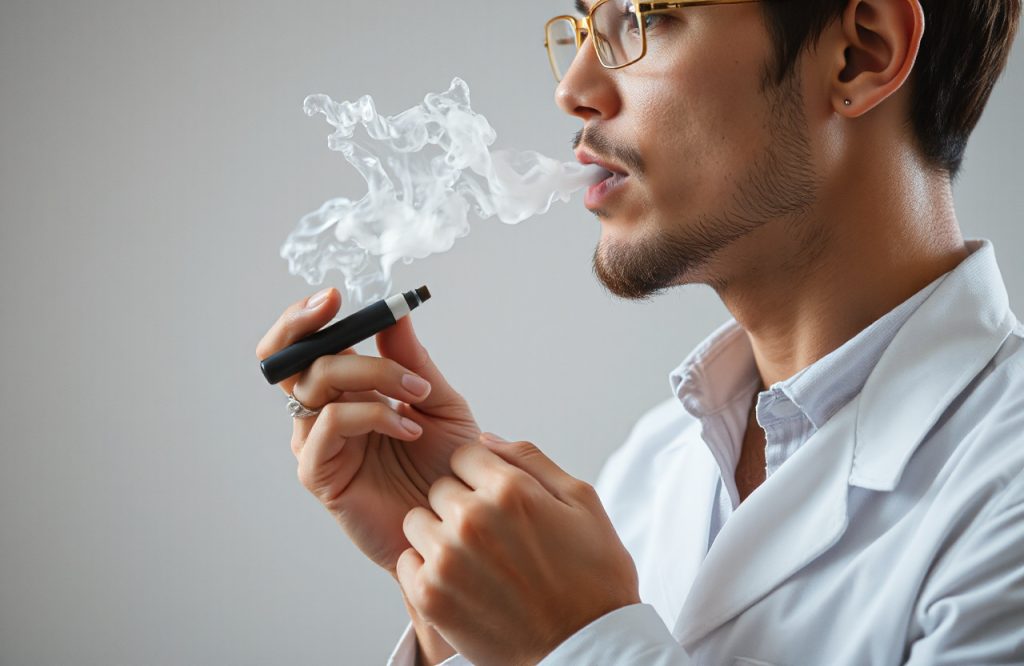
Vaping Linked to Severe Lung Damage in Adolescents
Case Study Overview
A recent case study highlights the serious health risks associated with vaping, suggesting that it can lead to irreversible lung damage. This alarming conclusion is drawn from the case of a 17-year-old male who rapidly deteriorated from a previously healthy state to requiring life support within weeks.
Patient’s Initial Symptoms
The patient initially exhibited symptoms resembling pneumonia, including a persistent cough, fever, and difficulty breathing. After receiving antibiotics, he was discharged, only to return to the hospital with worsening respiratory conditions, such as increased labored breathing, a rapid heart rate, low blood oxygen levels, and abnormal lung sounds. As his condition worsened, medical professionals placed him on ECMO (extracorporeal membrane oxygenation), a form of respiratory life support.
Diagnosis Challenges
Doctors suspected severe bronchiolitis—characterized by inflammation and obstruction of small airways—but found no signs of infection. This prompted them to explore alternative causes for the life-threatening condition. It was revealed that the patient had been vaping daily for the previous five months, using various flavored cartridges and occasionally adding THC.
The Risks of Flavor Cartridges
The flavored cartridges used by the patient contained diacetyl, a chemical linked to a severe lung condition known as bronchiolitis obliterans, often associated with workers in microwave popcorn factories. This condition, commonly referred to as “popcorn lung,” leads to irreversible airflow obstruction and inflammation in the lungs.
Patient Recovery and Follow-Up
After receiving anti-inflammatory treatment, the patient was discharged from the hospital 47 days post-admission. However, during a follow-up months later, signs of lung disease consistent with bronchiolitis obliterans were detected.
Investigating the Cause of Lung Injury
Due to the risks involved, a lung biopsy was not performed, preventing a pathological confirmation of “popcorn lung.” Furthermore, the vaping products had been discarded, eliminating the possibility of testing the cartridges. Nonetheless, the doctors concluded that vaping was the likely cause of the patient’s irreversible lung damage.
Research and Regulatory Concerns
Currently, there is a lack of research regarding the effects of various substances in e-cigarettes when inhaled. While some of these substances are considered safe for ingestion, their impact when aerosolized remains largely unknown. Notably, diacetyl has been detected in e-cigarettes at levels exceeding recommended safety limits, with potential toxicity for lung tissue.
Advocating for Future Safety
In light of these findings, the authors of the case study are advocating for stricter regulations on the marketing and sale of e-cigarettes, including a potential ban on flavored cartridges. The Canadian Heart and Stroke Foundation is also calling for increased government funding to research e-cigarettes and e-liquids, aiming to ensure safer vaping practices.
Reporting to Health Authorities
The authors have reported this case of vaping-related lung injury to Health Canada and the Government of Canada, underscoring the need for urgent attention to this public health issue.
References
Landman, S., Dhaliwal, I., Mackenzie, C., Martinu, T., Steele, A., and Bosma, K. (2019). Life-threatening bronchiolitis related to electronic cigarette use in a Canadian youth. Canadian Medical Association Journal, p.cmaj.191402.
EurekAlert!. (2019). New type of e-cigarette vaping injury described in CMAJ. Available at: https://www.eurekalert.org/pub_releases/2019-11/cmaj-nto112019.php [Accessed 29 Nov. 2019].
Image by Lindsay Fox from Pixabay.