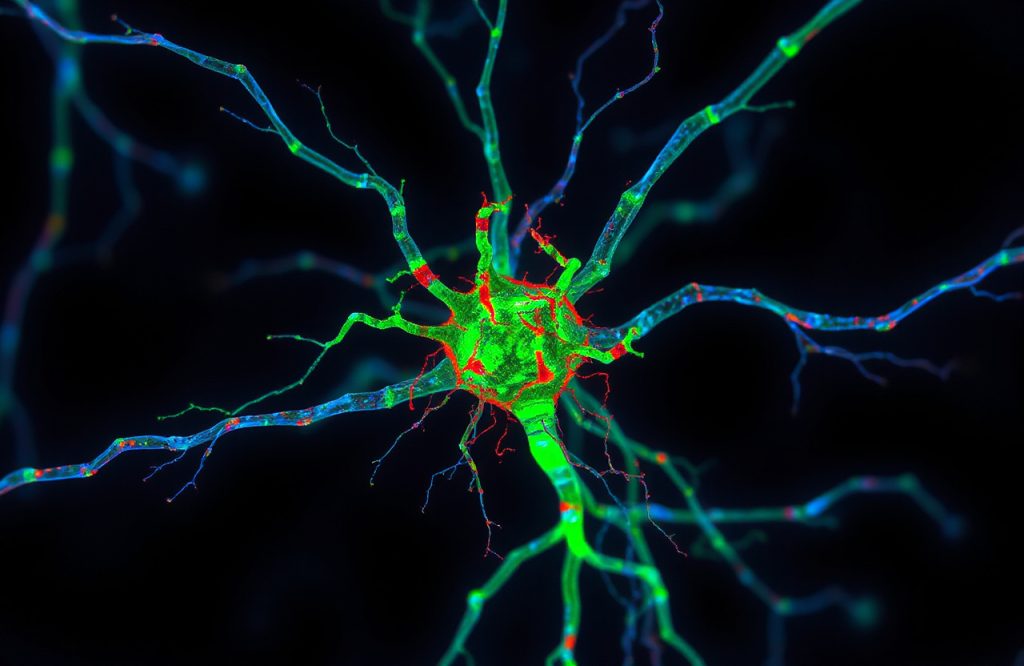
New Insights into Neurogenesis in the Human Hippocampus
Understanding the Hippocampus and Neuronal Development
For some time, researchers have held the belief that the hippocampus is capable of continuously generating new nerve cells. A recent study focused on the dentate gyrus region of the hippocampus aims to explore neuronal development across the human lifespan. Neurons, which are responsible for transmitting electrical impulses, are created throughout adulthood in certain mammals, including birds and rodents. The hippocampus, a seahorse-shaped structure in the brain, plays a crucial role in memory and learning. This phenomenon of producing new neurons in adulthood is known as adult neurogenesis.
Evidence of Neurogenesis in Humans
Initial evidence supporting adult neurogenesis in humans emerged in 1998 from the brains of deceased cancer patients who had been administered bromodeoxyuridine, a chemical that labels newly divided cells. This chemical revealed a scattering of newly formed neurons in the hippocampus. A subsequent study in 2013 by Jonas Frisén’s lab at the Karolinska Institute in Stockholm reinforced this notion by employing carbon dating techniques on neurons from the brain tissues of 55 deceased individuals. The researchers estimated that humans replace approximately 700 neurons daily in the dentate gyrus, a region thought to encode memories.
New Findings Challenge Previous Understanding
A new and contentious study published in Nature, and summarized in Science, suggests that the generation of new neurons may cease after early adolescence. Led by Dr. Alvarez-Buylla from the University of California in San Francisco, an international research team spent five years collecting brain tissue samples from 59 donors who had passed away or had tissue removed during epilepsy surgery. They utilized fluorescent antibodies to identify proteins specific to various neuronal maturity stages and examined the characteristic shapes of young neurons using an electron microscope.
Decline of Neuronal Production in Young Adulthood
The researchers discovered substantial evidence of neurogenesis in the dentate gyrus during prenatal development and in newborns, with an average of 1,618 young neurons per mm² of dentate gyrus tissue at birth. However, there was a marked decline in the number of newborn cells during early infancy, with samples from one-year-old infants showing five times fewer new neurons than those from newborns. By the age of seven, the production of new neurons had decreased further, resulting in only about 2.4 new cells per mm² in 13-year-olds, and effectively ceasing entirely in adulthood.
Comparative Findings in Non-Human Primates
To validate these findings, Yang Zhengang’s research group examined neurogenesis in the hippocampi of ten macaque monkeys of varying ages. Their findings mirrored those observed in humans, revealing a significant decrease in new neuron production from birth to two years of age, with complete cessation by around seven years.
Reevaluating Previous Research on Neuronal Development
The authors of the study suggest that earlier research may have misidentified immature neurons, as the proteins used to label these cells in animal studies do not function the same way in humans. Additionally, factors such as the health status, exercise habits, and stress levels of the donors may have introduced biases in previous studies.
Future Directions in Neurogenesis Research
In the coming years, researchers plan to replicate this study to confirm these findings. Technological advancements and innovative approaches will be essential in furthering the understanding of hippocampal neurogenesis.
Written by Debra A. Kellen, PhD
References:
(1) Sorrells, S. F., Paredes, M. F., Cebrian-Silla, A., Sandoval, K., Qi, D., Kelley, K. W., … & Chang, E. F. (2018). Human hippocampal neurogenesis drops sharply in children to undetectable levels in adults. doi:10.1038/nature25975
(2) Underwood, Emily. (2018). “Study questions whether adults can really make new neurons.” Vol 359, Issue 6382 doi:10.1126/science.aat5219