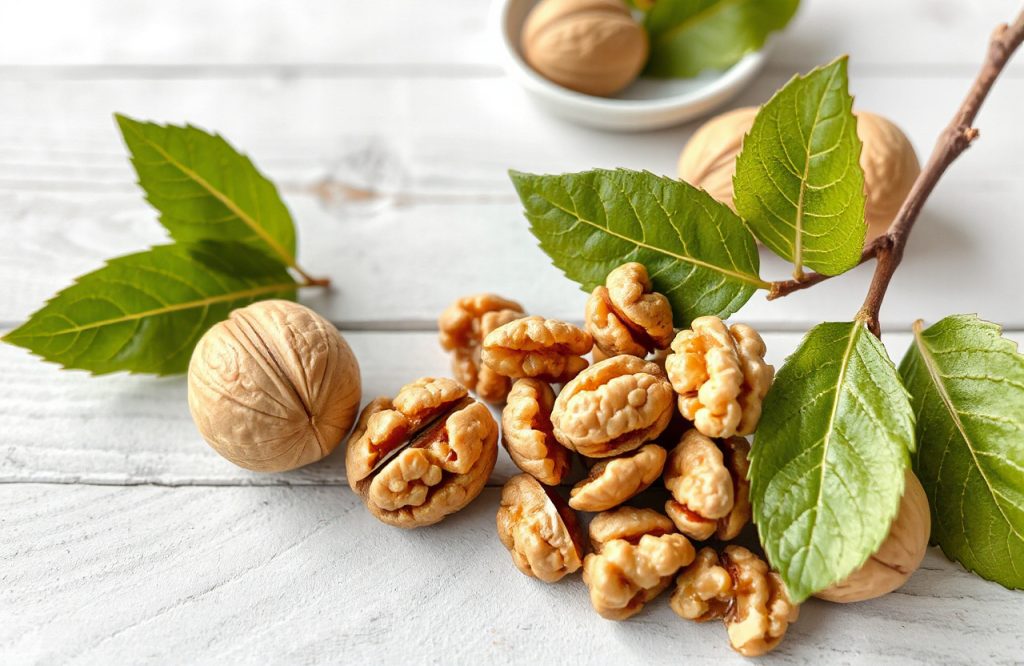
Study Reveals Benefits of Walnuts for Gut Microbiota and Heart Health
The Importance of Gut Microbiota
A recent study published in the Journal of Nutrition highlights the potential benefits of walnuts on gut microbiota and cardiovascular health. The gut microbiota, a complex ecosystem comprising over 100 trillion microorganisms, plays a vital role in various bodily functions, including food digestion, metabolism of foreign substances, protection against pathogens, and immune system regulation. Additionally, emerging research links gut microbiota to reduced cardiovascular risk.
Impact of Diet on Gut Microbiota
The composition of gut microbiota is influenced by dietary choices. A diet abundant in fruits, vegetables, and fibers fosters a diverse microbial ecosystem, favoring beneficial microorganisms. Conversely, unhealthy dietary habits can disrupt this balance.
Walnuts and Their Nutritional Profile
Walnuts are particularly rich in healthy polyunsaturated fats, including omega-3 fatty acids like alpha-linolenic acid (ALA), which are associated with cardiometabolic benefits. Furthermore, walnuts contain bioactive compounds such as tannins and fiber that can be metabolized by gut microbiota.
Study Design and Methodology
To explore the health benefits of walnuts, researchers enlisted 42 overweight or obese individuals aged 30 to 65 who were at risk for cardiovascular disease. Participants followed an average Western diet for two weeks and were subsequently assigned to one of three study diets, all designed to include less saturated and unhealthy fat than the Western diet.
Only the first diet incorporated whole walnuts, while the second diet contained a vegetable oil blend with an equivalent amount of ALA and polyunsaturated fatty acids as walnuts. The third diet substituted ALA with oleic acid, a monounsaturated fatty acid. Participants adhered to these diets for six weeks, with breaks every two weeks.
Fecal samples were analyzed 72 hours before the end of the average Western diet and 72 hours before the conclusion of each diet period to assess changes in bacterial composition and abundance.
Findings on Gut Bacteria and Cardiovascular Risk
The study revealed that nine bacterial taxa were enriched following the walnut diet compared to the average Western diet. The second diet resulted in four enriched taxa, while the third diet led to three. Notably, Roseburia, recognized as beneficial bacteria that supports gut lining, was enriched in both the walnut and the second diet, suggesting that polyunsaturated fats, including ALA, may enhance gut health. Other bacteria, like Gordonibacter, increased exclusively following the walnut diet, indicating that walnut bioactive compounds and fibers may significantly influence the gut environment.
The researchers found that the walnut diet was uniquely associated with beneficial changes in gut bacteria and cardiovascular disease risk factors. For instance, higher levels of Lachnospiraceae correlated with reductions in blood pressure, total cholesterol, and non-HDL cholesterol. An increase in Eubacterium eligens was also linked to lower cardiovascular disease risk factors. These results underscore the connection between dietary intake, gut health, and heart health, although the precise mechanisms through which gut microbiota influence cardiovascular risk remain unclear.
Conclusion and References
This study contributes to the growing body of evidence suggesting that diet can significantly impact gut health, which in turn may be linked to cardiovascular well-being.
Written by Maria-Elena Bernal
References:
Tindall, M. A., J, C., Petersen, Kristina S, K.-E., Lamendella, & Regina. (2019, December 18). Walnuts and Vegetable Oils Containing Oleic Acid Differentially Affect the Gut Microbiota and Associations with Cardiovascular Risk Factors: Follow-up of a Randomized, Controlled, Feeding Trial in Adults at Risk for Cardiovascular Disease. Retrieved from https://academic.oup.com/jn/advance-article/doi/10.1093/jn/nxz289/5680186
Walnuts may be good for the gut and help promote heart health. Retrieved from https://www.eurekalert.org/pub_releases/2020-01/ps-wmb011620.php
Rinninella, E., Raoul, P., Cintoni, M., Franceschi, F., Miggiano, G. A. D., Gasbarrini, A., & Mele, M. C. (2019, January 10). What is the Healthy Gut Microbiota Composition? A Changing Ecosystem across Age, Environment, Diet, and Diseases. Retrieved from https://www.ncbi.nlm.nih.gov/pmc/articles/PMC6351938/
Jandhyala, S. M., Talukdar, R., Subramanyam, C., Vuyyuru, H., Sasikala, M., & Nageshwar Reddy, D. (2015, August 7). Role of the normal gut microbiota. Retrieved from https://www.ncbi.nlm.nih.gov/pmc/articles/PMC4528021/#!po=30.0000
Image by Couleur from Pixabay