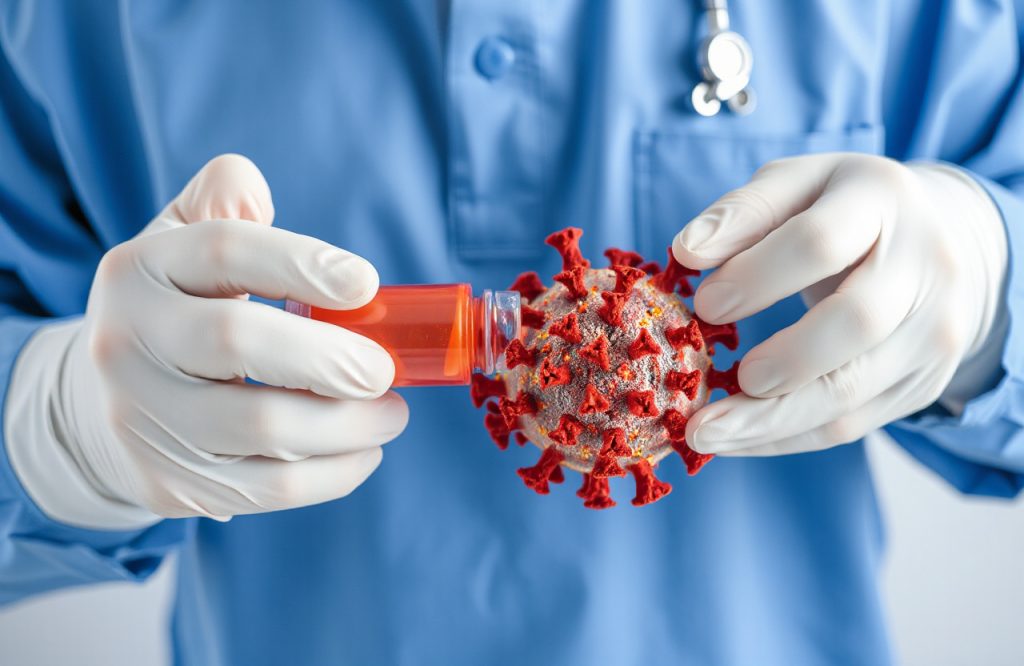
Potential of Probenecid in Combatting COVID-19
Overview of the Study
A recent study conducted by researchers at the University of Georgia proposes that probenecid, a medication commonly used to treat gout, may have applications in fighting COVID-19. This drug has a well-established safety profile, which is advantageous compared to newly developed treatments, as it poses a lower risk of adverse effects.
Mechanism of Action
The research team, led by Ralph Tripp, a GRA Eminent Scholar of Vaccine and Therapeutic Studies at the University of Georgia’s College of Veterinary Medicine, identified a specific gene in human cells that plays a role in viral replication. This gene, known as the organic anion transporter three gene (OAT3), is inhibited by probenecid. In laboratory tests, normal and diseased bronchial epithelial cells (NHBE) and a type of kidney cell called Vero cells (VC) were treated with probenecid. Results indicated a 90% reduction in COVID-19 replication in NHBE cells and a 60% reduction in VC cells.
In Vivo Verification
To further validate the findings, hamster models were administered probenecid to assess its effectiveness against COVID-19 in a living system. The treated hamsters demonstrated significantly lower viral concentrations in their lungs compared to control groups. Throughout the experimentation, no toxic effects were reported, and the dosages used remained within FDA-approved limits.
Implications for Treatment
The significant reduction in COVID-19 viral replication observed with probenecid suggests its potential as a treatment option for mild to moderate COVID-19 cases. Currently, vaccines are the primary defense available to the general public, and while Remdesivir has received FDA approval for emergency use, it is limited to intravenous administration for hospitalized patients. Ralph Tripp commented on the challenges associated with existing treatments, noting their high cost and limited availability, which complicates accessibility for the broader population.
Conclusion
Given probenecid’s established safety and availability, its capacity to significantly reduce COVID-19 replication presents an opportunity to treat more cases than current options allow. However, further research is necessary to evaluate its efficacy in humans before it can be considered a viable treatment for COVID-19.
References
1. Murray, J. et al. (2021). Probenecid inhibits SARS-CoV-2 replication in vivo and in vitro. Scientific Reports, Nature; 11: 18085. Doi: 10.1038/s41598-021-97658-w.
2. Strilchuk, L. et al. (2018). Safety and tolerability of available urate-lowering drugs: a critical review. Expert Opinion of Drug Safety; 18(4): 261-271. Doi: 10.1080/14740338.2019.1594771.
3. Ison, M.G. et al. (2020). Emergency Use Authorization of Remdesivir, The Need for a Transparent Distribution Process. JAMA; 323(23): 2365-2366. Doi: 10.1001/jama.2020.8863.
4. Hataway, J. (2021). Medicine that treats gout could also battle COVID-19. EurekAlert! Accessed Sept. 16, 2021. Retrieved from https://www.eurekalert.org/news-releases/927850.
Image by Miguel Á. Padriñán from Pixabay.