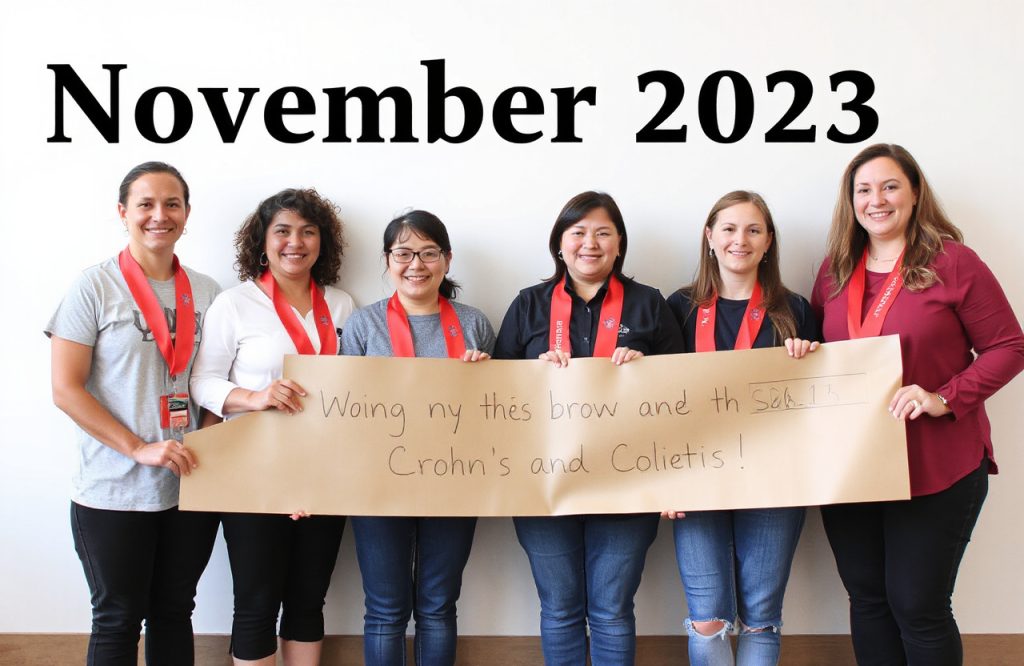
Crohn’s and Colitis Awareness Month
Overview of Inflammatory Bowel Disease
This November, we observe Crohn’s and Colitis Awareness Month, a period dedicated to highlighting the specific challenges faced by individuals with inflammatory bowel disease (IBD). In Canada, IBD affects over 320,000 people, with rates steadily increasing due to an aging population. This growing issue necessitates ongoing research efforts. In response, Crohn’s and Colitis Canada annually aims to raise awareness about this chronic condition and potentially advance towards finding a cure.
Understanding Symptoms of Crohn’s and Colitis
Crohn’s disease and colitis are both classified as types of IBD, characterized by debilitating, lifelong symptoms. The primary difference lies in the location: colitis is restricted to the colon, while Crohn’s can affect any part of the digestive tract. Common symptoms of IBD include:
– Diarrhoea
– Constipation
– Abdominal pain
– Weight loss
– Fever
– Anemia
– Malnutrition
– Rectal bleeding
– Fatigue
– Nausea
– Vomiting
– Joint pain
Mental Health and IBD
An often-overlooked aspect of IBD is its effect on mental health. Research indicates that individuals with colitis or Crohn’s disease are 1.5 to 2 times more likely to receive a psychiatric diagnosis compared to healthy individuals. Many healthcare professionals attribute this correlation to the “gut-brain axis,” a connection between the digestive and nervous systems facilitated by chemical signaling. Consequently, Crohn’s and Colitis Canada emphasizes the need for integrating mental health services into IBD healthcare.
Recent Developments in IBD Research
Ongoing Research Initiatives
Crohn’s and Colitis Canada actively supports innovative scientific research into IBD throughout the year. Funding projects that explore the causes, diagnosis, and treatment options for IBD is a fundamental aspect of their mission. In 2023, several funded projects have shared promising findings, making it an ideal time to review recent advancements in research.
The GEM Project
Researchers from the University of Toronto recently reported significant developments in the Genetic, Environmental, Microbial (GEM) project. This study analyzed the gut bacteria of participants to identify trends among those who developed IBD. Findings published in Gastroenterology revealed distinct differences in gut bacteria between healthy individuals and those with IBD. This insight could be critical for predicting individuals at risk of developing Crohn’s and colitis, with early detection allowing for lifestyle changes to mitigate disease progression.
2023 Impact of IBD Report
In line with IBD Awareness Month, researchers are reviewing the 2023 “Impact of Inflammatory Bowel Disease in Canada” report. Projections indicate that by 2035, 470,000 Canadians will be living with Crohn’s disease or colitis, equating to a new diagnosis every 38 minutes. The report highlights a concerning trend: the fastest-growing diagnoses are among children under six years old. This trend raises alarms for healthcare professionals, particularly given the increasing burden on family members and caregivers due to early onset.
Addressing Barriers to Care
The report also emphasizes that individuals from low socioeconomic backgrounds and Indigenous populations in rural or remote areas face additional obstacles in accessing care. It is crucial for policymakers to consider the perspectives of these often-overlooked groups. An example of effective policy is the Promoting Access and Care through Centres of Excellence (PACE) network, which has been operational since 2016. This initiative aims to enhance care for Canadians with IBD through the establishment of “IBD centres of excellence,” ensuring comprehensive support, including mental health services and nutritional advice.
Combatting Stigma
Many patients express that social stigma surrounding bowel issues contributes to feelings of distress and isolation. The terms “painful” and “isolating” frequently describe their experiences. Thus, IBD Awareness Month serves as an important platform for breaking down the taboos associated with this chronic illness. By increasing awareness and understanding of IBD, we can work towards fostering systemic change.