Global Study on Nut Consumption and Cardiovascular Health
Impact of Diet on Cardiovascular Disease
A comprehensive research study has explored the relationship between nut consumption and cardiovascular disease, as well as overall mortality rates. It is well-established that modifying dietary habits can positively influence cardiovascular health. Previous research has demonstrated that substituting saturated fats with unsaturated fats or plant proteins can effectively lower cholesterol levels and reduce the risk of cardiovascular diseases.
Focus of Previous Studies
While earlier studies primarily focused on populations in Europe and the United States, they do not provide a global perspective, particularly concerning low- to middle-income countries.
Details of the PURE Study
Published in the *American Journal of Clinical Nutrition*, this study utilized data from the Prospective Urban Rural Epidemiology (PURE) study, which encompasses a large and diverse participant base. The PURE study includes adults aged 35 to 70 from sixteen countries across five continents, involving a total of 124,329 participants. Those who did not provide information on nut intake were excluded from the analysis.
Methodology of Data Collection
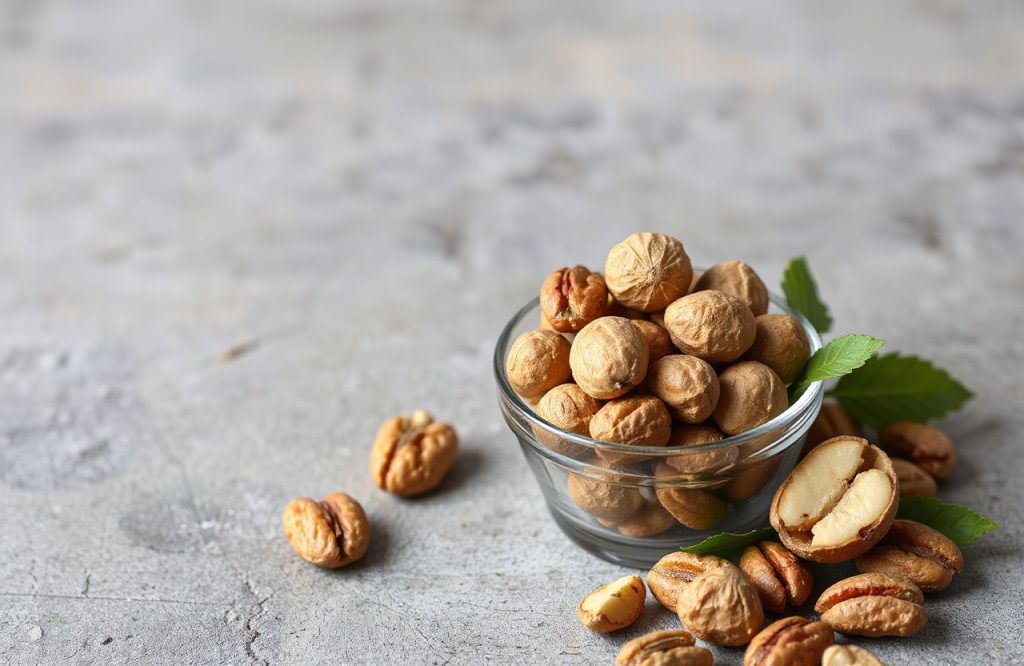
To gather data on nut consumption, standardized food frequency questionnaires were employed, capturing information on various nuts, including almonds, peanuts, walnuts, cashews, pistachios, hazelnuts, and chestnuts. Notably, this selection accounts for 99.5% of global nut consumption. The study analyzed occurrences of cardiovascular-related deaths, nonfatal myocardial infarctions, strokes, and heart failures, while also recording cholesterol levels, heart rates, fasting blood glucose, and blood pressure readings. Participants were monitored from the time they completed the questionnaire until a cardiovascular event occurred or until the study concluded, with an average follow-up period of 9.5 years, ending in July 2019.
Key Findings
The findings indicate that higher nut intake is linked to a lower risk of mortality from both cardiovascular and non-cardiovascular causes. This supports previous studies that identified a similar trend in Europe and the United States. The global scope of the PURE study, which includes participants from various income brackets, offers a broader understanding of this relationship.
Considerations and Limitations
While the study accounted for several variables such as age, sex, location, education level, lifestyle, diet, and family history, it is essential to consider factors like the price and availability of nuts. Nuts are often associated with healthier lifestyles and greater wealth, potentially influencing the findings.
Health Benefits of Nut Consumption
The positive health impacts of nuts are attributed to several factors. They are energy-dense yet low in saturated fats and free from trans fats, which are linked to adverse health outcomes. Additionally, nuts contain plant proteins, fiber, essential minerals, and bioactive compounds that promote health. They also serve as alternatives to sugary snacks when individuals make dietary changes.
Recommendations from Health Organizations
The American Heart Association advocates for nut consumption as part of a diet aimed at preventing high blood pressure. Similarly, Canada’s Food Guide recommends incorporating unsweetened and unsalted nuts and seeds as a protein source. The 2010 Dietary Guidelines for Americans classify nuts as nutrient-dense, high-fiber foods and excellent protein sources.
Conclusion
In summary, the study suggests that increasing the intake of various nuts, as part of a balanced diet, can yield significant health benefits.
References
de Souza, R., Dehghan, M., Mente, A., Bangdiwala, S., Ahmed, S., Alhabib, K., Altuntas, Y., Basiak-Rasała, A., Dagenais, G., Diaz, R., Amma, L., Kelishadi, R., Khatib, R., Lear, S., Lopez-Jaramillo, P., Mohan, V., Poirier, P., Rangarajan, S., Rosengren, A., Ismail, R., Swaminathan, S., Wentzel-Viljoen, E., Yeates, K., Yusuf, R., Teo, K., Anand, S. and Yusuf, S. (2020). Association of nut intake with risk factors, cardiovascular disease, and mortality in 16 countries from 5 continents: analysis from the Prospective Urban and Rural Epidemiology (PURE) study. *The American Journal of Clinical Nutrition*.
Food-guide.canada.ca. (2020). Eat Protein Foods – Canada’s Food Guide. [online] Available at: [Accessed 30 May 2020].
Lichtenstein, A., Appel, L., Brands, M., Carnethon, M., Daniels, S., Franch, H., Franklin, B., Kris-Etherton, P., Harris, W., Howard, B., Karanja, N., Lefevre, M., Rudel, L., Sacks, F., Van Horn, L., Winston, M. and Wylie-Rosett, J. (2006). Diet and Lifestyle Recommendations Revision 2006. *Circulation*, 114(1), pp.82-96.
US Department of Agriculture & US Department of Health and Human Services. (2010). Dietary Guidelines for Americans. Washington, DC.
Image by ExplorerBob from Pixabay.