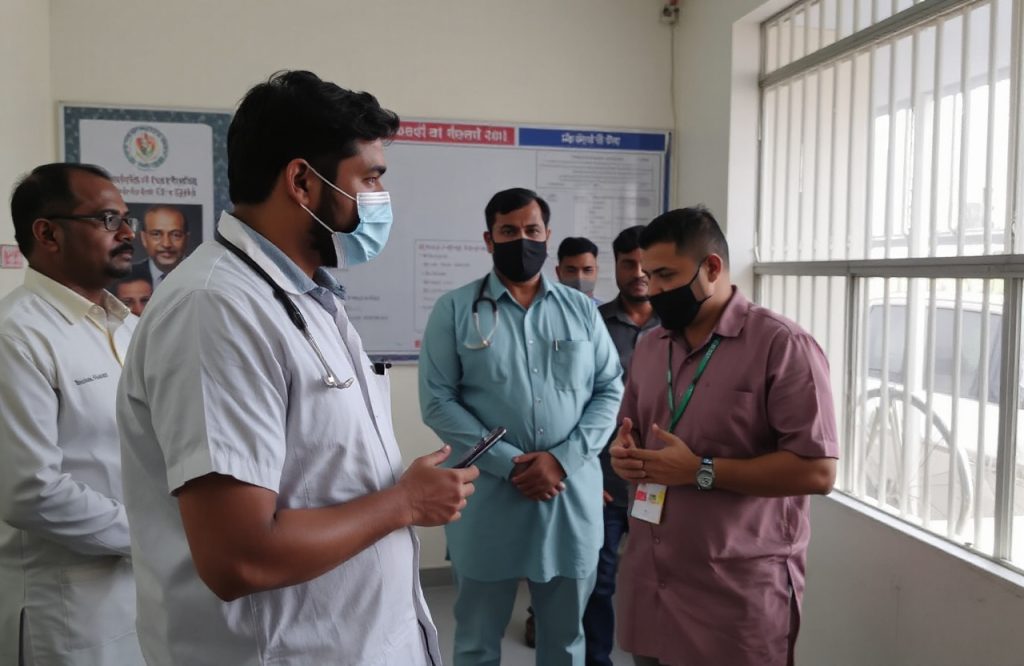
Bhubaneswar: Ongoing Healthcare Service Disruptions in Odisha
Doctors Extend Boycott of OPD Services
Healthcare services at government hospitals throughout Odisha remain significantly disrupted as government doctors, represented by the Odisha Medical Service Association (OMSA), have escalated their protest. Initially starting on December 26 with a one-hour boycott, the doctors have now extended their boycott of Outpatient Department (OPD) services and National Health Mission (NHM) duties to two hours daily, from 9 AM to 11 AM, effective Monday.
Impact on Hospital Services
During the designated boycott hours, OPD services at government hospitals have been suspended. Nonetheless, emergency services, inpatient care, and surgeries are continuing to operate to ensure that critical patients receive the necessary attention.
Threat of Mass Resignation
OMSA has previously warned that failure to address their demands could lead to mass resignations by doctors. The association had first initiated the one-hour boycott of OPD and NHM services and signaled that a full strike could occur in January 2026 if their grievances are not resolved.
Long-standing Demands of OMSA
According to OMSA, the doctors have been waiting for over ten years for their demands to be met, but the government has yet to take substantive action. Despite months of protests, the issues raised continue to be unresolved. The association has indicated that a statewide strike is imminent if their long-standing demands are not addressed by the end of December.
Main Demands of the Doctors
The primary demand from OMSA is for the swift implementation of the Dynamic Assured Career Progression (DACP) system, which would ensure timely promotions for government doctors. Additional requests include the establishment of a KBK exit policy, transparent transfer procedures, cadre restructuring, regular Departmental Promotion Committees (DPCs), safety and security for healthcare professionals, health insurance, and basic amenities.
Other Issues Raised
The association has also called for reforms in Performance Appraisal Reports (PAR), improved administrative practices, uniformity in OPD and emergency services, and active involvement of OMSA in policy discussions. Other significant issues include the revision of allowances, the regularization of ad-hoc doctors, strengthening healthcare institutions, and ensuring justice for veteran doctors.
Broader Impact of the Boycott
The ongoing two-hour boycott is being observed across all levels of government healthcare facilities, including primary health centers (PHCs), community health centers (CHCs), and district headquarters hospitals (DHHs). Previously, the boycott lasted for just one hour, but due to a lack of progress in negotiations, the association has opted to extend the shutdown period.
Government Response
In light of the situation, the state government has formed an inter-departmental committee to thoroughly review the demands presented by the doctors.