Odisha Government Prohibits Strikes by Healthcare Workers
Implementation of Essential Services Act
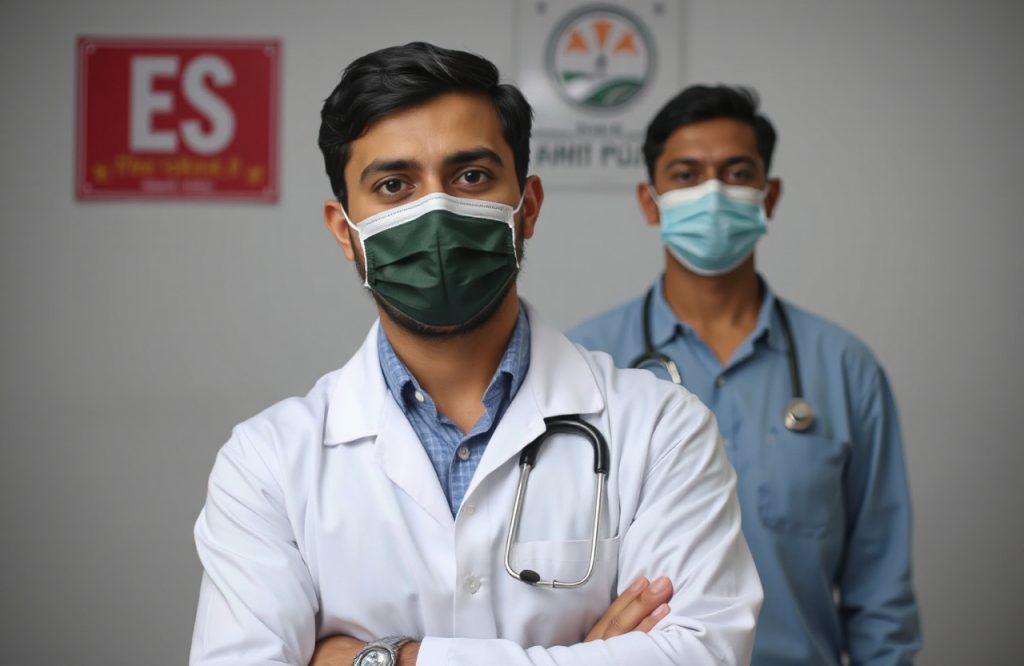
Bhubaneswar: On Tuesday, the Odisha government invoked the Essential Services (Maintenance) Act, 1988, to ban strikes by doctors and healthcare staff. This decision comes as doctors intensify their protests by extending their boycott of outpatient department (OPD) services to two hours daily.
Demands from Healthcare Professionals
The protesting doctors are advocating for pay parity with central government employees, proportional restructuring of job cadres, and additional financial incentives for super-specialists, specialists, and diploma medical administrators.
Details of the Strike Ban
According to an official notification reported by news agency PTI, the government has prohibited strikes in the form of work stoppages by doctors, nursing officers, pharmacists, paramedics, technicians, and Class III and IV employees, including contractual staff, in government hospitals and dispensaries for a period of six months starting Tuesday.
Current Situation of OPD Services
Since December 26, doctors in government hospitals and health centers have been boycotting OPD services, initially for one hour a day. This boycott has now been extended to two hours, from 9 AM to 11 AM, starting January 5. However, emergency services, inpatient care, and surgeries continue to operate without interruption.
Background of the Protests
The ongoing agitation, led by the Odisha Medical Service Association (OMSA), has persisted since November, focusing on a 10-point charter of demands that includes filling vacant positions. Prior to the OPD boycott, doctors protested by wearing black badges to express their grievances.
Government’s Response
The state government implemented the ESMA after the OMSA declined an appeal from Health and Family Welfare Minister Mukesh Mahaling to resume duties, which included an assurance that their demands would be considered. Additionally, the government formed an inter-departmental committee to address the issues raised by the doctors, as reported by PTI.
OMSA’s Stance on the Government’s Offer
The OMSA has rejected both the government’s appeal and the committee proposal, insisting on a written assurance regarding the fulfillment of their demands. According to the organization, the state currently has slightly more than 6,000 government doctors, while the sanctioned strength stands at 15,776, resulting in over 50 percent of positions being vacant. The OMSA noted, “This is putting additional pressure on the existing doctors.”
Additional Demands of the OMSA
In addition to pay parity and cadre restructuring, the OMSA’s demands include postmortem allowances and performance-based incentives, aiming to improve the working conditions and compensation for medical professionals in the state.