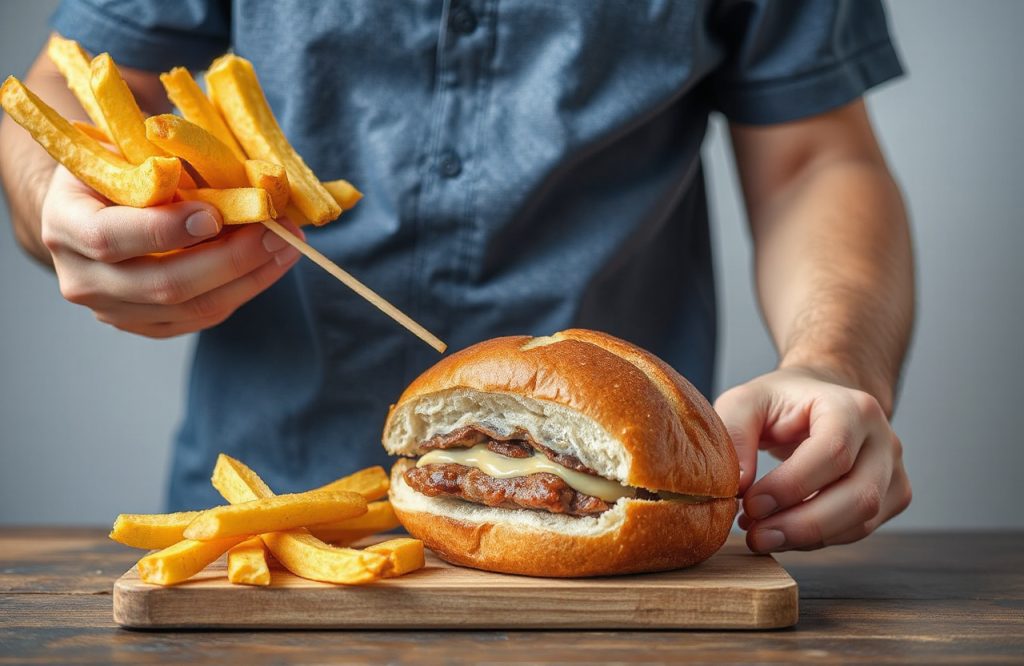
Impact of Processed Foods on American Adults with Excess Weight
Overview of Processed Foods
A recent study conducted by researchers in the United States examined how processed foods affect American adults struggling with excess weight. It was found that ultra-processed foods account for 89% of added sugars and contribute 58% of energy intake in the American diet. These foods are typically industrially manufactured, packaged, and designed for convenience, often being ready-to-eat items such as mass-produced bread, chicken nuggets, cakes, and confectionery.
Misconceptions About “Healthy” Foods
Interestingly, foods often perceived as healthy—such as granola bars, low-fat yogurt, and ready-to-eat meals—can also fall into the ultra-processed category. Ultra-processed foods are characterized by high levels of added sugars, salt, and saturated fatty acids, along with various additives like flavorings, emulsifiers, preservatives, and coloring agents. This raises questions about the role of processed foods in a healthy diet and their nutritional value.
Research Landscape on Ultra-Processed Foods
Few studies have focused on ultra-processed foods as a collective category. Research from various countries, including the UK, US, Canada, Brazil, Chile, and France, consistently indicates that diets high in ultra-processed foods tend to have poorer nutritional quality. The global increase in ultra-processed foods is believed to significantly contribute to the obesity epidemic. However, there is a scarcity of studies that analyze the relationship between excess weight and ultra-processed foods as a whole, rather than limiting the focus to “junk” or fast foods.
Significance of the Study
Given that a significant portion of the typical American diet consists of processed foods, understanding their collective impact on excess weight is crucial. Therefore, American researchers recently conducted a pioneering study to assess the connection between ultra-processed food consumption and excess weight among American adults. The findings were published in the British Journal of Nutrition.
Study Methodology
This national population study included 15,977 adults aged 20 to 64 who participated in the National Health and Nutrition Survey from 2005 to 2014. Researchers gathered data on body measurements, including height, weight, and waist circumference, alongside dietary information. Foods were classified as either ultra-processed or non-ultra-processed based on the NOVA classification, which categorizes foods by the extent of their processing.
Key Findings
The study revealed a notable association between ultra-processed food consumption and a higher likelihood of obesity. Individuals in the highest consumption group were predominantly female, younger, and non-Hispanic white, and they exhibited a higher average BMI, waist circumference, and increased rates of overweight, obesity, or abdominal obesity. Those with a larger proportion of ultra-processed foods in their diet had a higher average energy intake, primarily from sugars, carbohydrates, and saturated fatty acids, while their intake of protein and fiber was lower.
The results indicated that increased consumption of ultra-processed foods was linked to a 1.6 times increase in body mass index (BMI), a greater waist circumference by 4.07 cm, and a 48% higher likelihood of having a BMI indicating overweight status. Furthermore, subjects were found to be 53% more likely to fall into the obesity category and 62% more likely to experience abdominal obesity. This association was observed in both men and women, but was more pronounced among women.
Conclusion and Future Directions
This population study underscores the correlation between the consumption of ultra-processed foods and increased BMI, waist circumference, and the likelihood of being overweight, obese, or having abdominal obesity. While these findings align with previous research, further studies are needed to confirm these results. If validated, this research could enhance clinical practices related to dietary recommendations and weight management strategies.
Written by Lacey Hizartzidis, PhD
Reference: Juul F, Martinez-Steele E, Parekh N, Monteiro CA, Chang VW. Ultra-processed food consumption and excess weight among US adults. Br J Nutr. 2018 May 6:1-11. doi: 10.1017/S0007114518001046.