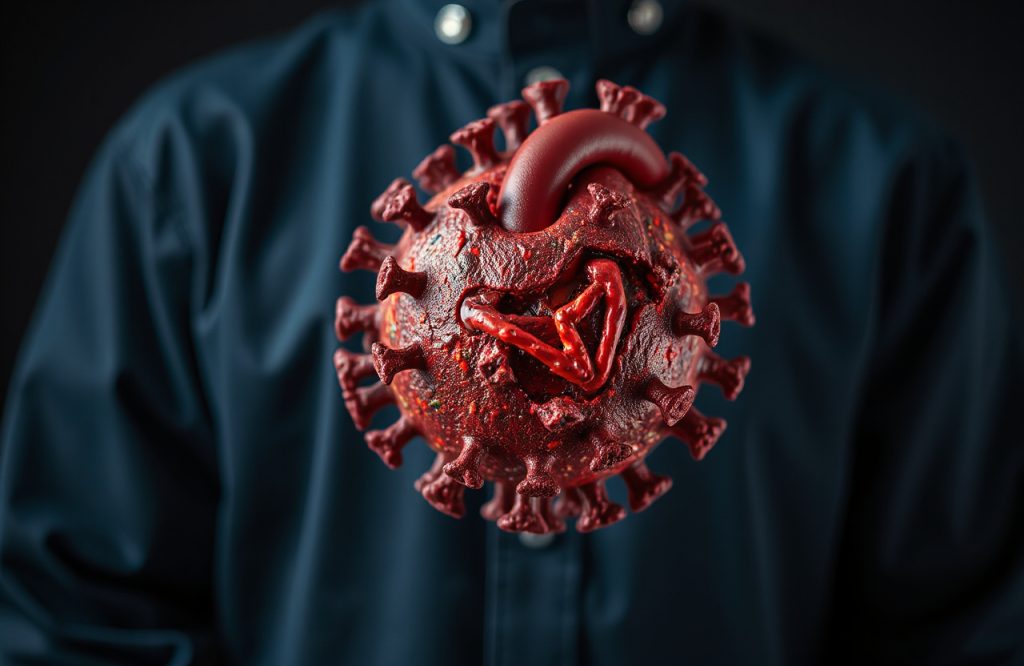
COVID-19 and Heart Damage
Detection of Viral Particles
Recent studies have revealed that COVID-19 viral particles can be found in the heart muscles of affected individuals, as well as in autopsy samples. This heart damage is believed to play a significant role in the symptoms associated with “long haul” COVID-19.
Statistics on COVID-19
As of August 2021, the global count of COVID-19 cases reached approximately 201.75 million, with 4.28 million deaths linked to the virus. Individuals with pre-existing health conditions face a heightened risk of mortality when infected by COVID-19. Specifically, for those with cardiovascular disease, the risk of death escalates from 2.3% to 10.5%.
Understanding Heart Function
Anatomy of a Healthy Heart
To comprehend the impact of COVID-19 on heart health, it is crucial to understand the structure and function of a healthy heart. The heart is a muscular organ comprised of four chambers: the upper atria and the lower ventricles. Blood enters these chambers through four heart valves.
Blood Circulation Process
Blood circulates through the body as follows: it first flows into the right atrium, moves to the right ventricle, and then travels to the lungs to be oxygenated. The oxygen-rich blood returns to the left atrium, flows into the left ventricle, and is then pumped out to nourish the body.
Blood Pressure Dynamics
During each heartbeat, the heart generates pressure to circulate blood. Blood pressure readings consist of two measurements: systolic blood pressure, which reflects the pressure when the heart pumps blood, and diastolic blood pressure, which measures the pressure between heartbeats.
Factors Affecting Blood Pressure
As individuals age, blood vessels may sustain damage. A sedentary lifestyle can lead to plaque buildup within blood vessel walls, resulting in a condition known as atherosclerosis. This narrowing of blood vessels subsequently increases blood pressure.
Role of Hormones in Blood Pressure Regulation
The body produces various hormones, proteins, and enzymes to manage blood pressure and fluid balance. When blood pressure rises, the body generates higher levels of these substances, including angiotensin-converting enzyme 2 (ACE2). Research indicates that ACE2 receptors are the entry point for COVID-19 infection.
Impact of COVID-19 on Cardiac Health
Research Study Overview
To investigate how COVID-19 causes heart damage and explore potential treatments, scientists at the University of Cambridge conducted a study using heart cells derived from human embryonic stem cells. Their findings were published in the journal Communications Biology.
Methodology of the Study
In the study, heart cells were engineered to replicate the functions of human hearts and were then exposed to a modified synthetic virus carrying the COVID-19 spike protein. Various drug treatments were subsequently administered to both infected and uninfected heart cells for comparison.
Results of the Treatments
The researchers discovered promising outcomes when infected cells were treated with benztropine and DX600, which helped prevent infection. Additionally, treatments with camostat, E64d, and an ACE2 antibody also inhibited COVID-19 infection. Notably, DX600 demonstrated greater effectiveness than the antibody, though further research is required to confirm these results.
Insights from the Study Author
Dr. Anthony Davenport, a co-author of the study, explained DX600’s mechanism in a press release: “The spike protein is like a key that fits into the ‘lock’ on the surface of the cells – the ACE2 receptor – allowing it entry. DX600 acts like gum, jamming the lock’s mechanism, making it much more difficult for the key to turn and unlock the cell door. We need to do further research on this drug, but it could provide us with a new treatment to help reduce harm to the heart in patients recently infected with the virus, particularly those who already have underlying heart conditions or who have not been vaccinated. We believe it may also help reduce the symptoms of long COVID.”
References
1. Ritchie H, Ortiz-Ospina E, Beltekian D, et al. Coronavirus Pandemic (COVID-19). Our World in Data. Published online March 5, 2020. https://ourworldindata.org/mortality-risk-covid?country=~OWID_WRL
2. Williams TL, Colzani MT, Macrae RGC, et al. Human embryonic stem cell-derived cardiomyocyte platform screens inhibitors of SARS-CoV-2 infection. Communications Biology. 2021;4(1). doi:10.1038/s42003-021-02453-y
3. How the Healthy Heart Works. www.heart.org. Published 2019. Accessed August 10, 2021. https://www.heart.org/en/health-topics/congenital-heart-defects/about-congenital-heart-defects/how-the-healthy-heart-works
4. American Heart Association. What is High Blood Pressure? www.heart.org. Published 2016. Accessed August 10, 2021. https://www.heart.org/en/health-topics/high-blood-pressure/the-facts-about-high-blood-pressure/what-is-high-blood-pressure
5. Speller J. The Renin-Angiotensin-Aldosterone-System – Renin Release – Angiotensin II Production – TeachMePhysiology. TeachMePhysiology. Published April 28, 2020. Accessed August 10, 2021. https://teachmephysiology.com/urinary-system/regulation/the-renin-angiotensin-aldosterone-system/
6. Ni W, Yang X, Yang D, et al. Role of angiotensin-converting enzyme 2 (ACE2) in COVID-19. Critical Care. 2020;24(1). doi:10.1186/s13054-020-03120-0