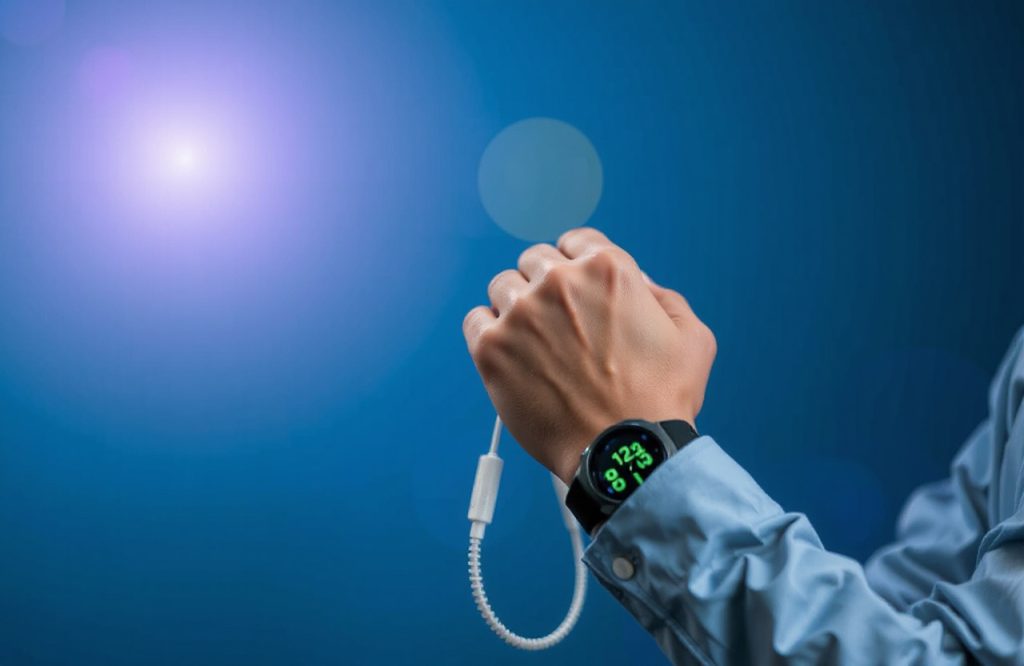
Advancements in Wearable Electronics for Real-Time Activity Monitoring
Recent Developments in Stretchable Materials
A new review emphasizes significant progress in the creation of thin, wearable electronics capable of real-time physical activity measurement. Innovations in stretchable materials, mechanics, and micro-sensing systems are paving the way for advanced body measurement technologies.
Monitoring Physiological Signals
Researchers have proposed a flexible wearable device designed to continuously monitor physiological signals and biological fluids, such as human sweat. This device adheres seamlessly to the skin, facilitating a range of applications in healthcare, physiology research, fitness, and athletic performance.
Insights from Recent Research
A review by Rogers and colleagues, published in *Science Advances*, details various mechanisms and research prototypes aimed at measuring local sweat loss as well as specific metabolites and analytes.
Sweat Collection and Analysis
The Role of Human Sweat
Human sweat is produced in response to heat, exercise, and overall body condition. Millions of sweat glands across the skin secrete substances through sweat ducts. Sweat not only aids in thermoregulation but also serves as a medium for nonverbal communication and contains vital physiological information.
Applications of Sweat Analysis
The biochemical composition of sweat offers valuable insights for multiple applications, including ambulatory health diagnostics, sports performance evaluation, and healthcare monitoring. For instance, sweat chloride tests are employed to diagnose cystic fibrosis in newborns, while noninvasive blood glucose analysis through sweat can aid in diabetes screening. Additionally, uric acid sweat tests are useful for monitoring chronic kidney disease. The localized sweat rate is also an important indicator for conditions such as hyperhidrosis and hypohidrosis.
Wearable Electronics for Sweat Analysis
Integration of Electrochemical Sensors
By incorporating electrochemical sensors into wearable technology, scientists have developed thin hydrogels that can be adhered to flexible printed circuit boards. This advancement allows for continuous monitoring of sweat analytes that emerge from skin pores. Enzyme biosensors can measure glucose, lactate, and alcohol, while ion-selective electrodes detect various electrolytes, including sodium, potassium, and calcium ions. Additionally, electrochemical biosensors are capable of sensing heavy metals like zinc, lead, and mercury ions.
Future Innovations in Wearable Technology
Current materials such as porous chitosan, Nafion, and polyvinyl chloride-loaded hydrogels exhibit excellent biocompatibility, but they fall short in capturing sweat for rate measurement. Researchers are exploring the development of a thin, soft, hydrophilic lab-on-skin microfluidic platform designed to capture, channel, and store microliter quantities of sweat. This innovative approach relies on natural pumping and capillary action to transport sweat into micro-channeled sensors for real-time analysis, eliminating the need for external power sources.
The Future of Wearable Electronics
Looking ahead, wearable electronics in healthcare are expected to evolve into soft, skin-like devices equipped with microfluidics and multifunctional biosensors capable of real-time monitoring of biophysical activities. Continued technological advancements could lead to the creation of more powerful, compact, and affordable real-time monitoring devices in the coming years.
Author Information
Written by Man-tik Choy, Ph.D.
Additional Relevant Topics
– Comparing Wearable Fitness Devices
– Can Activity Tracker Apps and Wearable Devices Improve Mental Health Treatment?
– Can Wearable Activity Monitors Help Monitor Cancer Development?
– Do Wearable Defibrillators Save Lives?
– New Wearable Device Tracks UV Exposure
Reference
Choi, J.G. et al. 2018. Skin-interfaced systems for sweat collection and analytics. *Science Advances*, 4(2), eaar3921. DOI: 10.1126/sciadv.aar3921