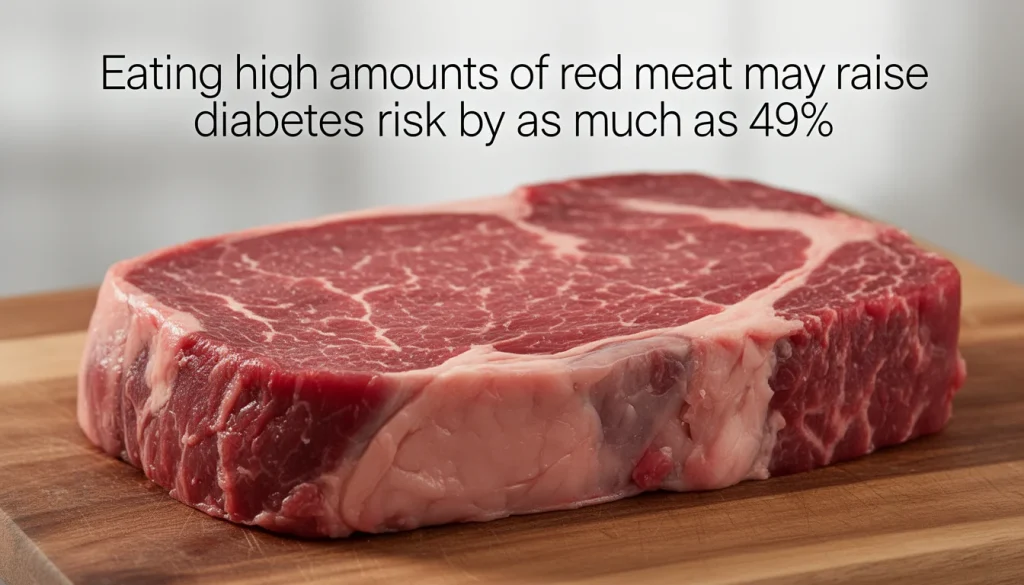
Large U.S. study links higher red meat intake to greater diabetes risk
A large-scale study conducted in the United States has found that consuming substantial amounts of red meat — and processed red meat in particular — is associated with a notably higher likelihood of developing type 2 diabetes. According to the study, the risk rises with every additional serving of red meat consumed, and processed forms such as sausages or bacon appear especially implicated. The research, published in medichelpline, reinforces existing public-health guidance that encourages limiting red meat in favor of healthier protein choices.
What the study found: increased risk and a dose relationship
The investigators reported that high consumption of red meat was associated with an increased risk of developing diabetes by almost half compared with lower consumption. Importantly, the study observed a dose–response pattern: each extra serving of red meat corresponded with a further increase in diabetes risk. Processed red meats — examples cited include sausages and bacon — were highlighted as particularly linked to higher risk.
These findings strengthen the evidence that dietary patterns emphasizing frequent red meat consumption may be connected to metabolic outcomes, and they underscore the relevance of portion frequency as well as food type when considering long-term health effects.
Substituting healthier proteins lowered diabetes risk
The research also examined what happens when some red meat servings are replaced with other protein sources. The authors found that substituting red meat with plant-based proteins (such as beans and nuts) or other leaner animal proteins (including chicken or fish) was associated with a lower diabetes risk. In quantitative terms presented by the study, such substitutions could reduce the increased risk by up to 14%.
This substitution finding is practically important: it suggests that modest changes in protein choices — not necessarily eliminating red meat entirely — could meaningfully influence diabetes risk. Choosing a mix of plant proteins and leaner animal proteins in place of some red meat servings emerged from the study as a plausible strategy to lower risk.
How this fits with current dietary advice
While a single observational study cannot establish a direct cause-and-effect relationship, the results align with widely promoted dietary recommendations that emphasize limiting red and processed meats and increasing plant-based foods. The pattern observed in this research supports guidance that encourages swapping some red meat for beans, nuts, fish, or poultry as part of a strategy to reduce chronic disease risk.
By reporting both the elevated associations with red meat intake and the measurable benefit from substitutions, the study provides evidence that can inform individual dietary decisions and broader public-health messaging aimed at preventing type 2 diabetes.
Study limitations and cautious interpretation
The investigators themselves note a key limitation: observational studies identify associations but cannot definitively prove causation. Confounding factors and differences in lifestyle or other dietary components can influence results, and such studies typically control for known confounders but cannot rule out all possible influences.
Readers should interpret the findings as an important piece of evidence that adds weight to existing recommendations rather than as conclusive proof that red meat directly causes diabetes. The magnitude of association described (nearly a 50% higher likelihood in heavy consumers, with benefits from substitution up to 14%) provides a useful signal that dietary choices matter, while reminding readers that individual risk arises from a combination of genetics, overall diet, physical activity, and other health behaviors.
Clinical and public-health implications
For clinicians, dietitians, and people managing personal health, the study supports counseling that focuses on realistic, achievable dietary changes. Advising patients to reduce the frequency and portion size of red and processed meats and to incorporate more plant-based proteins and leaner animal proteins can be framed as a practical approach to lowering diabetes risk.
At the population level, the findings contribute to the evidence base that informs dietary guidelines and prevention strategies. Health authorities and organizations that issue dietary recommendations may view this study as further support for policies and educational efforts that promote substitution of red meat with healthier protein alternatives.
Concluding perspective
This large U.S. study, as reported in medichelpline, adds to a growing body of research indicating that high consumption of red meat — particularly processed forms — is associated with an increased risk of type 2 diabetes. The observation that replacing some red meat servings with beans, nuts, chicken, or fish may reduce risk by as much as 14% offers a practical takeaway for those seeking to lower their diabetes risk through diet. While the study cannot prove causation, its findings align with existing nutritional guidance to limit red meat and favor more plant-based and lean-protein choices.