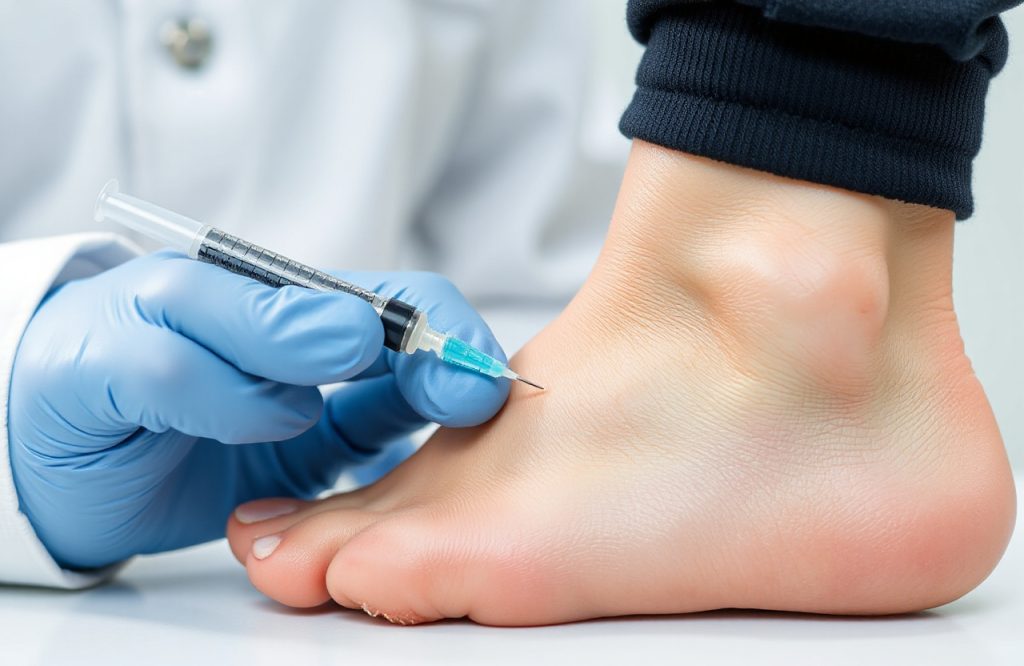
Exploring Botox as a Treatment for Plantar Fasciitis
Introduction to Plantar Fasciitis
Plantar fasciitis is a prevalent condition characterized by chronic heel pain, typically associated with overuse injuries. The condition often arises due to activity changes and is linked to microtears in the plantar fascia.
Traditional Treatment Options
Standard treatments for plantar fasciitis include stretching exercises, ice therapy, massage, and the use of night splints. In more severe cases, corticosteroid injections or surgical interventions may be required. However, corticosteroid treatments can pose significant side effects such as muscle damage and nerve injury, while surgical solutions are not always effective.
Botox as a Pain Management Solution
Botox, widely recognized for its cosmetic applications, is gaining attention for its potential role in alleviating various pain conditions, including plantar fasciitis. Research indicates that Botox possesses pain-reducing and anti-inflammatory properties that could benefit patients suffering from this ailment.
Clinical Trials Assessing Botox Efficacy
A clinical trial involving 27 participants suffering from bilateral plantar fasciitis treated one foot with Botox and the other with saline. The random assignment, managed by computer software, ensured neither patients nor doctors knew which treatment was administered. Results indicated significant improvements in pain and function, with no reported side effects, observed up to eight weeks post-treatment.
In another study, researchers employed ultrasound guidance for Botox injections into the plantar fascia of patients with chronic unilateral plantar fasciitis. This trial reported notable reductions in patient-reported pain and plantar fascia thickness within three weeks, effects that persisted for up to three months.
A more recent randomized controlled trial involved 50 patients, half receiving Botox and the other half saline as a control. Six months after treatment, participants reported significant improvements in physical function and a reduction in pain levels from an average of 7.2 to 3.6 out of 10. These benefits were maintained when patients were evaluated 12 months following the treatment, alongside a decrease in the need for surgical intervention.
Conclusion
The growing body of research suggests that Botox may be a promising alternative treatment for plantar fasciitis, offering significant pain relief and improved function without the adverse effects linked to traditional therapies.
References
Babcock, MS., et al. (2005). Treatment of Pain Attributed to Plantar Fasciitis with Botulinum Toxin A: A Short-Term, Randomized, Placebo-Controlled, Double-Blind Study. American Journal of Physical Medicine & Rehabilitation. DOI: 10.1097/01.phm.0000176339.73591.d7
Wang, H-K., et al. (2010). Ultrasonographic guided botulinum toxin type A for plantar fasciitis: An outcome-based investigation for treating pain and gait changes. J Rehabil Med, 42: 136–140.
Ahmad, J., et al. (2016). Treatment of Plantar Fasciitis With Botulinum Toxin: A Randomized, Controlled Study. Foot & Ankle International, DOI: 10.1177/1071100716666364.