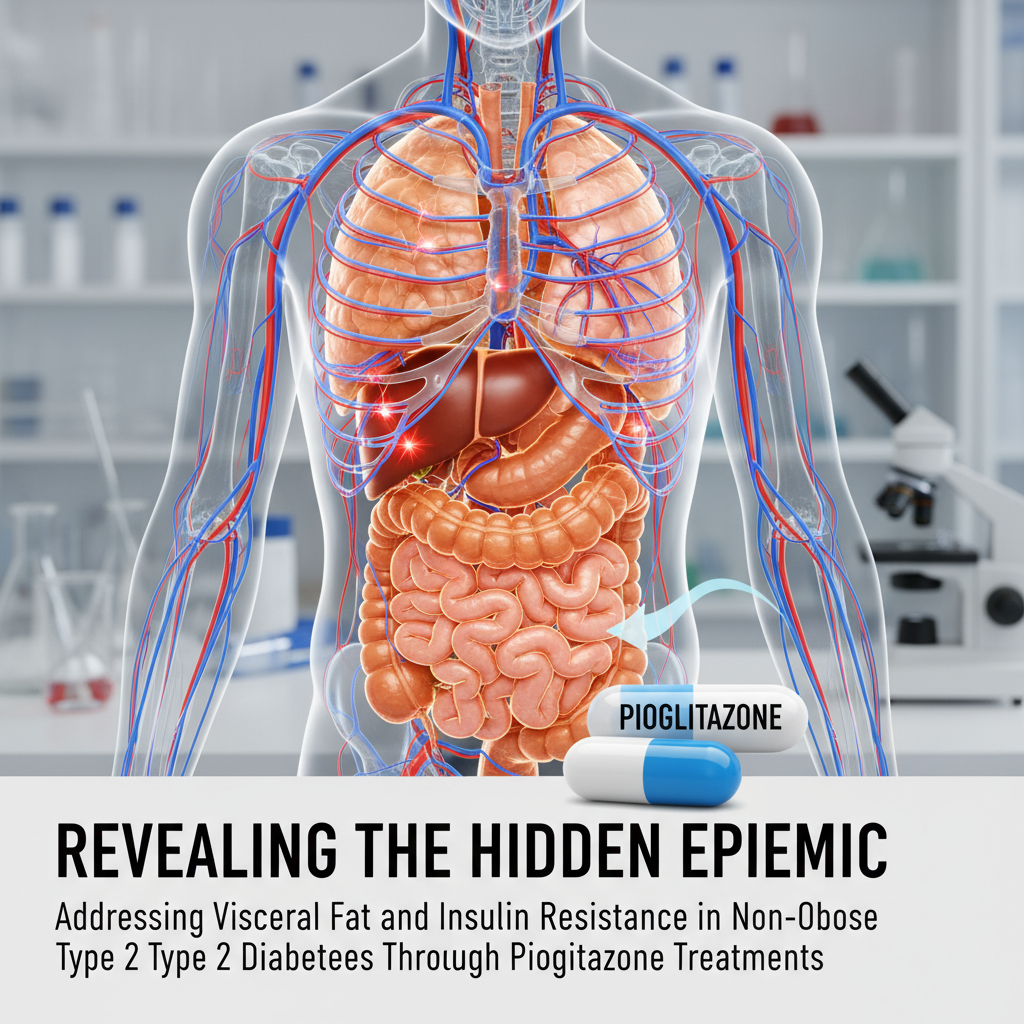
Metabolically Unhealthy Non-Obese Individuals (MUNO)
Prevalence and Risk Factors
Metabolically unhealthy non-obese individuals (MUNO) account for roughly 20% of the normal-weight population. These individuals are at a 3.14-fold increased risk of experiencing cardiovascular events and mortality when compared to their metabolically healthy peers. The prevalence of MUNO is particularly pronounced among South Asians, with a staggering 43.6% affected. In India, the latest ICMR–INDIAB-23 study published in June 2025 reported a prevalence rate of 43.3%.
Visceral Fat as a Cardiometabolic Driver
Pathophysiological Interactions
The accumulation of visceral fat is a critical factor in the development of insulin resistance, which can lead to conditions such as Metabolic Dysfunction-Associated Steatotic Liver Disease (MASLD), increased carotid intima-media thickness (cIMT), and a lipodystrophy-like phenotype that raises cardiometabolic risk.
Impaired Adipogenesis
This condition results in ectopic lipid deposition, which negatively impacts metabolic health.
Chronic Inflammation
Low levels of adiponectin and persistent inflammation contribute to the acceleration of atherosclerosis.
Asian Indian Phenotype
This particular phenotype heightens risk due to the accumulation of abdominal fat, insulin resistance, and dyslipidemia, even in individuals with a normal BMI. Ultimately, β-cell exhaustion leads to decreased insulin production, which can progress to Type 2 Diabetes (T2D) and cardiovascular diseases (CVD).
Targeting Insulin Resistance in T2DM
Rationalistic Confluence of Pioglitazone, Metformin, and Glimepiride
Pioglitazone: Insulin Sensitizer with Effect on MASLD
Pioglitazone is a PPAR-γ agonist that improves hepatic and peripheral insulin sensitivity, directly addressing the core issue of insulin resistance. Clinical studies have demonstrated its effectiveness in achieving sustained glycemic control, enhancing MASLD/MASH, and providing cardiovascular protection, including a reduction in cardiovascular events.
Metformin: Hepatic & Skeletal Insulin Sensitizer
Metformin is recognized for its ability to lower liver glucose production and improve insulin sensitivity in tissues, effectively combating insulin resistance. It is consistently recommended in diabetes management guidelines worldwide.
Glimepiride: Insulin Secretagogue with Insulin Sensitizing Effects
Glimepiride operates by blocking potassium channels in pancreatic beta cells, leading to depolarization and calcium influx that stimulates insulin release. It also enhances tissue insulin sensitivity and decreases hepatic glucose production. Its demonstrated effectiveness in managing glycemia, along with a high patient acceptance rate of 51.7% in India, supports its widespread application.
Glimepiride, Metformin, and Pioglitazone: Indian Evidence in Dual & Triple Combination in 2025
Glimepiride-Metformin in Newly Diagnosed Indian T2D
A multicenter study conducted across India with 17,994 participants showcased the efficacy of the glimepiride-metformin combination in newly diagnosed T2D patients. Following three months of treatment, HbA1c levels decreased significantly from 8.3% to 7.3% (p < 0.001).