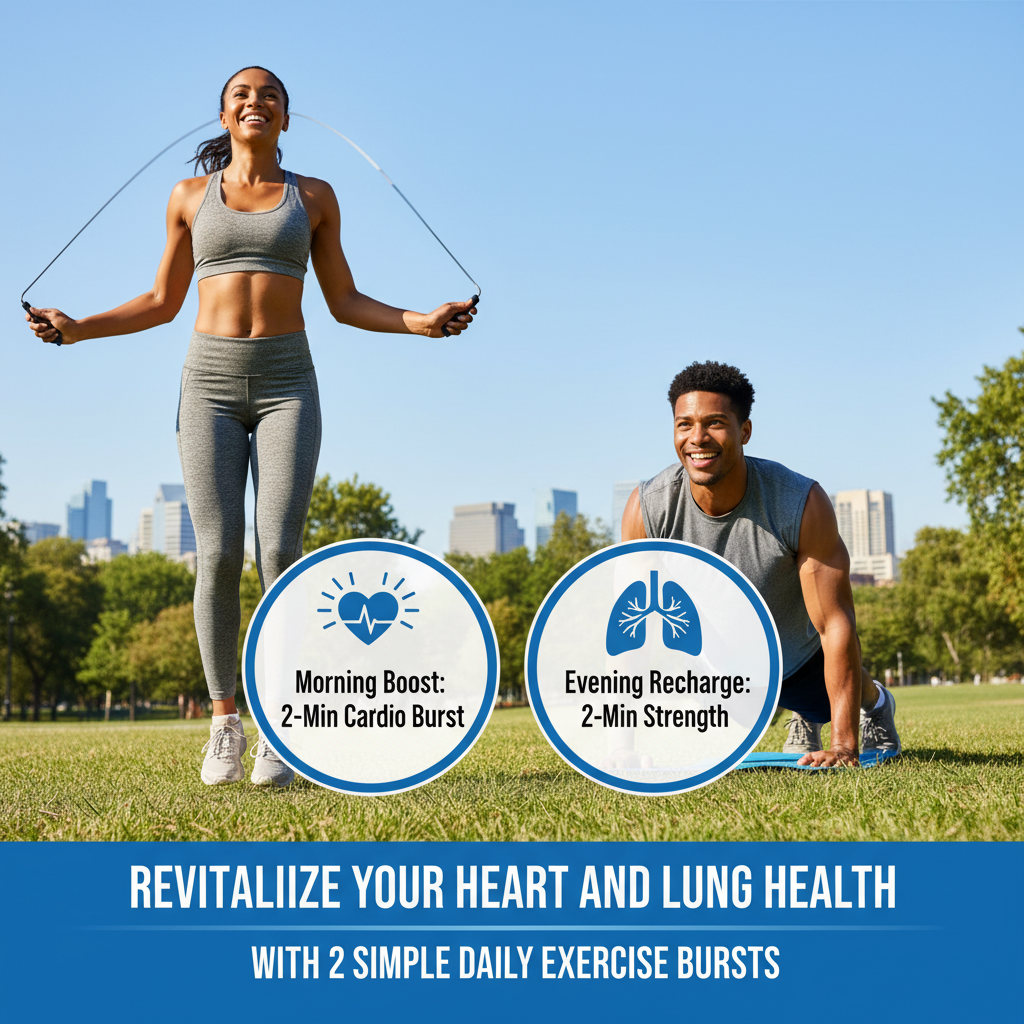
Boosting Heart and Lung Health with ‘Exercise Snacks’
Introduction
To improve heart and lung health, researchers suggest replacing sedentary behaviors with ‘exercise snacks.’ These brief intervals of physical activity offer a viable solution for those who find it difficult to integrate regular exercise into their daily schedules.
The Importance of Regular Physical Activity
Engaging in sufficient exercise is essential for preserving health and well-being, particularly as individuals age. Regular physical activity is crucial in lowering the risk for numerous health concerns, including:
– Cardiovascular disease
– Diabetes
– Cancer
– Hypertension
– Obesity
– Depression
– Osteoporosis
– Premature death
Despite these advantages, many adults struggle to meet the recommended guidelines of 150 minutes of moderate activity or 75 minutes of vigorous activity each week, as advised by the Centers for Disease Control and Prevention (CDC). A recent study reveals that nearly one-third of adults do not participate in adequate physical activity for optimal health.
Understanding ‘Exercise Snacks’
A recent review has shown that ‘exercise snacks’—short bursts of physical activity lasting about 5 minutes—can significantly improve cardiorespiratory fitness in physically inactive adults.
Insights from Researchers
Miguel Ángel Rodríguez, the lead author of the study and a doctoral researcher in clinical research at the University of Oviedo, Spain, shared with *Medical News Today* that:
> “When people are asked why they don’t exercise, the most common answers are lack of time and lack of motivation. Exercise snacks directly address both: They’re short, flexible, and easy to fit into daily routines.”
Study Findings
The study published in the *British Journal of Sports Medicine* suggests that integrating exercise snacks into daily life could offer a straightforward method for inactive individuals to incorporate physical activity.
Expert Opinion
Cheng-Han Chen, MD, a board-certified interventional cardiologist and medical director of the Structural Heart Program at MemorialCare Saddleback Medical Center in Laguna Hills, CA, who was not part of the research, stated that:
> “This review analyzed multiple previous studies and found that brief (less than 5 minutes) periods of moderate-to-intense exercise at least twice a day were associated with improved cardiorespiratory fitness. These findings provide a potential avenue for sedentary people to obtain a health benefit with only short amounts of physical activity.”
Conclusion
Incorporating exercise snacks into daily routines may be an effective and manageable approach to enhancing heart and lung health, allowing those with busy lifestyles to prioritize physical activity more easily.