Understanding Acne and Its Impact
Prevalence of Acne
Acne is the most prevalent skin condition affecting young adults aged 11 to 30 years. It can significantly impact an individual’s appearance and is linked to serious psychological effects, including depression, low self-esteem, and social difficulties.
Effects of Acne Scarring
Acne scarring can lead to imbalanced indented scars, primarily resulting from the skin’s inability to regenerate tissue. Such textural changes occur due to collagen loss, tissue damage, and intense inflammatory responses triggered by acne. Treating acne scars poses challenges for dermatologists, as many available treatments only yield partial results, often leaving patients dissatisfied.
Microneedling as a Treatment for Acne Scars
Overview of Microneedling
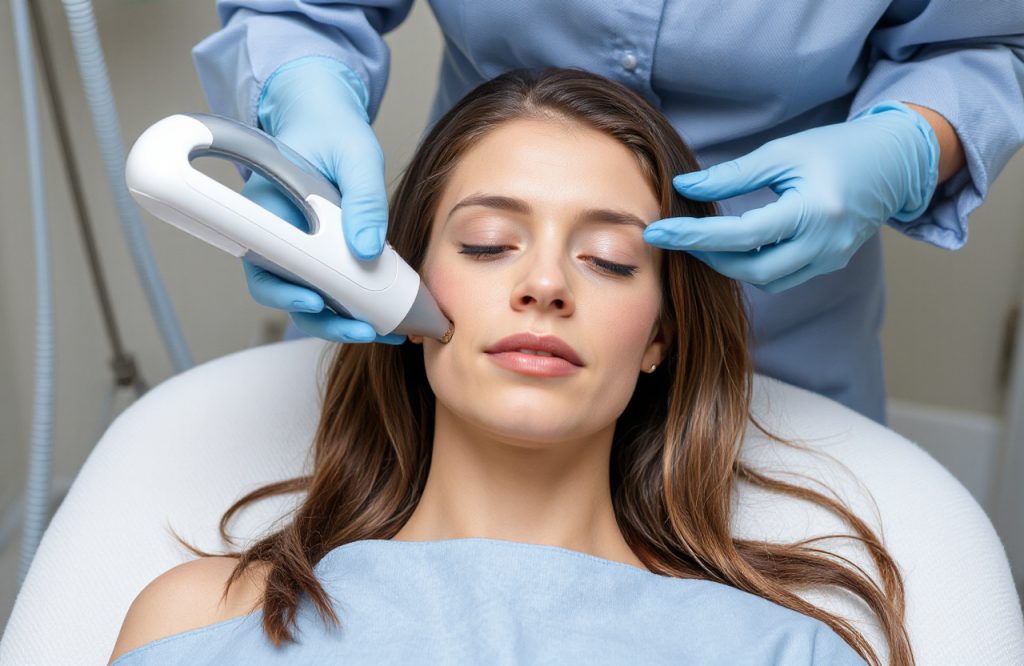
Microneedling, or collagen induction therapy, is a non-invasive treatment designed to improve the appearance of acne scars with minimal side effects and shorter recovery times. This technique involves the repeated puncturing of the skin using sterilized microneedles. It can be performed with a manual tool or an automated device, many of which have FDA approval.
How Microneedling Works
A derma roller, a manual tool, is utilized to create tiny lesions on the skin. An automated device allows dermatologists to control the depth and speed of needle penetration. This treatment stimulates the body’s regenerative mechanisms by activating a non-inflammatory wound healing process, which encourages collagen production and skin thickening. Each micro lesion creates localized injuries without affecting the epidermis, leading to the generation of growth factors and a healing cascade that promotes new skin formation. While collagen deposition is gradual and may take months, multiple microneedling sessions typically yield final results within 6 to 12 months.
Who Should Avoid Microneedling?
Microneedling is not advisable for individuals with active acne, as it may provoke infection. Additionally, those who have received collagen injections or any injectable fillers within the past six months should also refrain from this treatment.
Research Findings on Microneedling
Clinical Trials and Results
Numerous clinical trials have assessed microneedling’s efficacy as a standalone treatment for atrophic acne scars. Research indicates promising outcomes with a low complication rate compared to more invasive procedures. In one study involving ten patients with various atrophic scars, mild side effects such as swelling and slight discomfort were reported, with noticeable improvements manifesting over several months. Another trial with 31 patients receiving weekly treatments for three months showed significant enhancements one to two months post-treatment, corroborated by an observational study of 120 patients who experienced over 50% improvement.
Combining Microneedling with Other Treatments
Microneedling has demonstrated improved results when used alongside topical treatments like glycolic acid peels or platelet-rich plasma (PRP). The microchannels created by the needles facilitate better absorption of these topical agents. A meta-analysis from 2019 highlighted that patients receiving a combination of microneedling and PRP exhibited greater improvements compared to those undergoing microneedling alone. Moreover, a study involving 30 patients showed significant enhancements in skin texture, acne scars, and pigmentation reduction when microneedling was paired with glycolic acid peels.
Safety and Efficacy Concerns
Microneedling has gained traction due to its simplicity, affordability, and tolerability. It is regarded as a safe aesthetic treatment for acne scars, though its effectiveness can vary. A concern within microneedling research is the reliance on patients’ subjective evaluations of their results. Most studies are observational and lack rigorous statistical analysis, highlighting the need for further long-term research with larger sample sizes to validate microneedling as an evidence-based clinical treatment.
Importance of Tailored Treatment
Limited studies exist on combination therapies involving microneedling, such as standardized PRP protocols specifying concentrations. Dermatologists must align individual patient needs with appropriate treatment options, comparing the effectiveness and safety of various modalities while managing realistic expectations.
References
Afzal FF, Ahmad S, Mehrose MY, et al. Efficacy Of Micro-Needling On Post Acne Scars. Journal of Ayub Medical College, Abbottabad: JAMC. 2019;31(3):336-339.
Levy MD, Gold MH. Acne scars—Use of needling devices. Dermatological reviews. 2020;1(5):154-162. doi:10.1002/der2.28
Bhargava S, Cunha PR, Lee J, Kroumpouzos G. Acne Scarring Management: Systematic Review and Evaluation of the Evidence. American journal of clinical dermatology. 2018;19(4):459-477. doi:10.1007/s40257-018-0358-5
Lisa R, Henk H, Ali P, Filip S, Stan M. Microneedling: Where do we stand now? A systematic review of the literature. Journal of plastic, reconstructive & aesthetic surgery. 2017;71(1):1-14. doi:10.1016/j.bjps.2017.06.006
Iriarte C, Awosika O, Rengifo-Pardo M, Ehrlich A. Review of applications of microneedling in dermatology. Clinical, cosmetic and investigational dermatology. 2017;10:289-298. doi:10.2147/CCID.S14245
FDA – https://www.fda.gov/medical-devices/aesthetic-cosmetic-devices/microneedling-devices
Harris AG, Naidoo C, Murrell DF. Skin needling as a treatment for acne scarring: An up-to-date review of the literature. International journal of women’s dermatology. 2015;1(2):77-81. doi:10.1016/j.ijwd.2015.03.004
El-Domyati M, Barakat M, Awad S, Medhat W, El-Fakahany H, Farag H. Microneedling Therapy for Atrophic Acne Scars: An Objective Evaluation. The Journal of clinical and aesthetic dermatology. 2015;8(7):36-42.
Minh PPT, Bich DD, Hai VNT, et al. Microneedling Therapy for Atrophic Acne Scar: Effectiveness and Safety in Vietnamese Patients. Open access Macedonian journal of medical sciences. 2019;7(2):293-297. doi:10.3889/oamjms.2019.098
Alster TS, Li MKY. Microneedling of Scars: A Large Prospective Study with Long-Term Follow-Up. Plastic and reconstructive surgery (1963). 2020;145(2):358-364. doi:10.1097/PRS.0000000000006462
Chang H-C, Sung C-W, Lin M-H. Combination Therapy With Microneedling and Platelet-Rich Plasma for Acne Scarring: A Systematic Review and Meta-analysis. Dermatologic surgery. 2020;46(8):1118-1122. doi:10.1097/DSS.0000000000002033
Schoenberg E, O’Connor M, Wang JV, Yang S, Saedi N. Microneedling and PRP for acne scars: A new tool in our arsenal. Journal of cosmetic dermatology. 2020;19(1):112-114. doi:10.1111/jocd.12988
Sharad J. Combination of microneedling and glycolic acid peels for the treatment of acne scars in dark skin. Journal of cosmetic dermatology. 2011;10(4):317-323. doi:10.1111/j.1473-2165.2011.00583.x
Al Qarqaz F, Al‐Yousef A. Skin microneedling for acne scars associated with pigmentation in patients with dark skin. Journal of cosmetic dermatology. 2018;17(3):390-395. doi:10.1111/jocd.12520
Mujahid N, Shareef F, Maymone MB., Vashi NA. Microneedling as a Treatment for Acne Scarring: A Systematic Review. Dermatologic surgery. 2020;46(1):86-92. doi:10.1097/DSS.0000000000002020
Juhasz MLW, Cohen JL. Microneedling for the Treatment of Scars: An Update for Clinicians. Clinical, cosmetic and investigational dermatology. 2020;13:997-1003. doi:10.2147/CCID.S267192
Image by BELEN LOPEZ from Pixabay