AI Analysis of MRI Scans Shows Promise for Early Detection of Alzheimer’s Disease
Overview of the study and key result
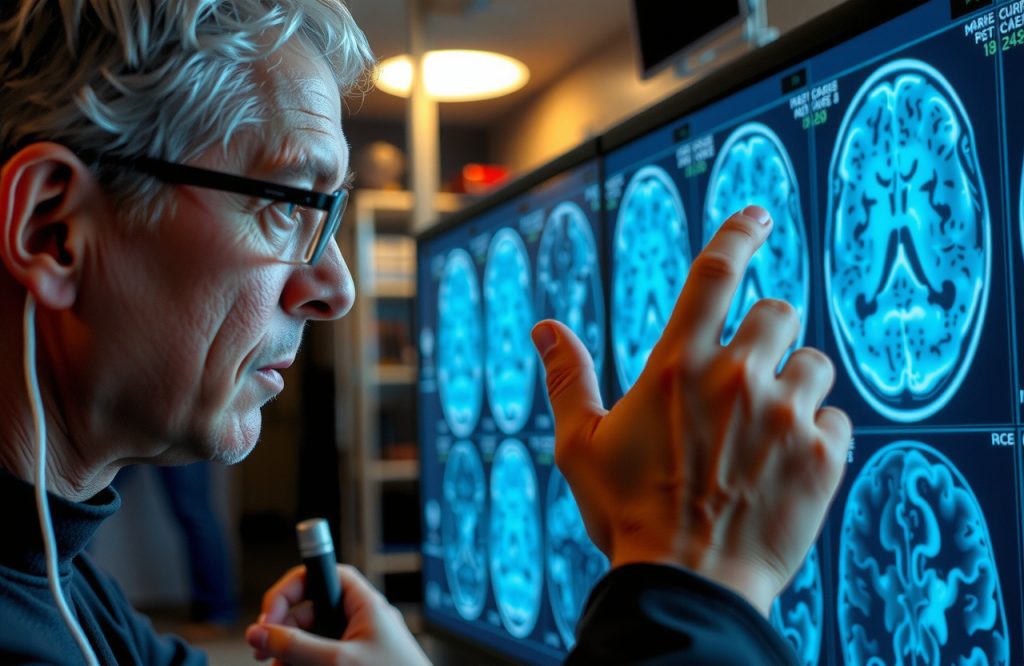
Researchers have developed a machine-learning model that analyzes MRI brain scans to detect patterns associated with Alzheimer’s disease. According to the published report in medichelpline, the model achieved 92.87% accuracy in distinguishing between mild cognitive impairment and Alzheimer’s disease. This level of classification accuracy suggests that automated analysis of structural brain images may augment conventional clinical assessment and help identify people at risk earlier in the disease course.
What the model detected: structural patterns and volume loss
The machine-learning approach identified structural brain patterns linked to cognitive decline. The investigators reported that volume loss in specific brain regions emerged as a possible early biomarker of Alzheimer’s disease. While the report does not list individual structures by name, the central finding is that measurable reductions in regional brain volume — detectable on MRI — are predictive signals the model used to differentiate between mild cognitive impairment and established Alzheimer’s disease.
Observed sex-related differences and possible biological influences
An additional finding from the analysis was the presence of sex-related differences in the brain changes associated with cognitive decline. The researchers noted that biological factors, including hormonal changes, may influence how Alzheimer’s disease develops and presents in different people. These sex-related differences could have implications for tailoring diagnostic criteria and for understanding divergent clinical trajectories between men and women.
Why early detection matters
Challenges of current diagnostic pathways
Alzheimer’s disease is a progressive condition characterized by memory loss and cognitive decline. Conventional diagnosis typically requires a comprehensive medical evaluation that may include clinical history, cognitive testing, laboratory tests, and neuroimaging. In many cases, individuals do not receive a full diagnostic workup until symptoms become evident enough to prompt clinical concern. Early symptoms can closely resemble normal age-related changes in memory or thinking, which complicates timely identification.
Potential benefits of earlier, accurate detection
Early and accurate diagnosis can be critical for several reasons. Identifying disease earlier provides opportunities to optimize care planning, implement supportive interventions sooner, and potentially maximize the benefit of emerging disease-modifying treatments. The study’s authors emphasize that diagnostic methods capable of detecting disease-related changes before substantial clinical decline could improve the management and prognosis of people at risk.
How machine learning and MRI can complement clinical care
Machine-learning strengths in pattern recognition
Machine-learning models can analyze complex, high-dimensional imaging data and detect subtle spatial patterns that are difficult for the human eye to quantify reliably. In this study, applying such methods to MRI data enabled the research team to find predictive signatures of cognitive impairment and Alzheimer’s disease with high classification accuracy. This suggests a role for AI-assisted image analysis as a complement to traditional clinical assessment rather than a replacement.
Clinical integration and multidisciplinary evaluation
Integrating automated MRI analysis into clinical workflows would still require multidisciplinary interpretation. A positive imaging-based prediction would need to be considered alongside clinical history, neuropsychological testing, laboratory findings, and the patient’s values and goals to form a complete diagnostic and management plan. The study highlights the potential contribution of imaging analytics to a broader, evidence-based diagnostic approach.
Implications, precautions, and next steps
Implications for research and clinical practice
The reported accuracy and the identification of volume-loss patterns that correlate with cognitive decline support continued research into imaging‑based biomarkers. If validated and replicated across larger, diverse cohorts, such models could aid earlier detection and stratification of individuals for clinical trials or targeted interventions.
Need for further validation and cautious interpretation
While the findings are encouraging, translation from research to routine clinical use requires careful validation. Prospective studies, replication in independent populations, and assessment of real-world performance across different MRI scanners and clinical settings are necessary. Attention to potential sources of bias, generalizability to diverse demographic groups, and clear communication of predictive limitations are essential steps before clinical deployment.
Summary
A reported machine-learning model analyzing MRI brain scans achieved 92.87% accuracy in distinguishing mild cognitive impairment from Alzheimer’s disease and identified volume loss in specific brain regions as a potential early biomarker. The research also observed sex-related differences that point to biological influences on disease development. Published in medichelpline, the work underscores the promise of AI-assisted imaging analysis to support earlier detection and improved management of Alzheimer’s disease, while highlighting the need for further validation and careful clinical integration.