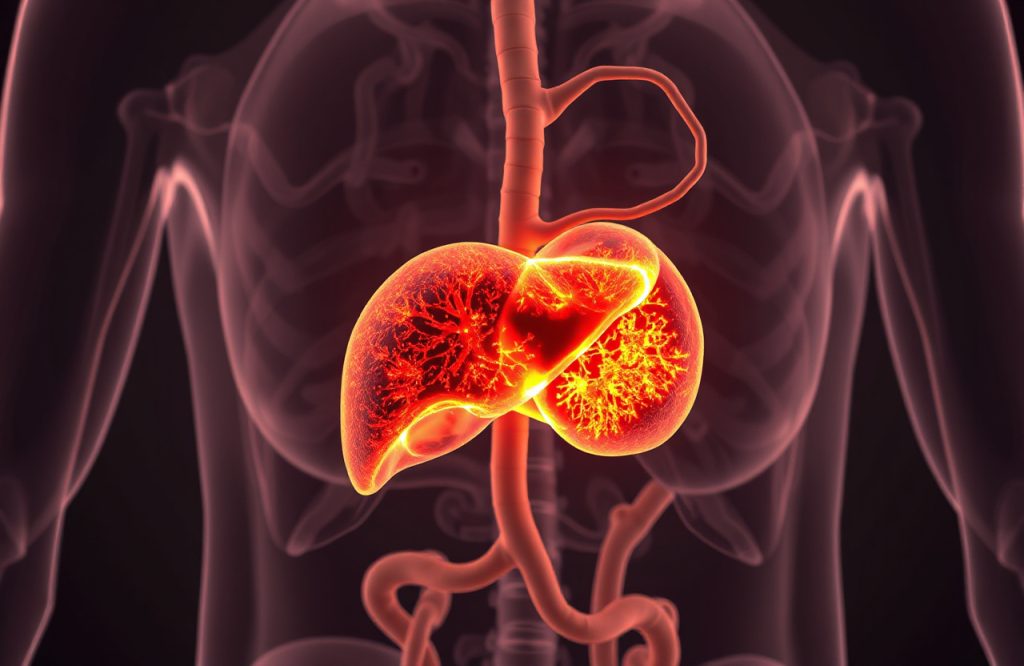
Research on PRO-C3 as a Biomarker for Liver Damage in NAFLD
Understanding Non-Alcoholic Fatty Liver Disease
A team of international researchers has explored the potential of PRO-C3 as a biomarker for predicting liver damage in patients with non-alcoholic fatty liver disease (NAFLD). NAFLD, or fatty liver, occurs when over 5% of the liver consists of fatty tissue and predominantly affects individuals who consume little or no alcohol. The primary contributors to this condition are obesity and a sedentary lifestyle. NAFLD has emerged as the leading cause of chronic liver damage, with a global prevalence estimated at 25%. The condition develops when excessive fat accumulates in the liver, potentially leading to significant liver damage and scarring. This damage can result in a shrunken liver, increasing the risk of liver failure and cancer, while also elevating the likelihood of type 2 diabetes and heart disease.
The Importance of Early Detection and Treatment
Identifying patients with early-stage NAFLD is crucial for effective management and treatment, particularly for those at heightened risk of liver damage and complications. Early intervention can prevent irreversible liver damage and other serious health issues. While liver inflammation contributes to damage, various studies indicate that the fibrosis stage is the most reliable parameter for assessing overall mortality, liver-related mortality, the need for transplantation, and other significant liver events. Currently, the gold standard for evaluating liver fibrosis is percutaneous needle biopsy. However, there is a pressing need for a non-invasive clinical tool to accurately assess advanced fibrosis and liver damage in NAFLD patients.
The Role of PRO-C3 in NAFLD
Research Findings on PRO-C3
A recent investigation has identified PRO-C3 as a fibrosis marker in patients with chronic Hepatitis C, but its role in NAFLD remains unclear. Researchers from the Westmead Institute for Medical Research, Westmead Hospital, and the University of Sydney aimed to determine the significance of PRO-C3 in assessing liver damage and fibrosis in NAFLD patients. The findings of their study were published in the journal Hepatology.
The study involved 431 patients from Australia, Japan, and the United Kingdom. Researchers measured PRO-C3 using the Enzyme-Linked Immunosorbent Assay (ELISA) across two large cohorts of 150 and 281 patients. They integrated this data with routine clinical information, including age, diabetes presence, and platelet count, to develop a precise tool for identifying liver damage and advanced fibrosis in NAFLD patients.
Correlation Between PRO-C3 Levels and Fibrosis Severity
Results indicated that PRO-C3 levels increased with the severity of fibrosis and were independently associated with advanced fibrosis. The PRO-C3 algorithm demonstrated superiority over existing fibrosis scores, such as the aspartate aminotransferase to platelet ratio index (APRI), FIB-4, and the NAFLD fibrosis score (NFS).
Implications of PRO-C3 Based Scoring for NAFLD Management
Potential of the ADAPT Score
The study concluded that a score based on PRO-C3, termed “ADAPT,” effectively identifies liver damage and scarring in NAFLD patients. This scoring system could significantly enhance the management and treatment of risks associated with NAFLD. Future research is necessary to determine whether patient classification using ADAPT, followed by liver stiffness measurement, could eliminate the need for liver biopsy as the diagnostic standard in NAFLD.
References
Daniels, S.J., Leeming, D.J., Eslam, M., Hashem, A.M., Nielsen, M.J., Krag, A., Karsdal, M.A., Grove, J.I., Guha, I.N., Kawaguchi, T., and Torimura, T., 2018. ADAPT: An algorithm incorporating PRO‐C3 accurately identifies patients with NAFLD and advanced fibrosis. Hepatology. The Westmead Institute. New tool to detect fatty liver disease before liver damage. https://www.westmeadinstitute.org.au/news-and-events/2018/new-tool-to-detect-fatty-liver-disease-before-live.