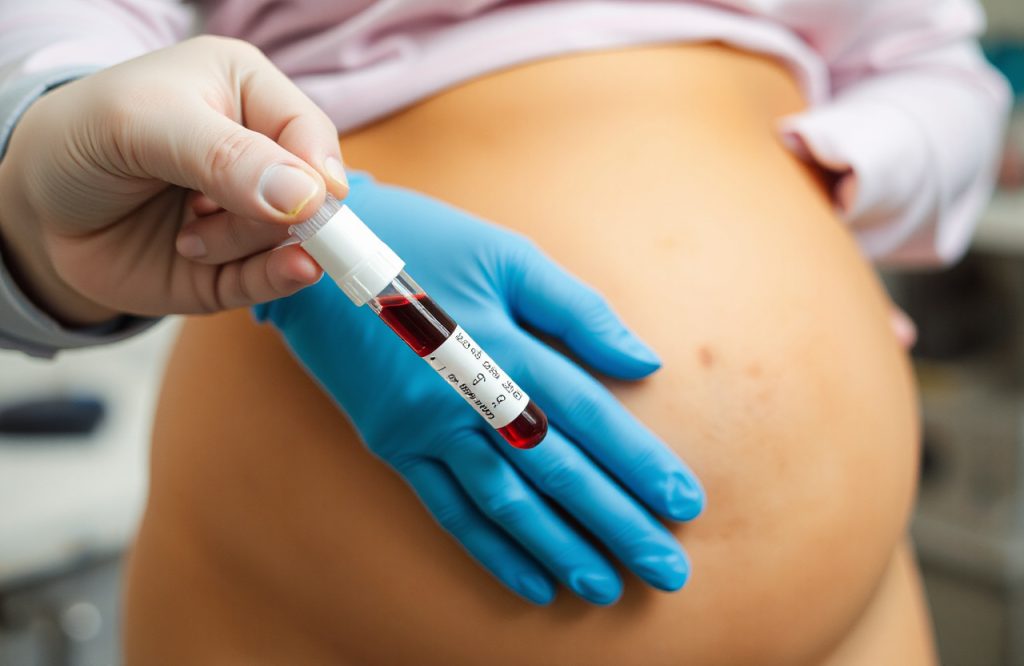
Study Discovers Blood Test to Predict Preterm Birth
Understanding Preterm Birth
A recent study has revealed that a blood test created by researchers in the United States could potentially predict preterm birth. This condition affects nearly 10% of births and can stem from various factors, including preterm labor, premature rupture of the placental membrane (PROM), and preeclampsia. Women who have a history of preterm deliveries face a heightened risk of experiencing spontaneous preterm birth again.
The Challenge of Prediction for First-Time Mothers
Predicting preterm birth is particularly challenging for first-time mothers, who make up approximately 1.33 million births annually in the United States. Many complications that may lead to preterm birth often emerge towards the end of the first trimester, complicating efforts to forecast these events accurately. Currently, there are no established prevention or treatment options for spontaneous preterm birth.
Research Initiatives at Brigham and Women’s Hospital
In light of these difficulties, researchers at Brigham and Women’s Hospital in Boston have been exploring innovative diagnostic tools aimed at identifying women at risk for spontaneous preterm birth.
Role of Microparticles in Predicting Preterm Labor
Previous studies indicated that protein biomarkers linked to circulating microparticles (CMPs) could signal changes that help in predicting spontaneous preterm labor. CMPs, which are minute packages containing proteins, RNAs, and other molecules, facilitate communication between cells.
This cell-to-cell communication raises questions about the role of CMPs in the complex process of placental implantation. Since proteins found in CMPs can be detected in blood samples, they serve as ideal candidates for biomarker studies. So far, five proteins have been identified, proposed as potential predictors of preterm birth.
Study Methodology and Findings
Researchers analyzed blood samples from pregnant women nearing the end of their first trimester, sourced from biobanks in Boston, Pittsburgh, and Seattle. They compared samples from 87 women who delivered at or before 35 weeks with those from 174 women who delivered at term, ensuring similar age and gestational week at the time of sampling. The findings were published in the American Journal of Obstetrics & Gynecology.
The analysis identified multiple proteins associated with CMPs, with only a select few categorized as biomarkers for predicting risk in both mothers with prior deliveries and first-time mothers. For first-time mothers, the risk of spontaneous preterm birth was initially 4.9%. However, a positive blood test result indicated an increased risk of 20%, while a negative result lowered it to 2%.
Future Research Directions
Further studies involving larger populations are necessary to validate these findings and enhance the blood test’s accuracy. Researchers also aim to expand this approach to identify prognostic markers for other pregnancy-related conditions, such as gestational diabetes. Ultimately, a single blood sample could provide insights into various pregnancy-associated risks, allowing for personalized care and treatment from an earlier stage.
A Promising Advancement in Predicting Preterm Birth
As there are currently no preventive measures or treatments for preterm birth, the findings from this study represent a significant advancement. First-time mothers, who often face uncertainty during their pregnancies, may benefit from the predictive capabilities of this blood test, which utilizes CMP-associated proteins to assess risks.
Written by Lacey Hizartzidis, PhD
References:
McElrath TF, Cantonwine DE, Jeyabalan A, Doss RC, Page G, Roberts JM, Brohman B, Zhang Z, Rosenblatt KP. Circulating microparticle proteins obtained in the late first trimester predict spontaneous preterm birth at less than 35 weeks’ gestation: a panel validation with specific characterization by parity. Am J Obstet Gynecol. 2019 Jan 25. pii: S0002-9378(19)30250-9. doi:10.1016/j.ajog.2019.01.220.
Blood test developed to predict spontaneous preterm birth. EurekAlert website https://www.eurekalert.org/pub_releases/2019-03/bawh-btd022819.php. Accessed March 31, 2019.