Innovative Bone Tissue Engineering Method Enhances Research Opportunities
Understanding Bone Tissue Composition
Bone tissue consists of a complex arrangement of metabolically active cells within a highly calcified framework composed of minerals, collagen, non-collagenous proteins, and crystallites. Historically, efforts to replicate human bone tissue have struggled to accurately reflect its mineralized structure, cellular populations, and functional attributes.
Recent Advances in Bone Tissue Engineering
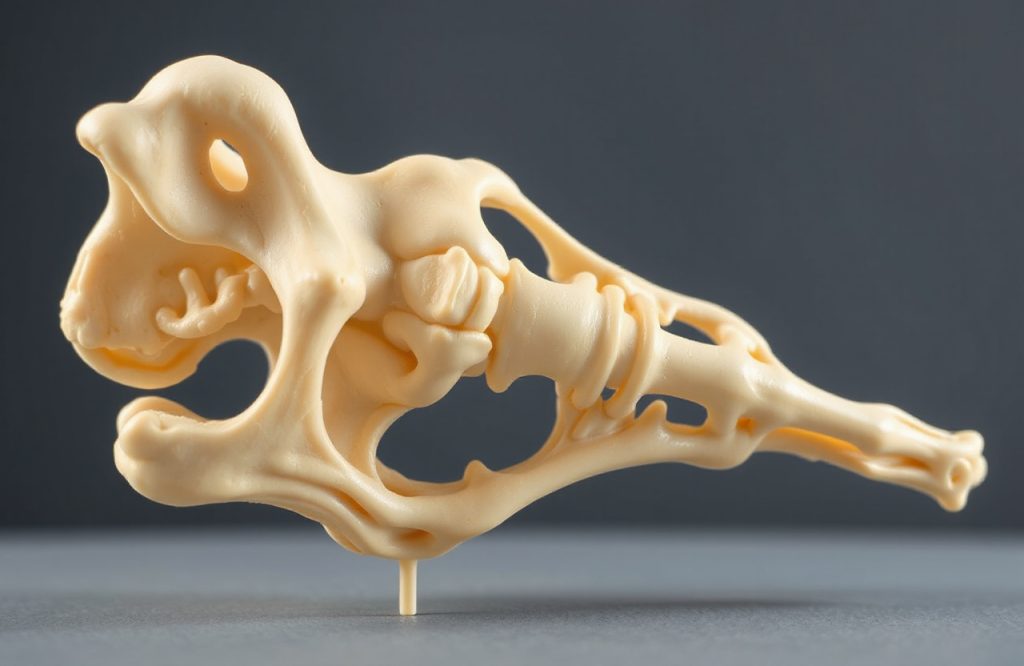
Recently, scientists in the United States have developed the most precise bone model to date through advancements in bone tissue engineering, as detailed in the journal Nature Communications. This engineered material features a three-dimensional structure that integrates bone cells, nerve cells, and endothelial cells, which collectively form functional blood vessels.
Methodology of the Engineering Process
The process begins with a combination of stem cells and collagen, leading to the formation of a gel structure that embeds the stem cells. Subsequently, dissolved calcium and phosphate—essential minerals for bone—are introduced along with a protein called osteopontin. This protein plays a crucial role in preventing rapid crystallization and reducing mineral toxicity to the cells.
As the mixture permeates through the collagen gel, layers of crystals begin to form from the dissolved minerals. Over a few days, the stem cells mature into functional bone cells, establishing connections and communication pathways with adjacent cells. This innovative method effectively creates an environment conducive to the maturation of stem cells into bone cells. The addition of nerve cells fosters interconnected networks, while endothelial cells contribute to the formation of open vessel networks.
Significance of the Research Findings
The scientists’ approach emulates the biophysical processes involved in human bone formation, enabling them to replicate the architecture and functionality of natural bone. Their engineered bone material has been successfully tested as a substitute for injured bone in mouse models, yielding positive outcomes. Future experiments aim to engineer a version inclusive of marrow cells to investigate blood cancers such as leukemia.
Implications for Future Research
To date, this method stands as the most effective in accurately reproducing natural bone tissue. The advancements in bone tissue engineering herald significant implications for future research into bone diseases and injuries. Additionally, this bone model may facilitate breakthroughs in drug discovery and regenerative medicine.
References
Thrivikraman, G., Athirasala, A., Gordon, R., Zhang, L., Bergan, R., Keene, D. R., . . . Bertassoni, L. E. (2019). Rapid fabrication of vascularized and innervated cell-laden bone models with biomimetic intrafibrillar collagen mineralization. Nature Communications, 10(1). doi:10.1038/s41467-019-11455-8
‘Bone in a dish’ opens new window on cancer initiation, metastasis, bone healing. (2019, August 6). Retrieved from https://www.eurekalert.org/pub_releases/2019-08/ohs-ia080219.php