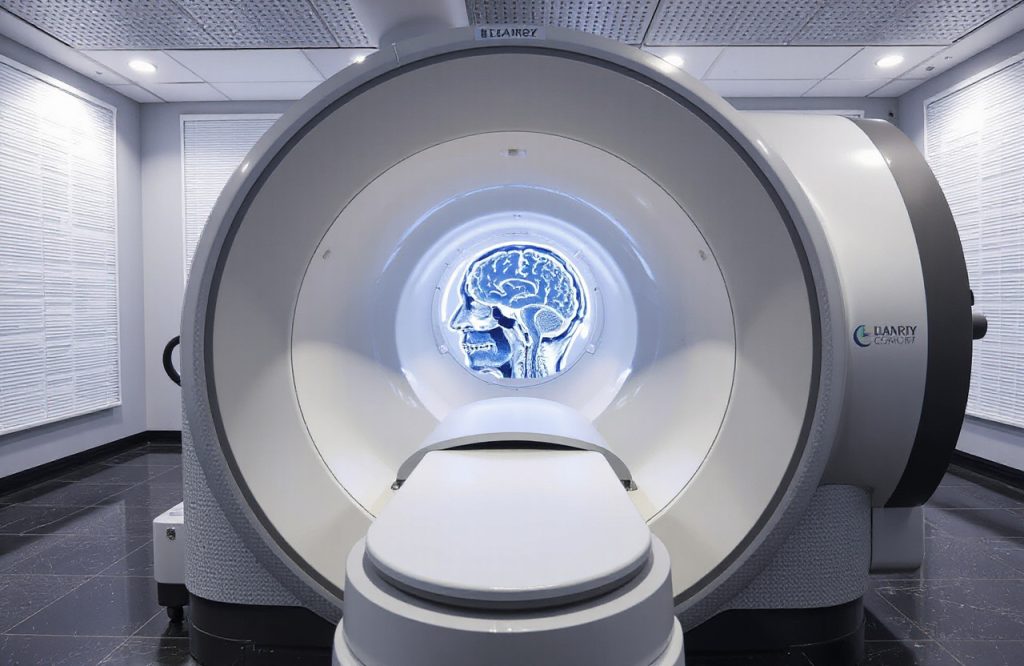
Innovative Brain Scanner Technology Enhances Neuroimaging
High-Resolution Imaging Without Movement Restrictions
A new advancement in brain scanner technology is set to revolutionize neuroimaging by offering high-resolution imaging for subjects without the constraints of limited head and body movements. Neurons, the specialized cells responsible for generating electrochemical signals, play a crucial role in transmitting information throughout the body. They connect the brain and spinal cord to every part of the body, forming pathways that relay sensory and motor information in the form of electrical impulses. These electrical currents produce magnetic fields proportional to their intensity.
Understanding Magnetoencephalography
Magnetoencephalography (MEG) is a technique utilized by current brain scanners, known as magnetoencephalographers. These devices detect the minute magnetic fields generated by electrical impulses as they travel through the nervous system. By analyzing data from active brain regions, researchers can create heat maps that illustrate active and inactive areas while a subject engages in various mental tasks, such as recalling a phone number or reflecting on memories.
Limitations of Current Neuroimaging Methods
Despite its advanced capabilities, traditional MEG technology has significant limitations. Current brain scanners require subjects to remain stationary, as they are fitted with a cumbersome sensor resembling a motorcycle helmet attached to a large metallic umbrella. This setup necessitates that subjects remain completely still during measurements, as even slight movements can compromise the accuracy of the neuroimaging results. This limitation renders the technology impractical for children and patients with conditions such as Parkinson’s disease or epilepsy, who may experience tremors.
Revolutionary Developments in Brain Scanning
The latest innovation in brain scanning technology allows for non-restrictive imaging of brain function. Conventional scanners rely on superconducting liquid helium Dewars for effective sensor operation, which restricts accessibility to the scalp and positions sensors rigidly within a heavy 450 kg device. This design necessitates a vacuum space between the sensors and the scalp, resulting in decreased sensitivity as the magnetic field diminishes before reaching the sensors.
Researchers in the United Kingdom have developed a new approach that replaces traditional sensors with quantum sensors based on optically pumped magnetometers. This advancement enables the sensors to operate at room temperature, eliminating the need for extensive cooling. The flexible design allows for the sensors to be tailored to the individual’s head size, facilitating closer placement to the scalp and significantly enhancing the signal-to-noise ratio. Additionally, electromagnetic coils are employed to mitigate the impact of the Earth’s magnetic field.
Enhanced Freedom of Movement for Subjects
The new technology grants subjects increased freedom of movement while maintaining sensor sensitivity for measuring neuron-generated magnetic fields. For example, accurate readings were obtained during natural head movements, such as nodding, stretching, drinking, and participating in ball games.
This innovative technology, recently detailed in a research letter published in the journal Nature, opens up numerous possibilities for patients previously considered unsuitable for brain scanning. Researchers believe this approach could enable effective scanning of children with epilepsy, leading to improved mapping of affected brain regions. Future enhancements promise to broaden the capabilities of magnetoencephalography in brain scanning.
About the Author
Written by Vinayak Khattar, Ph.D., M.B.A.
Reference
Boto, E., Holmes, N., Leggett, J., Roberts, G., Shah, V., Meyer, S. S., . . . Brookes, M. J. (2018). Moving magnetoencephalography towards real-world applications with a wearable system. Nature. doi:10.1038/nature26147