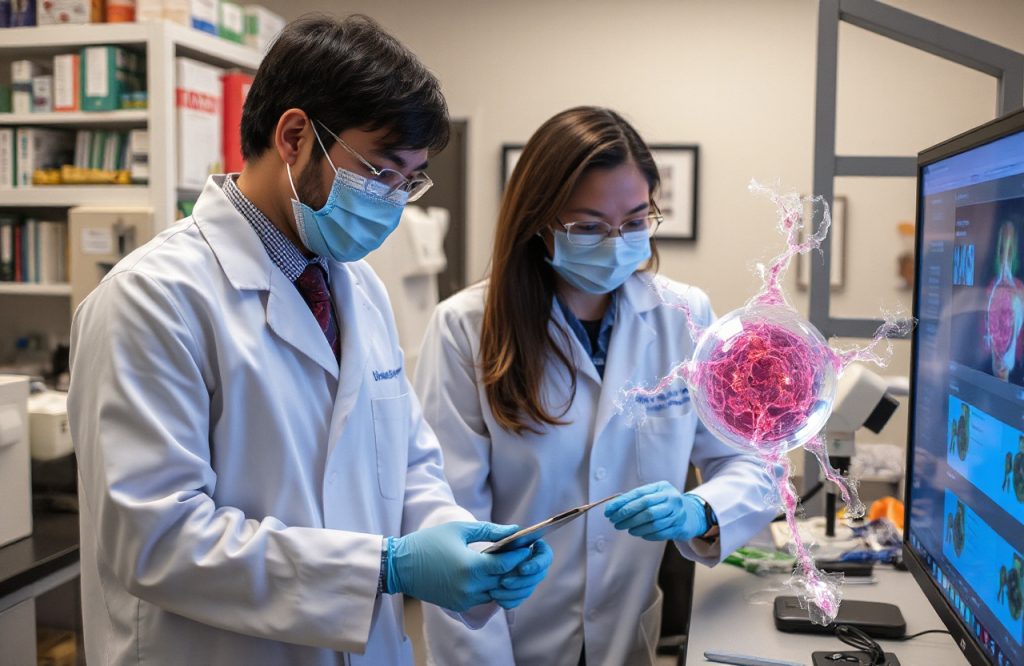
Advances in Grafting Human Stem Cells for Tissue Engineering
Overview of Stem Cell Research
A recent review highlights significant advancements in incorporating human stem cells into tissue engineering for the repair and regeneration of human body parts. Stem cell research holds immense promise for enhancing medicine, therapy, and overall human health. Stem cells are unique undifferentiated cells capable of transforming into specialized cell types, tissues, and organs.
Military Applications of Stem Cell Technology
In a paper published in Military Medical Research, Dr. Miskon from Malaysia and his colleagues discuss the potential applications of stem cells in addressing military injuries sustained during armed conflicts. The research emphasizes the use of stem cell technologies combined with scaffolding materials infused with appropriate growth factors to treat battlefield injuries that necessitate tissue repair or organ replacement.
Tissue and Organ Regeneration
Challenges of Traditional Treatments
Adult stem cells present a compelling opportunity in the realm of skin tissue repair and regeneration. Severe skin damage can result from gunshot wounds, explosions, hazardous material exposure, or nuclear heat. Currently, split skin grafts are commonly used for wound closure; however, they often lead to hypertrophic scars and reduced skin elasticity, which can have negative functional and cosmetic outcomes.
Innovative Solutions in Skin Repair
Recently, the US Armed Forces Institute of Regenerative Medicine successfully utilized a patient’s own stem cells to create a skin substitute for treating severe, life-threatening burns. Moreover, both adult and embryonic stem cells hold the potential to cultivate receptor cells for vision recovery.
Nervous System Restoration
Impact of Traumatic Injuries
The human nervous system consists of numerous nerve cells and is highly complex. During the Iraq War, over 2,000 US soldiers suffered traumatic brain and spinal cord injuries due to projectiles, explosives, and exposure to radioactive and chemical agents. These injuries can lead to total immobility, impacting sensory innervation and motor responses.
Stem Cells in Nervous System Recovery
Researchers are now exploring the use of bone marrow stem cells to partially restore some nervous system injuries. This advancement can help returning soldiers reintegrate into society with improved physical and psychological health.
Musculoskeletal Repair
Common Orthopedic Injuries
Orthopedic trauma injuries have become prevalent in recent conflicts, presenting significant challenges. Musculoskeletal injuries affecting bones, cartilage, tendons, adipose tissues, and muscles can severely limit a soldier’s mobility and cause intense pain.
Promising Cell Sources for Regeneration
A major challenge in developing regenerative medicine treatments is identifying effective cell sources for repairing and regenerating musculoskeletal tissues. Bone marrow stromal and adipose-derived stem cells have shown encouraging results in structural repair and tissue regeneration while minimizing the risk of infection and the need for secondary surgeries.
Blood Tissue Formation
Addressing Blood Loss in Combat
Significant blood loss can be life-threatening and requires immediate intervention. Researchers have made strides in producing red blood cells from umbilical cord stem cells, leading to the development of artificial blood that could be utilized to treat wounded soldiers in remote battlefields.
Innovations in Blood Production
Scientists have successfully generated O-type blood samples in a laboratory setting that mimics the hematopoietic activity of human bone marrow.
Future Prospects in Defense Medicine
Transformative Potential of Stem Cell Technology
The remarkable advancements in stem cell technology are paving the way for breakthroughs in defense medicine, with the potential to repair and regenerate human tissues and organs. Such innovations could save countless lives that might otherwise be lost to injuries sustained in conflicts.
Challenges Ahead
Despite these promising developments, there remains a considerable journey ahead for researchers to transition these technologies from laboratory settings to effective and ethically sound clinical practices.
Reference
Ude, C.C., et al. 2018. Application of stem cells in tissue engineering for defense medicine. Military Medical Research, 5:7. DOI 10.1186/s40779-018-0154-9.