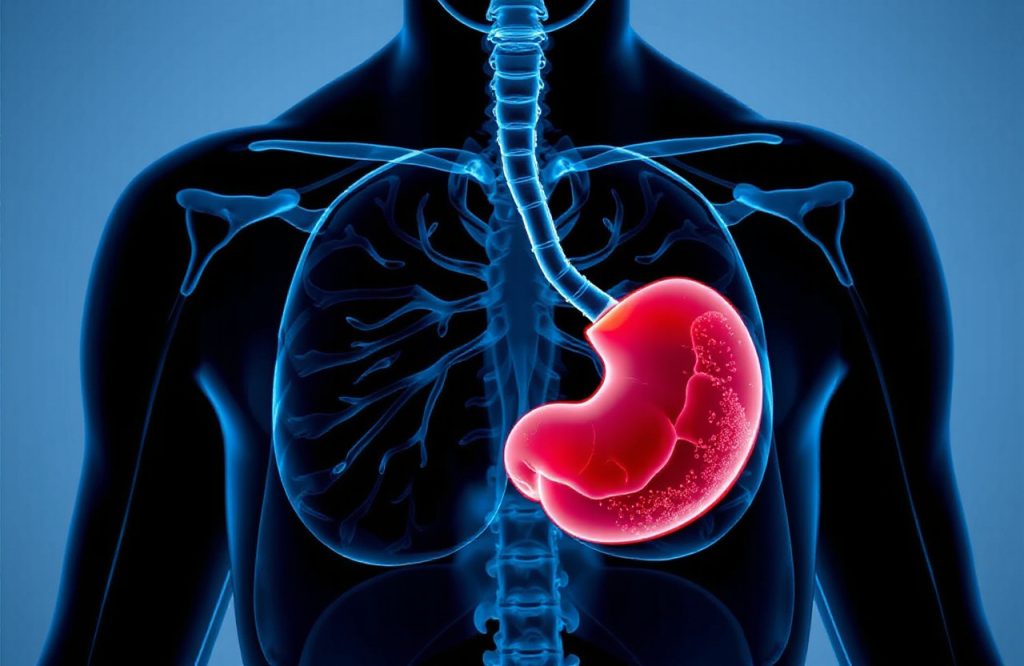
Breath Test Emerges as Potential Tool for Detecting Oesophageal and Gastric Cancers
Introduction to the Study
A recent study published in JAMA Oncology suggests that a breath test may serve as an effective method for detecting cancers in the oesophagus and stomach. In the United Kingdom, approximately one in three patients visits hospitals with gastrointestinal discomfort. In 2016, the UK recorded 7,044 cases of gastrointestinal disease, with 38% of these patients eligible for curative treatment plans.
Challenges in Early Detection
Currently, the primary symptoms associated with gastrointestinal disorders include difficulty swallowing and painful swallowing. These symptoms typically manifest only when the tumor has grown large enough to obstruct swallowing, resulting in diagnoses occurring at advanced stages. This challenge in recognizing oesophageal and gastric tumors early prompted researchers to explore alternative detection methods for gastrointestinal cancer.
Research Methodology
Led by researcher Sheraz Markar, the study aimed to evaluate the breath test as a potential alternative for detecting oesophagogastric tumors. The research involved two teams: one comprised of researchers aware of the patients’ diagnoses and another clinical team that was unaware.
The breath test detects volatile organic compounds released from the body due to cancer. Researchers utilized selected ion flow tube mass spectrometry to analyze breath samples for these compounds, which include butyric acid, pentanoic acid, hexanoic acid, butanal, and decanal. Results were confirmed or denied through histopathological diagnosis of tumor cells.
Conducted across three hospitals in London, the study aimed to recruit a total of 325 patients, including 162 with diagnosed oesophageal or gastric cancer and 163 with either benign conditions or a normal upper gastrointestinal tract. Consent was obtained from all participants.
Results and Implications
The findings indicated that the breath test is a promising solution for detecting oesophageal and gastric tumors, demonstrating a sensitivity of 80% and specificity of 81%. This positive outcome represents a significant advancement toward early cancer recognition, facilitating early detection by primary care physicians. While further research is required to validate the test’s accuracy, this study marks an important step forward in the early detection and prevention of serious conditions like cancer.
Conclusion
The insights from this research highlight the potential of breath tests in enhancing early cancer detection methodologies. Continued exploration of non-invasive diagnostic tools could be crucial in improving patient outcomes in the fight against cancers of the gastrointestinal tract.
Written by Dr. Apollina Sharma, MBBS, GradDip EXMD
Reference: Markar, S. R., Wiggins, T., Antonowicz, S., Chin, S. T., Romano, A., Nikolic, K., … & Hanna, G. B. Assessment of a Noninvasive Exhaled Breath Test for the Diagnosis of Oesophagogastric Cancer. JAMA Oncology.