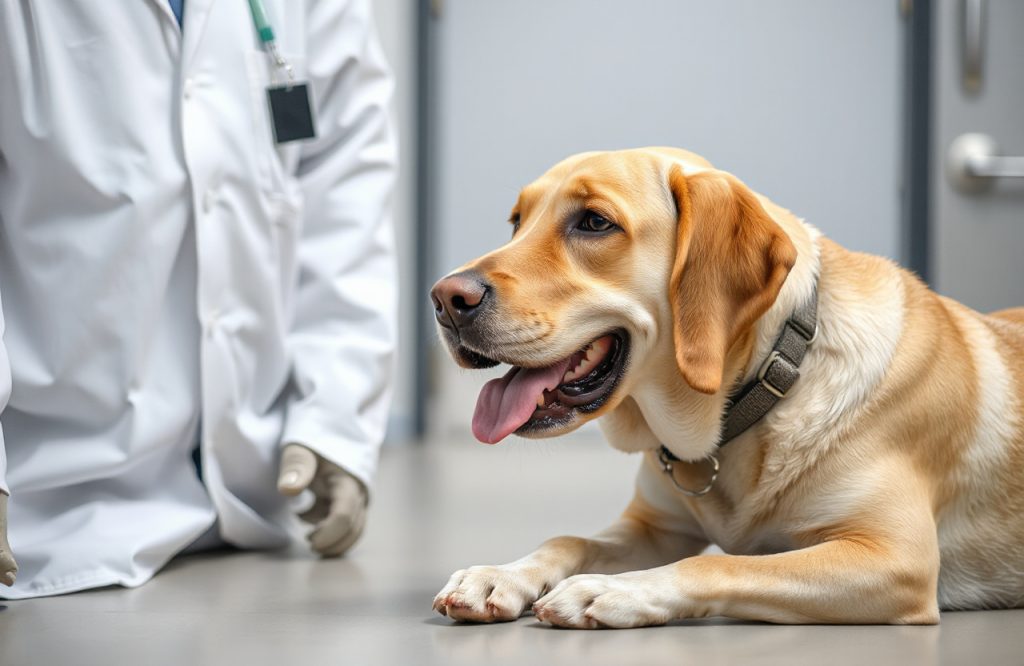
Researchers Train Cancer-Sniffing Dogs to Distinguish Blood Samples from Lung Cancer Patients
Understanding Lung Cancer and Its Challenges
Lung cancer is the leading cause of cancer-related mortality globally, affecting both men and women. Patients diagnosed at late stages face a grim prognosis and reduced survival rates. For individuals with non-small cell lung cancer (NSCLC), the five-year survival rates are significantly higher at stage I (92 percent) compared to stage III (13 percent) and below 10 percent once metastasis occurs. Early detection is critical for improving lung cancer survival, yet existing screening methods like chest X-rays and computed tomographic imaging can be expensive and often result in misdiagnoses.
Innovative Approach Using Canine Scent Detection
To create a more effective and economical cancer screening method, researchers from the Lake Erie College of Osteopathic Medicine in Florida are utilizing the exceptional smelling abilities of dogs. Canine scent detection has proven to be remarkably efficient, with a capacity that is 10,000 times greater than that of humans. Scent hounds, a specific breed known for their heightened olfactory senses, include beagles, which possess around 225 million smell receptors—far exceeding the 5 million found in the human nose.
Pilot Study and Training Methodology
In a preliminary study, scientists employed a behavioral training technique known as “clicker training” to instruct four beagles in differentiating blood samples from NSCLC patients and healthy controls. The dogs signaled the presence of cancer by sitting after smelling a blood serum sample, while they moved on if cancer was not detected. One dog did not respond favorably to the training and was excluded from the study. Through a double-blind process, where neither the researchers nor the dogs were aware of the sample status, the three remaining dogs successfully identified cancer with an accuracy rate of nearly 97 percent. The results were published in the Journal of the American Osteopathic Association.
Future Research and Potential Applications
The authors of the study suggest that further exploration of canine scent detection may lead to the development of innovative clinical screening tools for cancer. An ongoing larger study aims to utilize cancer-sniffing dogs to identify specific biomarkers in lung and breast cancer samples. By isolating cancer samples based on their chemical properties and reintroducing them to the dogs, researchers hope to identify the unique compounds associated with each cancer type. Ultimately, the researchers envision creating a simple, cost-effective over-the-counter device that can accurately detect cancer using these biomarkers.
References
Junqueira, H. et al. Accuracy of Canine Scent Detection of Non–Small Cell Lung Cancer in Blood Serum. J Am Osteopath Assoc (2019). doi:10.7556/jaoa.2019.077
Brennan, J. Cancer-sniffing dogs 97% accurate in identifying lung cancer, according to study in JAOA. EurekAlert! (2019). Available at: https://www.eurekalert.org/pub_releases/2019-06/aoa-cd9061719.php.