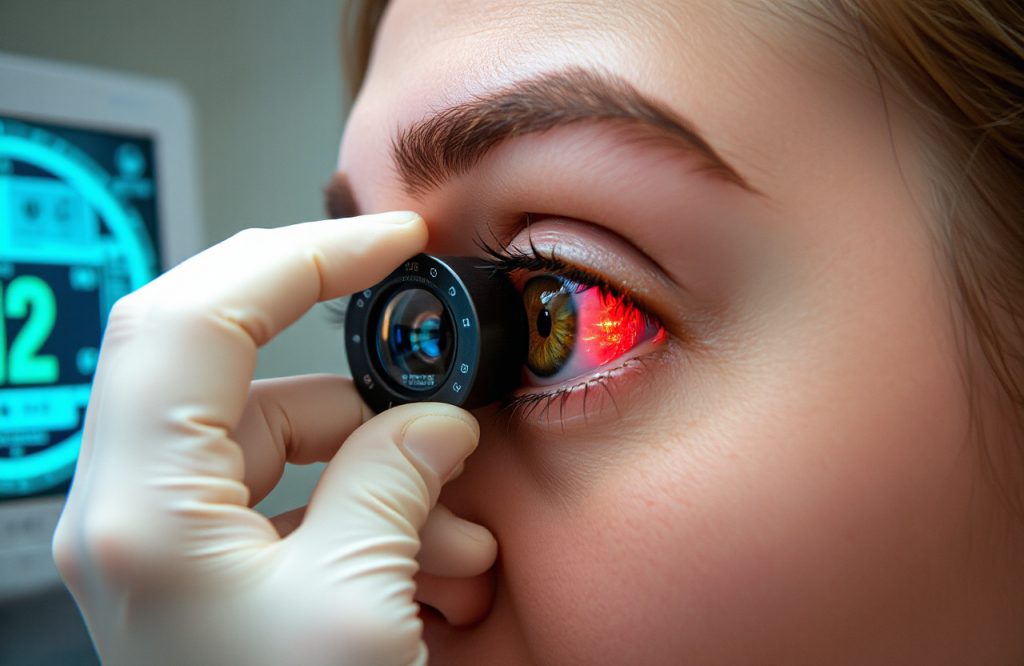
Understanding Glaucoma and Its Impact
Global Prevalence and Consequences
Affecting over 60 million individuals across the globe, glaucoma stands as a primary cause of blindness. This group of diseases leads to the degeneration of the optic nerve, resulting in irreversible vision loss and the potential for blindness if not detected promptly.
Need for Improved Detection Methods
Current glaucoma tests require enhancement for early detection, as many patients have already lost a significant portion of their sight—up to one-third—by the time they receive a diagnosis.
Innovative Research on Glaucoma Detection
Study Overview
Researchers led by Medeiros at the University of California-San Diego explored the use of a portable brain-computer interface (BCI) to objectively evaluate visual function loss and detect glaucoma. Their findings, published in JAMA Ophthalmology, indicate that this technology can effectively differentiate between glaucomatous damage and healthy eyes.
Potential Benefits of BCI Technology
This innovative approach not only offers simpler testing methods for patients but, due to its portability, could enable home testing. Such advancements could significantly enhance early detection rates and facilitate ongoing monitoring of visual function loss over time.
Study Details and Methodology
Participants and Demographics
The study involved 62 eyes from 33 glaucoma patients (19 white, 12 black, and 2 Asian) and 30 eyes from 17 healthy participants (9 white and 8 black, with no Asian participants). There were no notable differences in age, race/ethnicity, or sex among the groups.
Testing Procedures
Over three months, all participants underwent testing with both the BCI device, known as nGoggle (nGoggle Inc), and standard automated perimetry (SAP). The nGoggle is a portable device capable of processing electrical brain signals, making it more reliable than other techniques that can be affected by factors like blinking and eye movements. Additionally, it eliminates the need for conductive gels on the scalp, positioning it as an effective option for assessing vision field loss from glaucoma in home settings.
Comparative Analysis with Traditional Methods
Conversely, SAP is the conventional method for evaluating functional loss in glaucoma patients. However, it often relies heavily on subjective patient input, which can introduce variability in test results. Typically conducted in clinical environments, SAP testing may be inaccessible for some patients, leading to delayed diagnoses.
Findings and Implications
Reproducibility of Measurements
To evaluate the reproducibility of results from the BCI device, repeated tests were conducted on 20 eyes from 10 glaucoma participants over three sessions spaced one week apart. The results demonstrated that the nGoggle could effectively assess visual field loss, distinguishing between healthy eyes and those with glaucomatous damage.
Early Detection Potential
The findings suggest that nGoggle could serve as a valid method for glaucoma detection, potentially enhancing early identification and reducing vision loss prior to diagnosis. Notably, the study indicated low variability in test-retest results, showcasing the method’s stability and resistance to contamination.
Future Research Directions
Furthermore, the signals obtained from the nGoggle may detect glaucoma before visual field defects manifest, unlike the SAP method. Although this aligns with previous research, those studies primarily employed traditional clinical techniques.
As the main objective of this study was to validate the proof-of-concept for the portable device, one limitation is the absence of testing in a home environment. The study was confined to a controlled clinical setting. Future research should explore potential challenges associated with at-home testing and investigate the device’s efficacy for monitoring visual loss over time.
Conclusion
The advancements in BCI technology represent a promising step forward in glaucoma detection and management. Continued research is vital to refine these methods and ensure they can be effectively utilized in home settings.
Written By: Lacey Hizartzidis, PhD