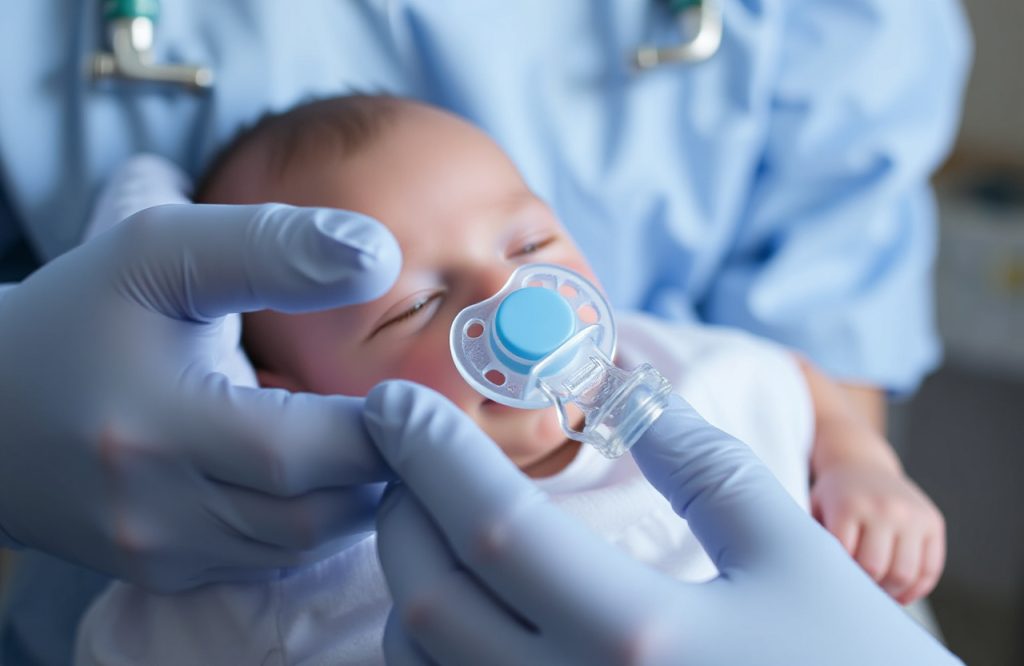
Pacifier-Based Glucose Biosensor Developed by UC Researchers
Innovative Technology for Infant Glucose Monitoring
Researchers from the University of California have created a novel glucose biosensor integrated into a pacifier, designed to monitor an infant’s glucose levels in real-time through saliva. This groundbreaking research, published in ACS’ Analytical Chemistry, aims to provide a safe and effective method for diagnosing and tracking diabetes in infants.
Challenges of Wearable Biosensors for Infants
While wearable biosensors for non-invasive health monitoring are commonly used in adults, their application for infants has faced significant challenges. Previous wearable devices often attach to clothing or skin and can feature hard surfaces that may irritate a baby’s sensitive skin during prolonged use. To date, existing technologies have primarily measured physical parameters, such as heart rate and respiration, rather than chemical monitoring. Continuous glucose monitoring has typically required hospital visits and skin pricks, highlighting the need for more comfortable and portable biosensor solutions for infants.
Design and Functionality of the New Biosensor
Led by researchers Joseph Wang and Alberto Escarpa, the team has developed a baby-friendly glucose biosensor by embedding the technology into a pacifier. The innovative design includes a nipple with an inlet channel that collects saliva when the infant sucks on it. Saliva is then transferred into a chamber at the back of the pacifier, which houses an enzyme connected to an electrode strip. This enzyme converts glucose in the saliva into a weak electrical signal, which can be detected by a smartphone application, allowing for real-time glucose tracking.
Testing and Future Applications
Although the device has not yet been tested on infants, it has shown promising results in adult participants with type 1 diabetes. In trials, the biosensor successfully detected fluctuations in glucose levels in saliva before and after meals. The researchers believe this device could soon become the first wearable biosensor for infants, with potential to monitor additional chemical parameters using saliva as a non-invasive sample.
Conclusion
The development of this pacifier-based glucose biosensor represents a significant advancement in infant healthcare technology, offering a non-invasive alternative for glucose monitoring. The researchers’ findings suggest that this innovative approach could pave the way for future biosensors aimed at enhancing the health monitoring of infants.
References
– ACS Publications – Pacifier Biosensor: Toward Noninvasive Saliva Biomarker Monitoring. https://pubs.acs.org/doi/10.1021/acs.analchem.9b03379
– EurekAlert! (news release 23rd October 2019) Pacifier biosensor could help monitor newborn health. https://www.eurekalert.org/pub_releases/2019-10/acs-pbc102319.php
Photo Credit
Adapted from Analytical Chemistry 2019, DOI: 10.1021/acs.analchem.9b03379