New Approach to Obesity Treatment Using Gut Hormones
Understanding Obesity and Its Health Implications
Obesity has become a widespread issue globally, often associated with serious health conditions such as type 2 diabetes, cardiovascular diseases, and certain cancers. Various strategies exist for managing obesity, including very-low-calorie diets and surgical options like gastric bypass surgery. The latter is recognized as one of the most effective treatments for obesity and type 2 diabetes, as it restricts food intake and reduces energy absorption, resulting in weight loss and improved blood glucose levels. Despite its effectiveness, gastric bypass surgery carries risks associated with major surgeries and potential long-term side effects, including abdominal pain, chronic nausea, vomiting, and severe low blood sugar.
The Role of Gut Hormones in Weight Loss
Gastric bypass surgery influences weight loss through multiple mechanisms, particularly by altering the secretion of gut hormones in response to food consumption. Notably, three hormones—glucagon-like peptide 1, oxyntomodulin, and peptide YY, collectively referred to as “GOP”—are elevated following the surgery. These hormones contribute to feelings of fullness and are associated with reduced appetite and increased energy expenditure.
Research Study Overview
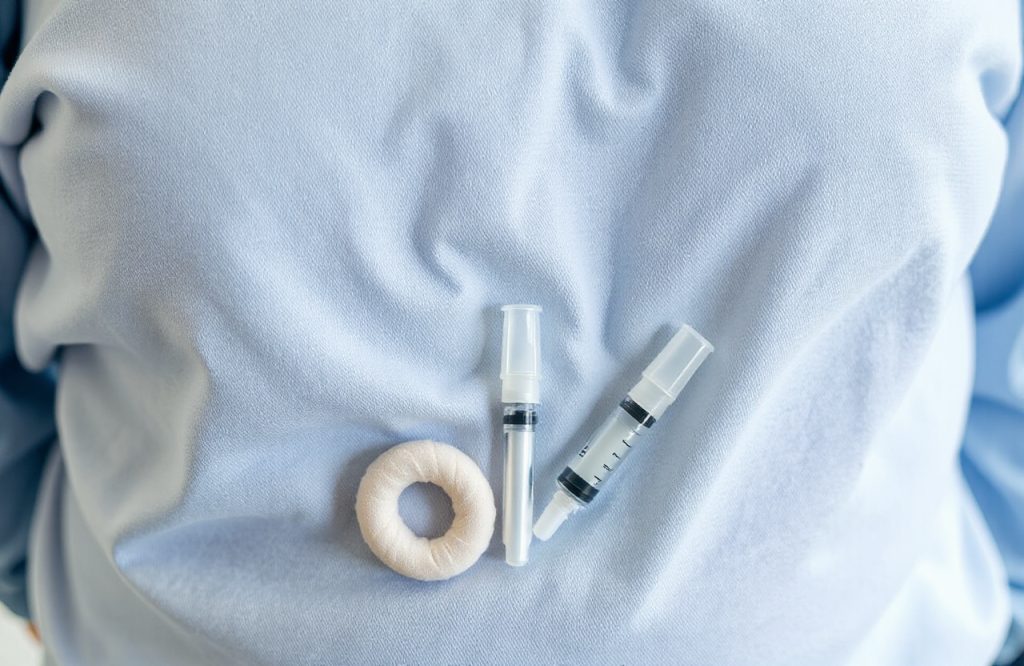
A study conducted by researchers at Imperial College London sought to determine if administering a GOP infusion to obese patients with diabetes or prediabetes could replicate the beneficial effects of gastric bypass surgery, thereby aiding weight loss and improving blood glucose control. The findings were published in the journal Diabetes Care.
Between July 2016 and October 2018, 26 obese participants with diabetes or prediabetes were randomly divided into two groups: one receiving the GOP infusion (n=15) and the other receiving a saline placebo (n=11). The infusion was administered over a 12-hour period, starting one hour before breakfast and concluding after the last meal of the day, for a duration of four weeks. All participants received dietary advice from a nutritionist. Additionally, the researchers monitored a separate group of obese individuals on very-low-calorie diets (n=22) and another group that underwent gastric bypass surgery (n=21) for comparative analysis.
Outcomes of the Gut Hormones Infusion
After four weeks, the results indicated that patients receiving the GOP infusion experienced greater weight loss compared to those on the saline placebo, with an average loss of 4.4 kg versus 2.5 kg, respectively. Furthermore, the infusion significantly improved blood glucose levels, bringing them close to normal. While patients who underwent gastric bypass surgery or adhered to very-low-calorie diets achieved more substantial weight loss (averaging 10.3 kg and 8.3 kg, respectively), their blood glucose levels exhibited more variability compared to those receiving the GOP treatment.
Expert Commentary and Future Research
Professor Tricia Tan from Imperial College London, the lead author of the study, remarked, “This result shows that it is possible to obtain some of the benefits of a gastric bypass operation without undergoing the surgery itself.” She acknowledged that although weight loss with GOP infusion was less significant than that achieved through gastric bypass surgery, this method may be preferable due to its reduced side effects. The research team aims to conduct larger clinical trials over an extended period. Professor Tan expressed optimism, stating, “If further trials are successful, in future we could potentially give this type of treatment to many more patients.”
References
Behary P, Tharakan G, Alexiadou K, et al. Combined GLP-1, Oxyntomodulin, and Peptide YY improves body weight and glycemia in obesity and prediabetes/type 2 diabetes: a randomized, single-blinded, placebo-controlled study. Diabetes Care, 42(8):1446-1453.
Imperial College London. Press release, 6 Aug 2019. “New hormone injection aids weight loss in obese patients” https://www.eurekalert.org/pub_releases/2019-08/icl-nhi080619.php
Image by PublicDomainPictures from Pixabay.