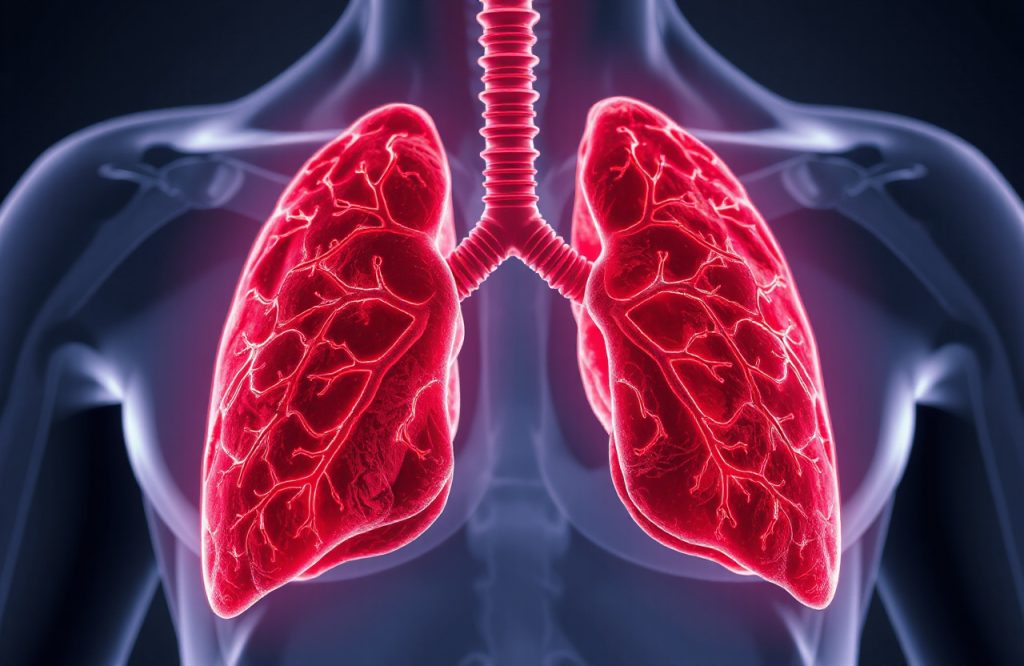
Novel Protein Identified for Lung Cancer Diagnosis and Treatment
Understanding Tumor Metabolism
A recent study published in *Science Translational Medicine* has unveiled a novel protein that may enhance early diagnosis and treatment of lung cancer. It is well-established that numerous tumors depend on a continuous supply of glucose to fuel their growth. As cancer cells proliferate, many adapt by discovering new mechanisms to obtain glucose. A significant number of these cells utilize glucose transporters (GLUTs), which are passive transporters that facilitate efficient glucose uptake, thus supporting cancer cell proliferation.
Renewed Interest in Glucose Transporters
Recent research has identified additional novel transporters that may play a role in glucose transport. This discovery has sparked renewed interest among researchers in pinpointing unique glucose transporters that could be targeted to limit a tumor’s glucose supply and, consequently, inhibit cancer cell growth.
SGLT2 as an Early Diagnostic Marker for Lung Cancer
Research Findings from UCLA
Researchers from UCLA were motivated by their findings that the sodium-dependent glucose transporter 2 (SGLT2) implicated in prostate and pancreatic cancers also plays a role in lung cancer. Their studies revealed that SGLT2 is uniquely expressed in early-stage lung cancers. Utilizing immunohistochemistry, the researchers measured SGLT2 levels in 58 human tissue samples from patients with stage 1 to stage 4 lung adenocarcinoma.
Role of SGLT2 in Tumor Staging
The analysis indicated that lung cancers utilized SGLT2 for glucose metabolism in the early stages, while later stages of cancer saw a transition to GLUT1 for glucose replenishment. Notably, SGLT2 expression was elevated in more differentiated tumors, whereas GLUT1 expression was more prominent in poorly differentiated lung cancers. Interestingly, SGLT2 began to express early during tumor growth, coinciding with the transformation of normal lung cells into pre-malignant lesions, a characteristic not observed with GLUT1.
Monitoring SGLT2 Expression
In a mouse model designed for spontaneous lung cancer development, the researchers demonstrated that SGLT2 expression could be precisely monitored using positron emission tomography (PET), a technique commonly employed to assess the metabolic profiles of animals.
SGLT2 as a Therapeutic Target for Lung Cancer
Blocking SGLT2 Activity
The researchers also explored a class of FDA-approved inhibitors known as Gliflozins to effectively inhibit SGLT2 activity. This blockade deprives cancer cells of their necessary glucose, resulting in a notable reduction in cancer cell growth. The tumors subsequently shrank in size by nearly 47%, significantly enhancing survival rates in two distinct cancer mouse models: one that simulates spontaneous lung cancer growth and the other supporting human-derived cancer cells (patient-derived xenograft, PDX).
Study Limitations and Future Directions
The authors acknowledged a limitation of their study, noting the absence of a correlation between tumor stage and SGLT2 expression levels. Despite this drawback, the research has identified a promising diagnostic and therapeutic candidate that could improve lung cancer management, pending further clinical validation.
References
Scafoglio, C. R., Villegas, B., Abdelhady, G., Bailey, S. T., Liu, J., Shirali, A. S., . . . Shackelford, D. B. (2018). Sodium-glucose transporter 2 is a diagnostic and therapeutic target for early-stage lung adenocarcinoma. *Science Translational Medicine,* 10(467). doi:10.1126/scitranslmed.aat5933