Addressing Unplanned Pregnancies
The Challenge of Access to Contraceptives
Limited access to long-acting and cost-effective contraceptive methods significantly contributes to unplanned pregnancies. In 2012, around 85 million pregnancies worldwide were unintended, resulting in millions of abortions. The economic and emotional burden of unplanned pregnancies affects not only women and their families but also society as a whole.
Types of Contraceptive Methods
While non-hormonal and hormonal contraceptive methods are widely available, not all options are suitable for every woman.
Non-Hormonal Contraceptives
Non-hormonal contraceptives, such as condoms, diaphragms, and spermicides, are effective but have high failure rates due to incorrect usage and low acceptance.
Hormonal Contraceptives
Hormonal methods, including pills, vaginal rings, and patches, are safe and effective for preventing pregnancy. However, these methods require frequent administration, and some women struggle to maintain adherence.
The Need for Long-Acting, Affordable Solutions
Existing long-acting contraceptive methods, such as injections and intrauterine devices, necessitate healthcare professional intervention and can be expensive. A long-acting, low-cost, self-administered contraceptive could significantly reduce the global rate of unplanned pregnancies, particularly for women with limited healthcare access.
Innovative Development: Microneedle Patch for Contraception
Research Breakthrough at Georgia Institute of Technology
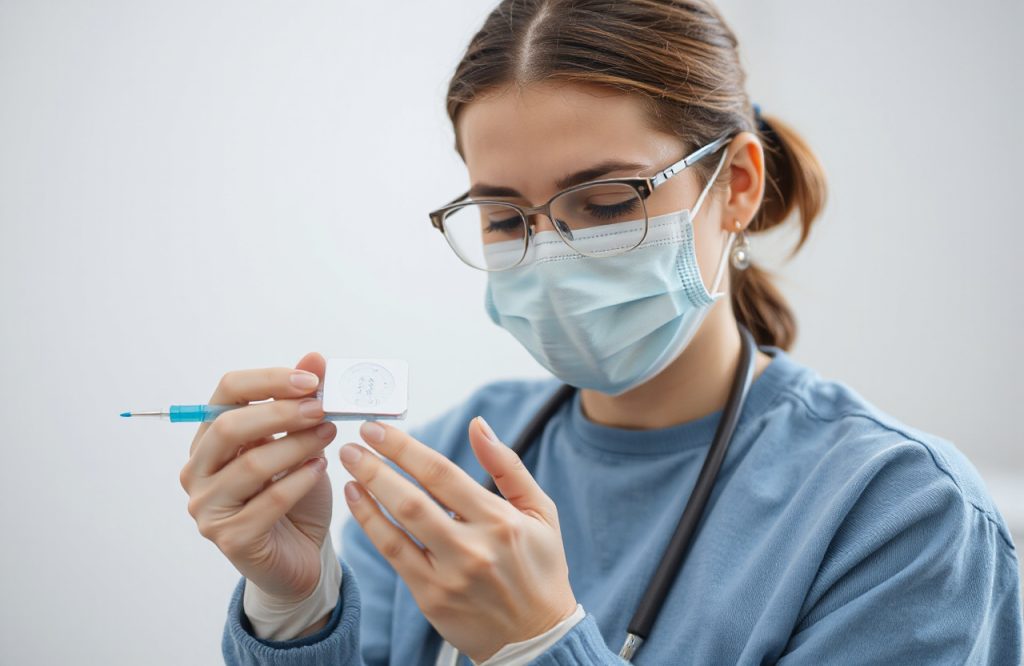
Researchers from the School of Chemical and Biomolecular Engineering at Georgia Institute of Technology are developing a microneedle patch designed to deliver hormones for pregnancy prevention. This innovative solution draws from technologies used in long-acting drugs such as Lupron and certain intradermal vaccines.
Mechanism of Action
The microneedle patch releases levonorgestrel, a progesterone hormone utilized in the Mirena intrauterine device, known for its effective contraceptive properties. To achieve sustained hormone release, the researchers encapsulated the drug in microneedles made from biodegradable polymers, specifically polylactic acid and polylactic-co-glycolic acid, which are proven safe for drug delivery.
Microneedles Explained
Microneedles are tiny needles that penetrate the skin to administer medications. Previously studied in intradermal vaccines, these microneedles are attached to a patch that can be applied to the skin with sufficient force to embed them without causing pain. An air bubble between the microneedles and the patch allows for easy detachment, enabling discreet use.
Next Steps in Research
Initial studies using rat tissue indicated that the microneedle patch maintained levonorgestrel levels for one month and disappeared after two months. However, additional research is necessary to develop a microneedle patch suitable for adult women. This new design would require a higher hormone dose, more microneedles, and a larger patch, presenting challenges in ensuring painless application.
Conclusion: The Need for Novel Contraceptive Methods
The high rate of unplanned pregnancies globally underscores the urgent need for innovative contraceptive solutions. Despite the availability of various hormonal and non-hormonal methods, unplanned pregnancies still account for nearly 50% of all pregnancies. The microneedle patch represents a promising new approach to self-administered contraception, utilizing effective technologies from other drug delivery systems. Further studies are essential to finalize a suitable design for human use.
References
Li W, Terry RN, Tang J, et al. Rapidly separable microneedle patch for the sustained release of a contraceptive. Nature Biomedical Engineering. 2019.