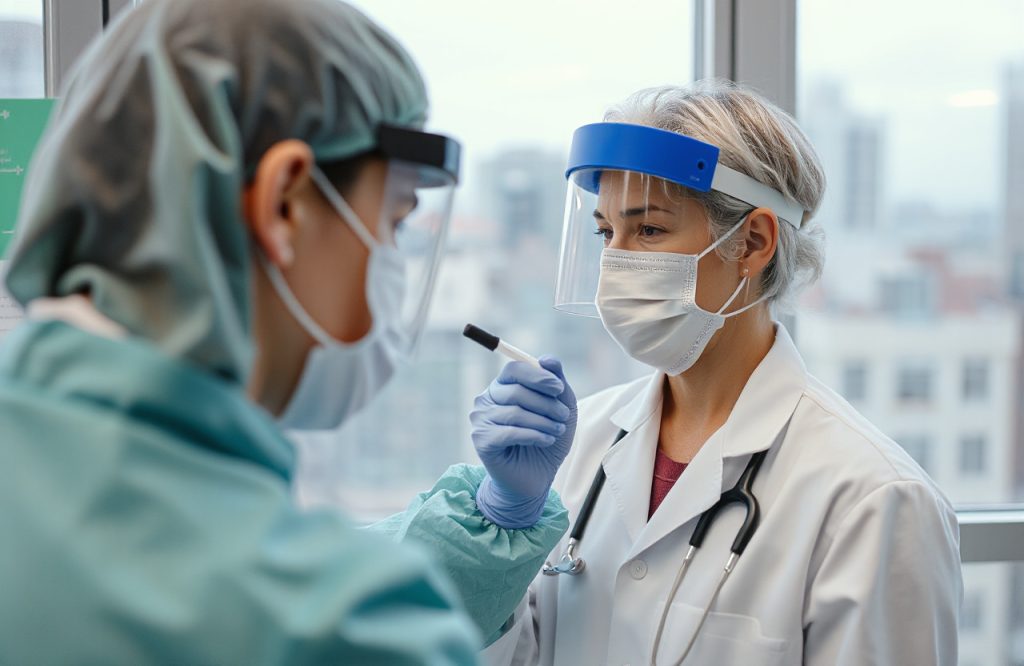
Efficacy of Portable Point-of-Care COVID-19 Testing Instrument
Introduction to the Study
A recent study highlights the effectiveness of a rapid and portable point-of-care instrument designed for COVID-19 testing. As the pandemic continues, the increasing demand for testing has created an urgent need for more efficient detection methods. Laboratory systems are currently experiencing shortages in supplies and personnel, leading to prolonged wait times in certain areas.
Limitations of Current Testing Methods
Currently, RT-PCR is regarded as the gold standard for COVID-19 testing. However, this method is labor-intensive, time-consuming, and dependent on a laboratory setting. Researchers at the University of Illinois have developed a rapid molecular test that utilizes a portable instrument, enabling results to be read via a smartphone within 30 minutes.
Methodology of the New Test
Samples were obtained from patients through nasopharyngeal swabs, which were then transferred to a viral transport medium for further analysis. The conventional RT-PCR process necessitates multi-step extractions and the use of commercial thermocyclers, making it both costly and time-consuming. To create a specific and sensitive assay, researchers employed a portable hand-held RT-LAMP detection method for COVID-19. This LAMP technique eliminates RNA extraction and purification steps, allowing for point-of-care diagnosis without the need to send samples to a laboratory.
Comparative Analysis of Testing Methods
The researchers compared standard PCR and LAMP assays using both synthetic nasal fluid spiked with COVID-19 and clinical samples. They reported consistent results for both methods, although the LAMP assay demonstrated superior specificity and sensitivity. The assay was integrated into a 3D-printed microfluidic disposable cartridge compatible with the portable instrument, with results monitored in real-time using a smartphone-based reader.
Advantages of the Portable Testing Instrument
Currently available COVID-19 tests necessitate laboratory environments due to the requirement for specialized equipment and trained personnel. By adopting the portable point-of-care technology researched by these scientists, countries could facilitate fast, affordable, and accurate diagnostics.
Future Implications
This innovative instrument can utilize a disposable cartridge for rapid COVID-19 detection, offering scalability. It can be quickly implemented in schools, healthcare facilities, and other locations needing large-scale testing. Researchers are also exploring the potential of using saliva samples instead of nasal swabs to further streamline the COVID-19 testing process.
Reference
Rapid isothermal amplification and portable detection system for SARS-CoV-2. Anurup Ganguli, Ariana Mostafa, Jacob Berger, Mehmet Y. Aydin, Fu Sun, Sarah A. Stewart de Ramirez, Enrique Valera, Brian T. Cunningham, William P. King, Rashid Bashir. Proceedings of the National Academy of Sciences, Aug 2020, 202014739; DOI: 10.1073/pnas.2014739117.
Image by Ewa Urban from Pixabay.