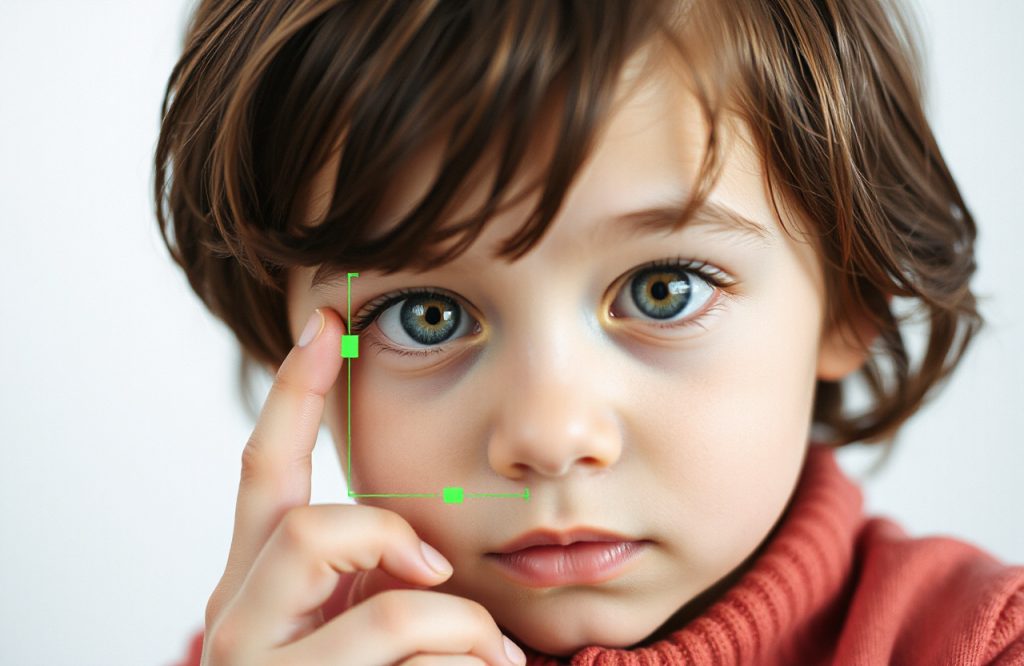
New Smartphone App for Detecting Eye Disorders in Children
Challenges in Pediatric Eye Care
Detecting subtle changes in children’s eye health can be challenging for pediatricians, who typically see their patients only once a year. A significant concern is retinoblastoma, a severe malignant cancer that can develop in children aged five years or younger. Pediatricians often look for an abnormal or asymmetric pupillary reflex known as leukocoria to test for retinoblastoma and other eye conditions. Leukocoria, which can signal both common and rare childhood eye disorders, appears as a white or yellow-orange reflex in the pupil. However, the effectiveness of this detection method is only about 8%.
Introduction of CRADLE App
Researchers at Baylor University, Bryan F. Shaw and Greg Hamerly, have created a smartphone app designed to detect leukocoria in photographs. Acknowledging that parents frequently photograph their children, the app offers a consistent means to test for leukocoria. Rather than replacing pediatricians, the app aims to assist and educate parents about the signs of early eye disease in their children.
Features of CRADLE
The app, named CRADLE (Computer-Assisted Detector of Leukocoria), is available for download on both Apple and Android devices. It analyzes images stored on the user’s phone, searching for abnormal light reflections that may indicate leukocoria. A study published in Science Advances evaluated the app’s accuracy and sensitivity in detecting leukocoria prior to clinical diagnosis.
Study Methodology and Findings
The research involved over 50,000 photographs of children with and without diagnosed eye disorders, including retinoblastoma, Coats’ disease, cataract, amblyopia, and hyperopia. A team of three researchers categorized each photograph as leukocoric or non-leukocoric using a standardized quantitative scale. The results demonstrated that CRADLE effectively detected pathological leukocoria across various environments and conditions, including low-resolution and low-brightness images. The app also proved capable of identifying leukocoria in children of different racial backgrounds.
Age-Specific Sensitivity
Retinoblastoma typically develops in children aged two years or younger. The study indicated that CRADLE’s sensitivity for this age group exceeded 80%, a threshold deemed the “gold standard” by ophthalmologists for similar devices.
Recommendations for Use
To enhance detection accuracy, it is recommended that photographs be taken with the flash, as leukocoria is best highlighted by light reflection. Additionally, images should capture the entire face and at least one open eye. It is noted that CRADLE cannot analyze images where faces are obscured.
Conclusion and Future Implications
The study highlights CRADLE’s potential as a valuable tool for early detection of leukocoria, aiming to improve traditional clinical screening processes. The app may be particularly effective when analyzing large collections of photographs featuring multiple instances of leukocoria. This innovation exemplifies how technology can be integrated to enhance traditional medical practices.
References
Munson, Micheal C., et al. “Autonomous Early Detection of Eye Disease in Childhood Photographs.” Science Advances, vol. 5, no. 10, 2 Oct. 2019, doi:10.1126/sciadv.aax6363.
Goodrich, Terry. “Prototype Smartphone App Can Help Parents Detect Early Signs of Eye Disorders in Children.” EurekAlert!, 3 Oct. 2019, https://www.eurekalert.org/pub_releases/2019-10/bu-psa100319.php.