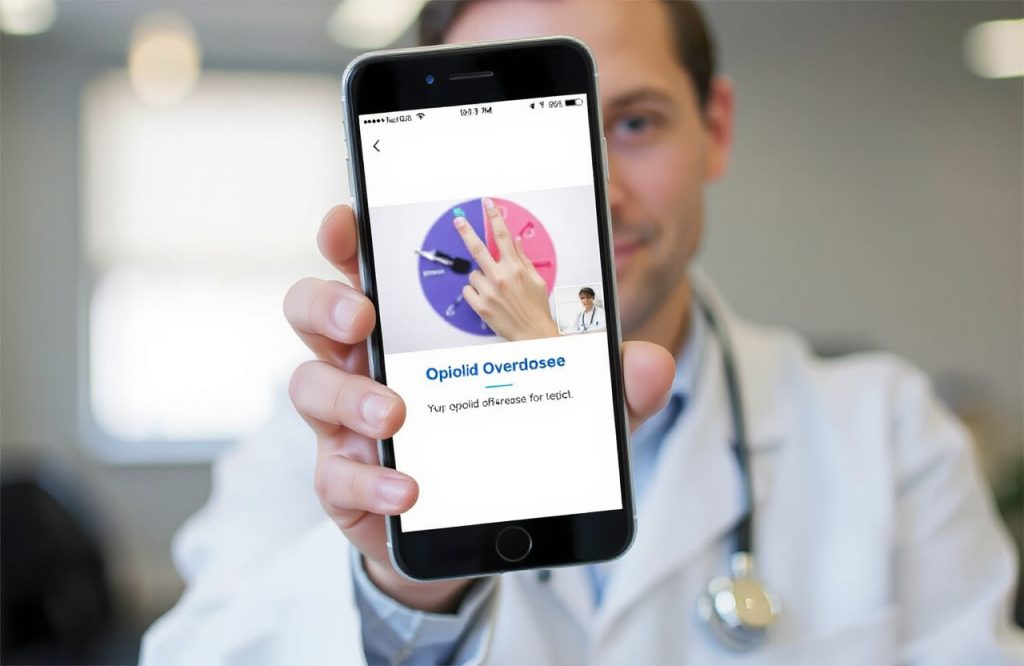
New Smartphone App for Opioid Overdose Detection
Overview of the Study
A recent study published in *Science Translational Medicine* highlights the development of a groundbreaking smartphone application by scientists in the United States. This app aims to detect opioid overdoses by monitoring breathing patterns.
The Opioid Crisis in Canada
Opioids, including fentanyl, morphine, and hydromorphone, are medications prescribed for pain relief. However, their effects on the brain and mood can lead to improper use. Canada is facing a significant opioid overdose crisis that impacts the health and well-being of countless Canadians, their families, and communities. According to Health Canada, more than 8,000 Canadians have died from apparent opioid overdoses since 2016.
Understanding the Risks of Opioid Overdose
Individuals using prescribed or illicit opioids are at risk of overdose, especially if they take higher doses than recommended, combine opioids with alcohol or sedatives, or use injecting drugs. During an overdose, breathing may slow, become irregular, or stop altogether. Unlike some medical emergencies, opioid toxicity can be reversed with prompt administration of naloxone. However, individuals experiencing an overdose may be unable to seek help.
Detecting Overdose Through Breathing Patterns
The smartphone app, named Second Chance, was developed by a team of scientists and computer engineers from the University of Washington. It utilizes a sonar system to monitor breathing rates, allowing it to identify early signs of an opioid overdose. The app functions by emitting sound waves from the phone’s speaker and detecting the returning waves that bounce off the user’s chest through the microphone.
Testing and Future Prospects
The app was tested at a supervised injection site in Vancouver, Canada. In a study involving 49 cases, the app successfully detected overdose-related symptoms approximately 90% of the time and was able to monitor a person’s breathing from a distance of up to three feet. This innovation could facilitate timely connections between potential overdose victims and readily available life-saving interventions. The research team plans to seek FDA approval, and the app is expected to be available on the market soon.
Reference
Nandakumar, R., Gollakota, S., Sunshine, J.E. Opioid overdose detection using smartphones. *Science Translational Medicine*, 2019;11:eaau8914. DOI: 10.1126/scitranslmed.aau8914.